
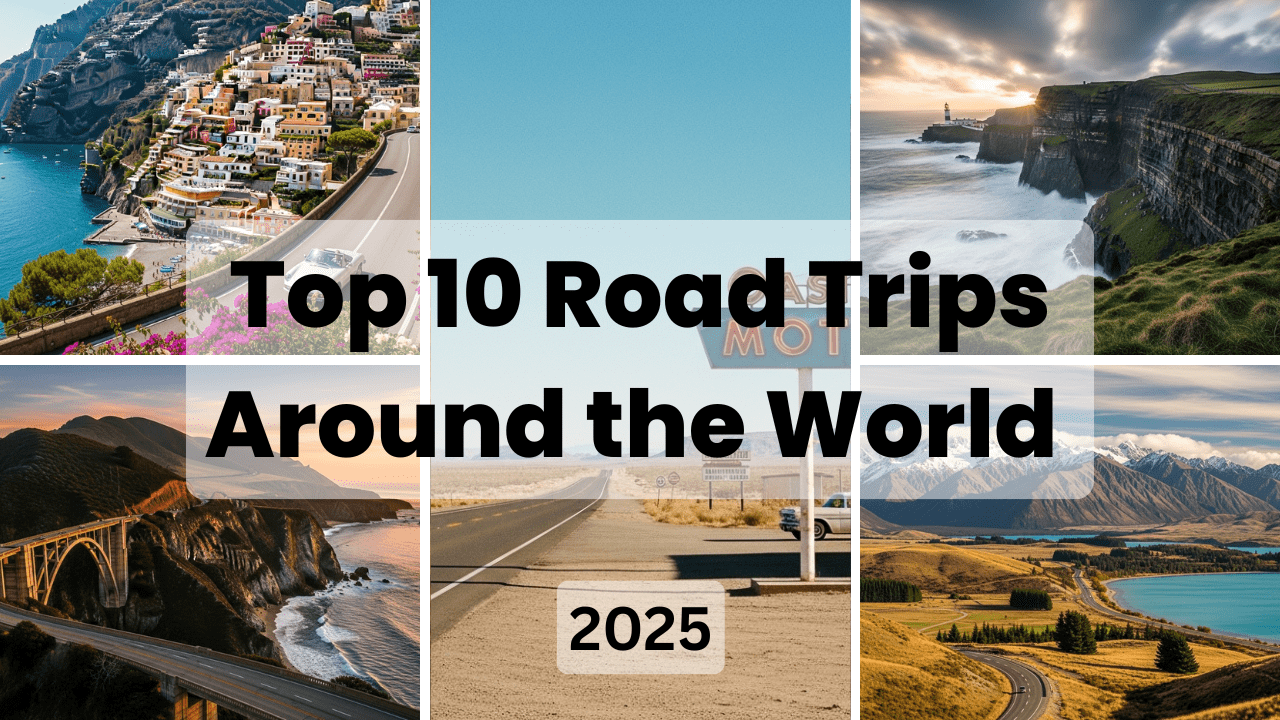
Discover the world’s 10 best road trips from Australia’s Great Ocean Road to Iceland’s Ring Road. Complete guide to unforgettable adventures.
Introduction: The Call of the Open Road
There’s something primal about a road trip. Something that speaks to our deepest need for freedom, discovery, and adventure. Maybe it’s the way the horizon keeps promising new wonders. Maybe it’s the spontaneous detours that become your favorite memories. Or maybe it’s simply this: behind the wheel, you’re not following someone else’s itinerary you’re writing your own story.
The best road trips around the world aren’t just about getting from point A to point B. They’re about the cafe you discover in a village that doesn’t appear on Google Maps. The sunset that stops you cold. The conversation with a local who changes your perspective. The moment you realize you’re not just traveling through a landscape you’re becoming part of it.
From Australia’s wave-carved coastlines to Iceland’s otherworldly volcanic terrain, from California’s legendary Highway 1 to Ireland’s wild Atlantic shores, these 10 scenic drives represent the pinnacle of road trip experiences. Each route offers something unique: dramatic natural beauty, cultural richness, and that intangible magic that only happens when you surrender to the journey.
Ready to shift into gear? Let’s explore the world’s most breathtaking road trips that will redefine how you think about travel.
1. Great Ocean Road, Australia: Where Ocean Meets Legend
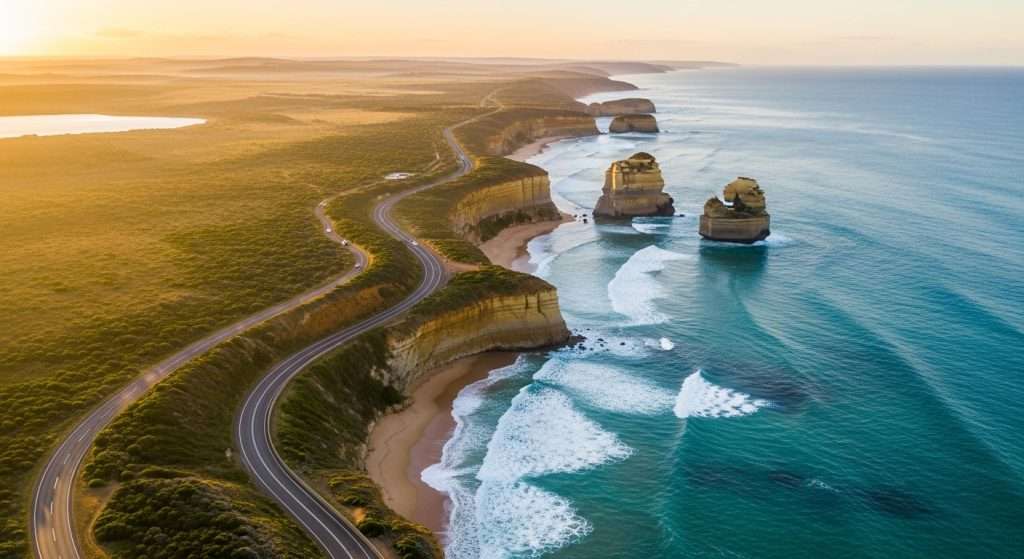
The Journey: 243 Kilometers of Coastal Perfection
Australia’s Great Ocean Road isn’t just a drive it’s a pilgrimage. Carved into Victoria’s southeastern coastline by returned World War I soldiers between 1919 and 1932, this memorial road stands as one of the world’s greatest engineering achievements and, arguably, its most spectacular coastal drive.
Why This Ranks Among the Best Road Trips Worldwide:
Start in Torquay, where surf culture was born, and follow the winding ribbon of asphalt as it hugs cliffs, dips through rainforest, and emerges at viewpoints that make your heart stop. The ocean isn’t just scenery here it’s a living, breathing force that shaped everything you see.
The Twelve Apostles: These limestone stacks rise from the Southern Ocean like ancient sentinels. Visit at sunrise when golden light ignites the rock faces, and you’ll understand why photographers worldwide consider this one of Earth’s most photogenic locations. Today the dramatic erosion continues these “apostles” are constantly being reshaped by nature’s patient hand.
Hidden Gems Along the Route:
- Bells Beach: Legendary surf break that hosts the Rip Curl Pro every Easter. Even non-surfers feel the electric energy here.
- Great Otway National Park: Detour inland for towering eucalyptus forests and the famous Otways treetop walk. Spot koalas sleeping in the canopy they’re everywhere if you look up.
- Apollo Bay: Charming fishing village perfect for fresh seafood and sunset beers at the local brewery.
- Lorne: Hipster beach town with excellent cafes, art galleries, and the Teddy’s Lookout viewpoint.
- Port Campbell National Park: Beyond the Twelve Apostles, discover Loch Ard Gorge, London Arch, and the Grotto.
Road Trip Insider Tips:
Drive west (Torquay to Port Fairy) for easier cliff-side photo stops. Allow 3-4 days to truly experience this route rushing diminishes the magic. November to March offers the best weather, but winter storms create dramatic wave-watching opportunities.
Practical Details:
- Distance: 243 km (151 miles)
- Duration: 3-4 days recommended
- Best Time: November-March (summer)
- Road Conditions: Excellent sealed roads
- Fuel: Regular stops available
2. Ring Road, Iceland: Journey Through Another World
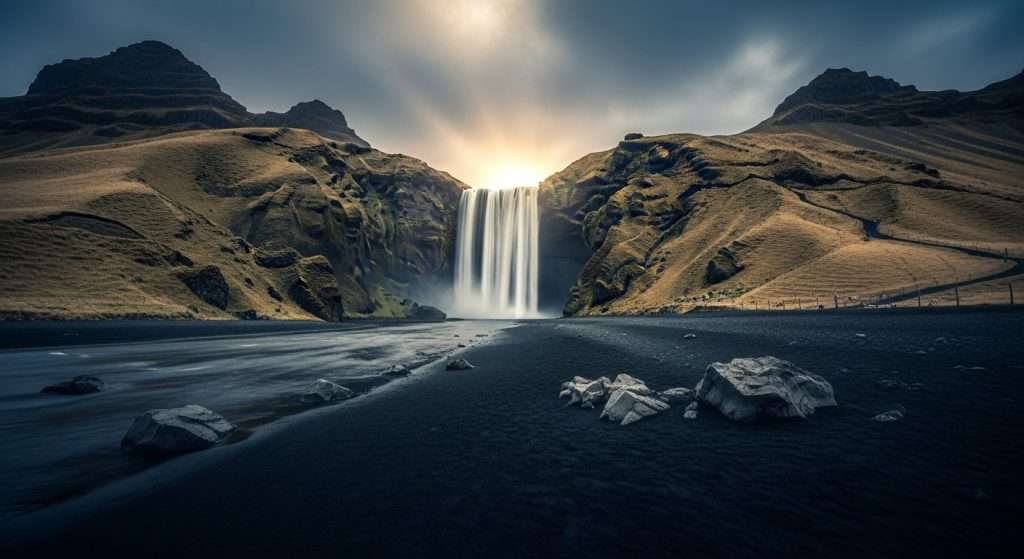
The Route: 1,332 Kilometers Around an Island of Fire and Ice
Iceland’s Route 1 (Ring Road) doesn’t just circle the island it orbits another dimension. This is where Earth reveals its raw creative power: erupting geysers, grinding glaciers, thundering waterfalls, black sand beaches, and volcanic landscapes so alien that NASA trained astronauts here.
Why Iceland’s Ring Road Tops World Road Trip Lists:
Every bend reveals landscapes that seem computer-generated. Driving Iceland’s Ring Road feels like navigating through a fantasy film where dragons might exist. The scale overwhelms glaciers larger than cities, canyons carved by apocalyptic floods, lava fields stretching to infinity.
Must-Stop Destinations on This Epic Scenic Drive:
South Coast Wonders:
- Seljalandsfoss: Walk behind this 60-meter waterfall for a perspective that changes everything. Bring waterproof gear you will get soaked, and you’ll love every second.
- Skógafoss: Thundering cascade where rainbows form on sunny days. Climb 527 steps to the top for panoramic views that make your legs forgive you.
- Reynisfjara Black Sand Beach: Basalt columns, roaring Atlantic waves, and legendary rock formations. Respect the ocean here sneaker waves are dangerous.
- Jökulsárlón Glacier Lagoon: Icebergs calve from Vatnajökull glacier and float serenely toward the ocean. Seals swim between them. Time dissolves here.
East Fjords: The Ring Road’s forgotten treasure. Dramatic mountains plunge into deep fjords, tiny fishing villages cling to shores, and you might drive for an hour seeing only reindeer and waterfalls.
North Iceland:
- Mývatn: Volcanic wonderland with bubbling mud pools, steaming vents, and pseudocraters. The Mývatn Nature Baths rival the Blue Lagoon with none of the crowds.
- Dettifoss: Europe’s most powerful waterfall. The earth literally shakes beneath your feet.
- Akureyri: Iceland’s “Capital of the North” offers culture, cuisine, and whale watching.
West Iceland:
- Snæfellsnes Peninsula: “Iceland in Miniature” showcases every landscape type: glaciers, lava fields, beaches, cliffs, and the mystical Snæfellsjökull volcano.
Planning Iceland’s Ring Road Adventure:
Summer (June-August): 24-hour daylight enables endless exploring. All roads accessible, accommodations plentiful, but also most crowded.
Winter (October-March): Northern lights dance overhead, but conditions demand respect. Roads can close suddenly, darkness dominates, and 4×4 vehicles are essential. Winter transforms Iceland into a completely different experience.
Shoulder Season (April-May, September): Sweet spot combining decent weather, fewer tourists, and lower prices. September especially offers autumn colors and northern lights possibilities.
Budget Reality:
- Duration: Minimum 7 days, 10-14 days ideal
- Vehicle Rental: $50-100/day (small car summer), $100-200/day (4×4 winter)
- Accommodation: $80-150/night (guesthouses), camping $15-30/night
- Food: $50-80/day (mix of groceries and restaurants)
Critical Safety Tips:
- Check road conditions daily at road.is
- Fill fuel tank at every opportunity stations are sparse
- Weather changes instantly pack layers
- Never leave the Ring Road without proper research
- Respect nature stick to marked paths
3. Pacific Coast Highway, USA: California Dreaming on Highway 1
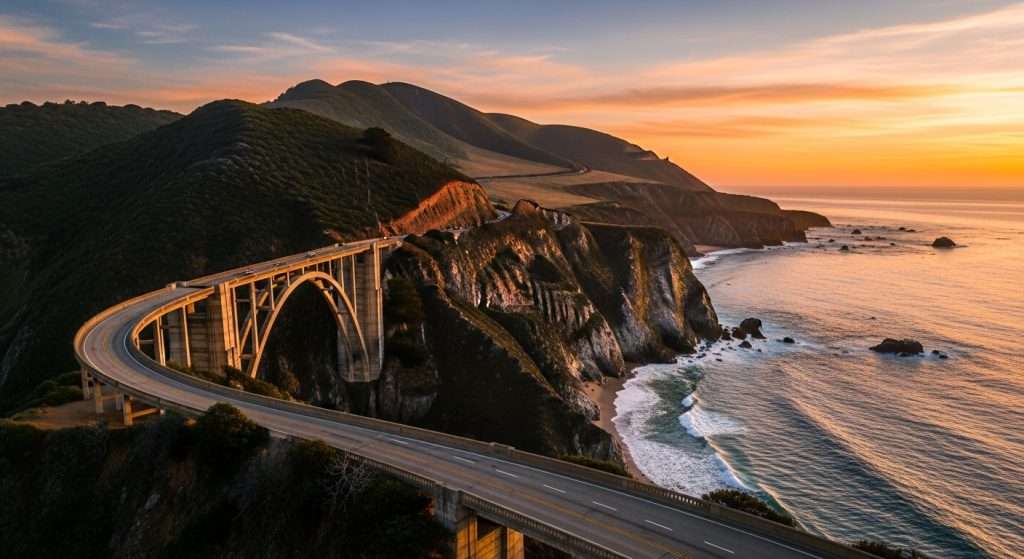
The Drive: 655 Miles of California Soul
California’s Highway 1 lives in the global imagination like few other roads. This legendary scenic drive connects San Francisco to Los Angeles (or vice versa) while showcasing the California that exists in songs, films, and dreams: dramatic coastlines where mountains meet ocean, charming coastal towns, wildlife-rich waters, and that ineffable California vibe.
Why Highway 1 Defines American Road Trip Culture:
The Pacific Coast Highway embodies freedom. This is the road trip that inspired Jack Kerouac, that appears in countless films, that makes rental car companies nervous (those cliff-hugging curves!). One side: endless Pacific vistas. Other side: golden hills or redwood forests. Straight ahead: pure adventure.
Big Sur: The Heart of Highway 1
The 90-mile stretch through Big Sur represents one of Earth’s most spectacular coastal drives. Highway 1 clings to cliffs hundreds of feet above crashing waves, threading through a wilderness where mountains plunge directly into the ocean.
Iconic Stops Along This Legendary Road Trip:
Northern Section (San Francisco to Big Sur):
- Golden Gate Bridge: Start dramatically. Park at Vista Point for photos that never get old.
- Half Moon Bay: Surf town with excellent breweries and pumpkin farms (October!).
- Santa Cruz: Beach boardwalk nostalgia meets excellent surfing and redwood forests.
- Monterey: Historic Cannery Row, world-class aquarium, and the starting point of 17-Mile Drive through Pebble Beach.
- Carmel-by-the-Sea: Fairytale village with white-sand beaches, art galleries, and upscale dining.
Big Sur Highlights:
- Bixby Bridge: The most photographed bridge on the Pacific Coast. Park at the north end for the classic shot.
- Point Sur Lighthouse: Volcanic rock outcrop topped with a historic lighthouse. Tours available weekends.
- Pfeiffer Beach: Purple-tinted sand (really!) and the famous keyhole rock formation that frames the sunset.
- McWay Falls: 80-foot waterfall that plunges directly onto the beach. View from the trail — beach access is prohibited.
- Julia Pfeiffer Burns State Park: Multiple vista points and the waterfall view that defines Big Sur.
Southern Section (Big Sur to Los Angeles):
- Hearst Castle: Opulent hilltop mansion built by newspaper magnate William Randolph Hearst. The excess is breathtaking.
- San Simeon: Elephant seal viewing December-March when thousands haul out to breed.
- Morro Bay: Giant volcanic rock dominates the harbor. Fresh seafood and kayaking await.
- San Luis Obispo: University town with excellent food scene and nearby wineries.
- Pismo Beach: Classic beach town vibe with pier, clam chowder, and dune buggies.
- Santa Barbara: “American Riviera” combines Spanish colonial architecture, perfect weather, wine country, and sophisticated dining.
- Malibu: Celebrity beach town with surf breaks, seafood shacks, and canyon hiking.
Pacific Coast Highway Road Trip Planning:
Direction Matters: Drive north to south. This keeps you on the ocean side, making pullouts easier and views unobstructed. Less nerve-wracking for drivers uncomfortable with cliff edges.
Timing Your Journey:
- Best Overall: April-May, September-October (fewer crowds, good weather)
- Summer: Peak season, expect traffic and high prices
- Winter: Dramatic storms, possible road closures, whale migration
Budget Breakdown:
- Duration: 4-7 days allows for relaxed exploration
- Accommodation: $100-300/night depending on season and style
- Food: $50-100/day from food trucks to fine dining
- Fuel: $150-250 total (depending on vehicle)
Pro Tips for the Perfect Highway 1 Road Trip:
- Book Big Sur accommodations months ahead very limited options
- Download offline maps cell service disappears in Big Sur
- Start early to beat crowds at popular photo spots
- Respect road closures landslides happen, alternate routes exist
- Pack layers coastal weather changes dramatically
4. Amalfi Coast, Italy: La Dolce Vita on the World’s Most Beautiful Drive
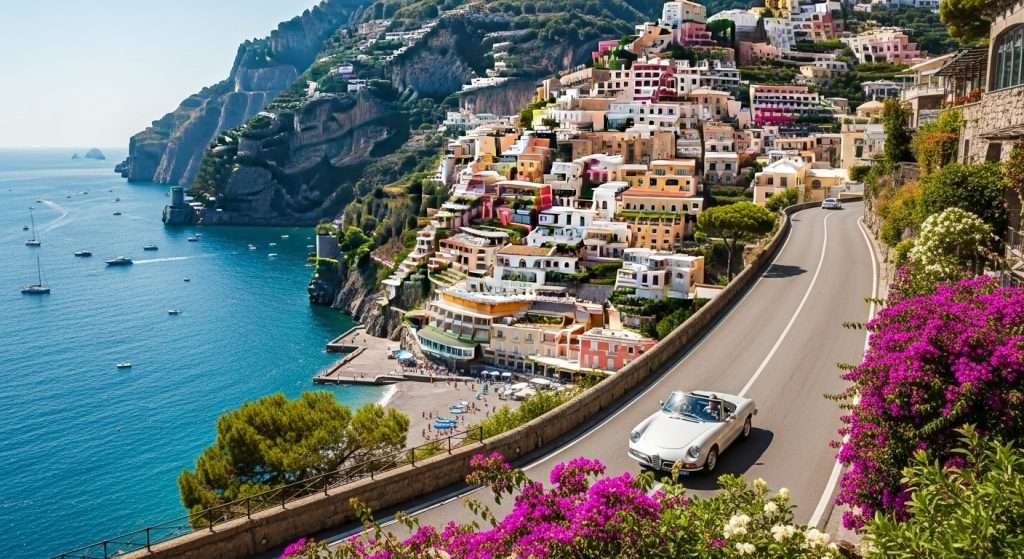
The Route: 50 Kilometers of Mediterranean Perfection
Italy’s Amalfi Coast Drive (SS163) squeezes improbable beauty into just 50 kilometers. This UNESCO World Heritage route twists along cliffs between Sorrento and Salerno, connecting pastel villages that tumble down mountainsides to azure Mediterranean waters. Every curve reveals another postcard, every town offers another reason to extend your stay.
Why the Amalfi Coast Ranks Among the World’s Best Road Trips:
This isn’t just a scenic drive it’s an assault on the senses in the best possible way. Lemon groves perfume the air. Bougainvillea cascades over stone walls. Church bells echo across valleys. Fresh pasta and seafood await around every bend. This is road tripping at its most romantic, most indulgent, most unforgettable.
The Villages: Each One a Masterpiece
Positano: The crown jewel. Houses painted in coral, terracotta, and cream cascade down the cliff face like a waterfall of architecture. Park above town (good luck!) and descend through narrow streets lined with boutiques, ceramics shops, and restaurants with views that distract from even the most excellent food.
Ravello: Perched high above the coast, Ravello offers respite from seaside crowds. Villa Cimbrone’s Terrace of Infinity provides views so spectacular they inspired Richard Wagner. The town hosts an annual music festival in summer that transforms gardens into concert halls.
Amalfi: Once a powerful maritime republic rivaling Venice and Genoa, Amalfi today is the coast’s heart. The cathedral’s Arab-Norman architecture dominates the main piazza. Taste limoncello at its birthplace. Hike to the Valle delle Ferriere waterfalls for a rare moment of solitude.
Atrani: Tiny fishing village (population: 850) squeezed between Amalfi and Ravello. This is authentic Amalfi Coast life: grandmothers gossiping in doorways, laundry strung between buildings, a intimate beach where locals outnumber tourists.
Praiano: Quieter alternative to Positano with similar beauty but fraction of the crowds. The sunset views from Marina di Praia beach club are legendary among locals.
Furore: Painted murals cover this “town without a piazza.” The fjord beach hidden at road level surprises drivers who almost miss it entirely.
Driving the Amalfi Coast: Preparation is Everything
Vehicle Choice: Rent the smallest car possible. We’re talking Fiat 500 tiny. The roads weren’t built for modern vehicles. Mirrors fold in for a reason. Buses take up 1.5 lanes on 2-lane roads. Your rental car insurance salesperson will sleep poorly knowing you’re here.
Driving Direction: East to west (Salerno to Sorrento) puts you on the mountain side, making the drive slightly less terrifying for nervous drivers. However, west to east offers better photo opportunities from pullouts.
Alternative: Skip the Stress: Hire a driver. Seriously. It costs $200-400 for a day but allows you to enjoy views, take photos, drink that limoncello, and keep your blood pressure healthy. Local drivers navigate these roads with terrifying confidence born from daily experience.
Public Transport: SITA buses connect all towns. Cheap ($2-4), scenic, sometimes delayed, always packed in summer. Not romantic but practical.
Best Time for This Scenic Drive:
- April-May: Perfect weather, spring flowers, manageable crowds
- September-October: Similar to spring, warm water for swimming
- June-August: Peak season = peak crowds, book everything months ahead
- November-March: Many businesses closed, but solitude and low prices
Culinary Road Trip Highlights:
This might be Italy’s most delicious region. Every town specializes in something:
- Positano: Beachside seafood restaurants with views to die for
- Praiano: Traditional trattorias serving pasta alla Nerano (zucchini and provolone)
- Amalfi: Fresh sfogliatella pastries from Pansa, limoncello from every shop
- Ravello: Michelin-starred dining at Rossellini’s with Infinite views
- Atrani: Local pizzerias where fishermen eat lunch
Budget Reality Check:
- Duration: 3-5 days minimum
- Accommodation: $150-400/night (book early!)
- Meals: $50-100/day per person
- Parking: $25-40/day in towns
- Activities: $20-50 for boat tours, hiking, villa visits
Essential Amalfi Coast Road Trip Tips:
- Book accommodations with parking or near parking lots
- Download offline maps GPS fails in tunnels.
- Pack patience traffic jams are guaranteed in summer.
- Bring motion sickness medication for passengers.
- Wear comfortable shoes for steep village stairs.
- Reserve restaurants ahead in high season
5. Garden Route, South Africa: Where Oceans, Forests, and Wildlife Meet
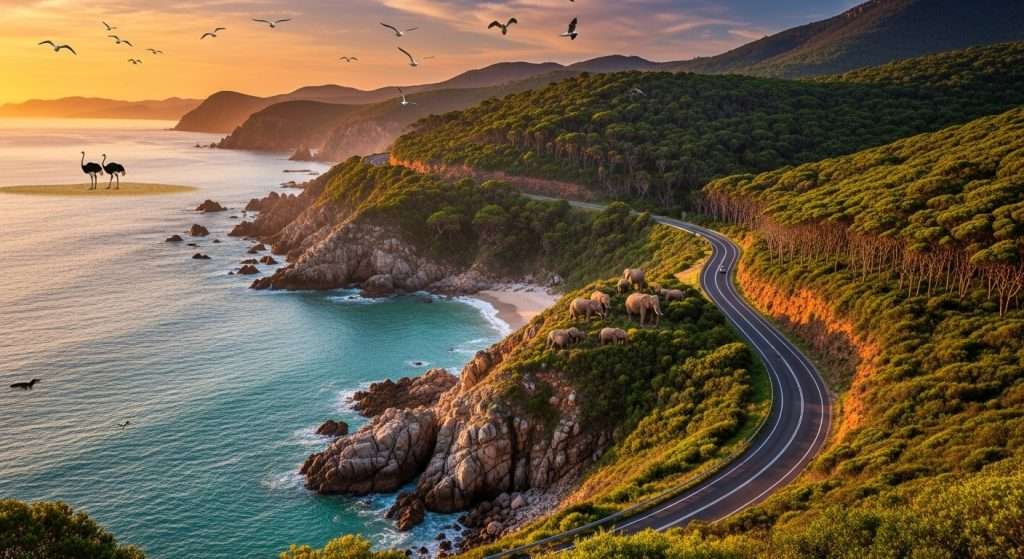
The Journey: 300 Kilometers of African Diversity
South Africa’s Garden Route stretches from Mossel Bay to Storms River (some extend it to Port Elizabeth), showcasing a landscape diversity that feels impossible in such a compact distance. In a single day, you’ll transition from pristine beaches to ancient forests, from dramatic cliffs to tranquil lagoons, with wildlife encounters and adventure activities woven throughout.
Why This Ranks Among the World’s Best Road Trips:
The Garden Route delivers Africa’s greatest hits in one manageable package. Want to see wild elephants, dolphins, and whales? Check. Hike through prehistoric forests? Done. Bungee jump from the world’s highest commercial bridge? Available. Taste world-class wine and cuisine? Everywhere. This scenic drive combines natural beauty with adventure, culture, and luxury at price points that make European travelers weep with joy.
Key Stops on Your Garden Route Adventure:
Mossel Bay: Historic starting point where Bartolomeu Dias first landed in 1488. The Post Office Tree, a 500-year-old milkwood tree, served as the first “mailbox” in sub-Saharan Africa. Today, enjoy shark cage diving, seal island tours, and excellent seafood.
Wilderness: Name says it all. This serene town nestles between seven rivers, indigenous forests, golden beaches, and pristine lakes. Kayaking, paragliding, and hiking draw adventure seekers. The Map of Africa viewpoint reveals a naturally formed African continent in the Kaaimans River.
Knysna: Jewel of the Garden Route. Knysna Lagoon, guarded by two sandstone cliffs called “The Heads,” offers calm waters for sailing, kayaking, and oyster harvesting. Visit Featherbed Nature Reserve, cruise the lagoon, and explore artisan shops in the waterfront. The Knysna Forest contains centuries-old yellowwood trees — though finding the legendary Knysna elephants requires legendary luck.
Plettenberg Bay: “Plett” combines beautiful beaches with upscale resorts. Robberg Nature Reserve’s peninsula hike rewards with incredible ocean views and seal colonies. June-November brings Southern Right whales to breed in the bay — watching them from shore is free and magical.
Nature’s Valley: Remote village where the Groot River meets the Indian Ocean. Part of Tsitsikamma National Park, this pristine area offers authentic wilderness without crowds. The forest meets the beach in scenes of almost overwhelming natural beauty.
Tsitsikamma National Park: The Garden Route’s ecological crown jewel. Ancient forests, dramatic coastline, and the famous Storms River Mouth suspension bridge create unforgettable experiences. Hike the Otter Trail (5-day backpacking adventure), explore tide pools, or simply absorb the raw power of nature.
Adventure Activities Along the Route:
- Bloukrans Bridge Bungee: 216-meter jump from the world’s highest commercial bungee bridge. Not for everyone, but those who leap never stop talking about it.
- Canopy Tours: Zip-line through indigenous forest canopies near Tsitsikamma and Wilderness.
- Whale Watching: Hermanus (slight detour west) is the world’s best land-based whale watching destination (June-November).
- Shark Cage Diving: Face your fears in Mossel Bay or Gansbaai.
- Hiking: Countless trails from easy forest walks to multi-day coastal routes.
- Wine Tasting: Route 62 wine route lies just inland — world-class wines at fraction of European prices.
Wildlife Encounters:
The Garden Route isn’t safari country, but wildlife appears regularly:
- Whales (June-November)
- Dolphins (year-round)
- Seals (at colonies)
- African penguins (slight detour to Betty’s Bay)
- Forest elephants (extremely rare in Knysna Forest)
- Vervet monkeys (everywhere — don’t feed them!)
- Diverse birdlife (Paradise flycatchers, Knysna louries, fish eagles)
Planning Your Garden Route Road Trip:
Duration: 5-7 days allows proper exploration without rushing. Less feels incomplete; more lets you dive deeper into activities and day trips.
Direction: East to west (Port Elizabeth to Cape Town) puts the ocean on your right for easier pullouts and photo stops. However, either direction works perfectly.
Best Time to Visit:
- October-April: Summer/shoulder season, warm weather, best beach conditions
- June-September: Whale season, cooler temperatures, winter rains possible
- Year-round: The Garden Route enjoys moderate climate always
Budget Breakdown:
- Accommodation: $50-150/night (excellent value compared to Europe)
- Meals: $20-40/day per person
- Activities: $30-150 per activity (bungee, whale watching, etc.)
- Fuel: $80-120 total
- Total: $100-200/day per person (mid-range comfort)
Practical Tips:
- Rent a reliable car (roads are excellent but distances add up)
- Book popular accommodations ahead (Knysna, Plett)
- Combine Garden Route with Cape Town visit (4-5 hours west)
- Stop frequently — the joy is in the discoveries
- Respect wildlife (baboons are clever thieves!)
6. Ring of Kerry, Ireland: Emerald Isle Magic
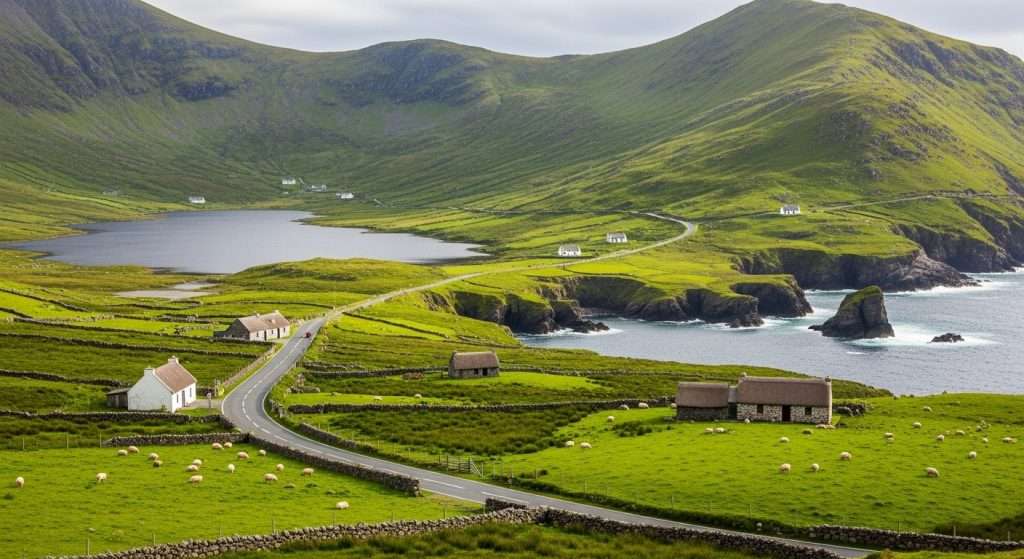
The Loop: 179 Kilometers Through Ireland’s Heart
Ireland’s Ring of Kerry isn’t just a scenic drive — it’s a journey through everything that makes Ireland magical. This circular route in County Kerry combines dramatic Atlantic coastlines, mysterious mountain passes, mirror-like lakes, ancient ruins, and villages where traditional Irish culture thrives. Every kilometer offers photo opportunities, every pub promises excellent Guinness and better stories.
Why the Ring of Kerry Tops European Road Trip Lists:
The Ring delivers quintessential Ireland in one perfect package. Rugged beauty? Check. Charming villages? Everywhere. Celtic history? Ancient stone forts dot the landscape. Irish hospitality? Prepare for conversations with locals that somehow last two hours. This is Ireland at its most picturesque, most friendly, most impossible to leave.
Following the Ring: Key Stops and Hidden Gems
Killarney: Traditional starting point. This bustling town serves as the Gateway to the Ring, but don’t rush through. Killarney National Park encompasses 26,000 acres of stunning lakes, woodlands, mountains, and Muckross House, a Victorian mansion worth exploring. Hire a jaunting car (horse-drawn carriage) for romantic park touring.
Route Direction: Drive clockwise (counterclockwise by North American standards). This keeps tourist buses heading the opposite direction and places you on the inside lane for easier stops. The narrow roads barely accommodate two-way traffic, and nobody wants to reverse around Irish curves.
Killorglin: Famous for the Puck Fair (August 10-12), Ireland’s oldest festival where locals crown a wild goat “King Puck.” Year-round, it’s a charming river town perfect for coffee and exploring.
Glenbeigh: Gateway to the Dingle Peninsula (worth its own road trip!). Rossbeigh Beach’s 7-kilometer strand offers wild Atlantic beauty. The Kerry Bog Village Museum recreates traditional 19th-century Irish life.
Cahersiveen: Daniel O’Connell’s birthplace (Ireland’s “Great Liberator”). Visit the Ballycarbery Castle ruins and nearby stone forts. The Old Barracks Heritage Centre explains local history compellingly.
Valentia Island: Connected by bridge and summer car ferry. The Slate Quarry offers dramatic cliff walks. Geokaun Mountain provides 360-degree Ring of Kerry views. This is where the first transatlantic telegraph cable reached European shores in 1858 — changing global communication forever.
Portmagee: Tiny colorful fishing village and departure point for Skellig Michael boat tours. This UNESCO site features a 6th-century monastery on a dramatic pyramid-shaped rock island. Star Wars fans recognize it as Luke Skywalker’s hideaway. Book tours months ahead (weather-dependent, May-September only).
Waterville: Charlie Chaplin’s favorite Irish village — he vacationed here annually. Long beach, excellent golf, and beautiful Lough Currane for salmon fishing. The quieter side of the Ring.
Caherdaniel: Visit Derrynane Beach (locals’ favorite) and Derrynane House, Daniel O’Connell’s ancestral home, now a museum. The beach’s sand dunes and turquoise water rival tropical destinations.
Sneem: Painted village houses create postcard perfection. The sculpture trail adds quirky art throughout town. Several excellent restaurants make this a perfect lunch stop.
Kenmare: Sometimes called the Ring of Kerry’s jewel. This heritage town offers colorful shop fronts, excellent restaurants, and artisan products. The Cromwell’s Bridge walk along the River Finnihy provides peaceful riverside rambling.
Moll’s Gap: Mountain pass with stunning panoramic views back toward Killarney Lakes. Pullout parking makes photography easy.
Ladies View: Named after Queen Victoria’s ladies-in-waiting who loved this viewpoint. Looking across Upper Lake toward MacGillycuddy’s Reeks (Ireland’s highest mountain range), you’ll understand their enthusiasm.
Planning Your Ring of Kerry Road Trip:
Duration: Full day minimum (6-8 hours driving), but 2-3 days allows proper exploration with overnight stays in Kenmare or Waterville.
Best Time to Visit:
- May-June: Longer days, blooming wildflowers, fewer crowds
- July-August: Peak season, busy but best weather
- September: Excellent compromise — good weather, thinning crowds
- October-April: Quiet but shorter days and frequent rain
Weather Reality: Ireland is green for a reason. Rain happens suddenly. “Four seasons in one day” is accurate. Pack layers and waterproofs. The dramatic clouds and light create the photographic magic.
Driving Challenges:
- Narrow roads: Single track with passing places in sections
- Sheep: They own the road and know it
- Tourist buses: Give them space; let them pass
- Hedgerows: Tall stone walls or hedges line roads — limited visibility at bends
Budget Breakdown:
- Accommodation: $80-150/night (B&Bs offer best value and Irish breakfast)
- Meals: $40-60/day per person
- Activities: $30-100 (Skellig Michael tours, boat trips)
- Fuel: $40-60
- Total: $120-180/day per person
Essential Irish Road Trip Tips:
- Book Skellig Michael tours months ahead
- Stop at local pubs for authentic food and conversation
- Download offline maps — cell service vanishes in valleys
- Try the seafood — fresh and excellent everywhere
- Respect the pace — this isn’t a race
7. Route 66, USA: The Mother Road of All Road Trips
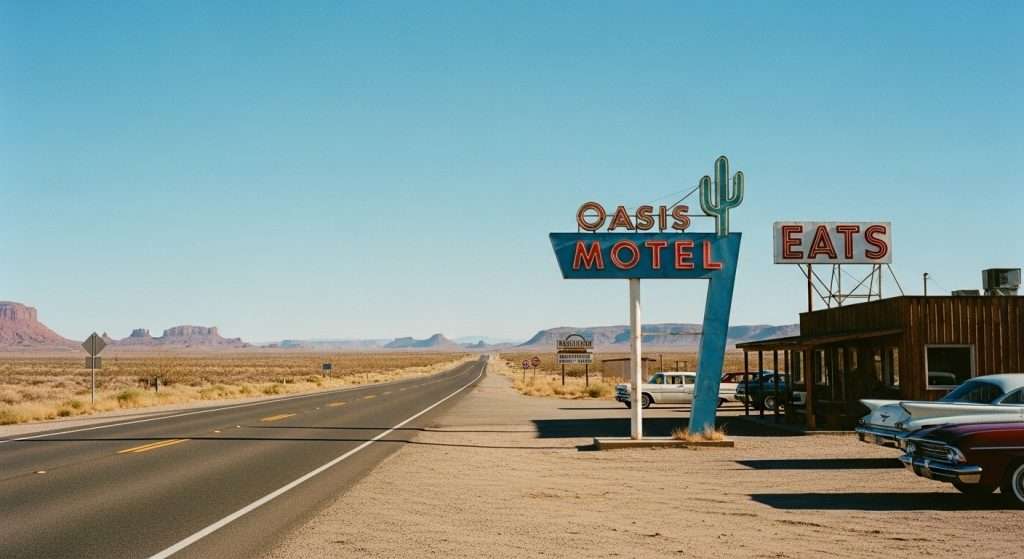
The Historic Highway: 2,448 Miles of American Dreams
Route 66 isn’t just a road trip — it’s a pilgrimage through American mythology. Stretching from Chicago to Santa Monica (1926-1985), the “Mother Road” represents freedom, westward expansion, and the great American road trip itself. While superseded by modern interstates, Route 66 survives in fragments, preserved by passionate communities keeping the spirit alive.
Why Route 66 Defines American Road Trip Culture:
This is where American car culture was born. Where families headed west during the Dust Bowl (read Steinbeck’s “The Grapes of Wrath”). Where post-war prosperity met the open road. Where diners, motels, and gas stations developed the aesthetic that still defines “Americana.” Driving Route 66 today is part road trip, part time travel, part treasure hunt for surviving pieces of mid-century America.
The Route: State by State Highlights
Illinois (Chicago to St. Louis): Start at the Route 66 Begin Sign on Adams Street in Chicago. Don’t miss Lou Mitchell’s Restaurant (breakfast institution since 1923), the Gemini Giant (towering spaceman statue in Wilmington), and countless preserved segments of original road.
Missouri: Cross the Chain of Rocks Bridge into St. Louis. Visit the Gateway Arch, then head southwest through Lebanon (Route 66 Museum), Springfield (birthplace of Route 66), and numerous preserved Burma-Shave signs.
Kansas: Only 13 miles! But don’t skip it. The Rainbow Bridge in Riverton and vintage Cars on the Route gallery in Galena make it worthwhile.
Oklahoma: Route 66’s heart. Tulsa’s Cyrus Avery Centennial Plaza, Arcadia’s Round Barn, Oklahoma City’s Route 66 Museum, and the Blue Whale of Catoosa represent Oklahoma’s Route 66 preservation passion.
Texas: Wide open Panhandle driving. Cadillac Ranch (Amarillo) — spray-paint-covered Cadillacs buried nose-first — is Route 66’s most interactive art installation. The Big Texan Steak Ranch challenges you with a free 72-ounce steak (if you finish in under an hour).
New Mexico: Perhaps the most scenic section. Tucumcari maintains numerous vintage neon signs. Santa Rosa’s Route 66 Auto Museum impresses car enthusiasts. Santa Fe (slight detour) offers cultural richness. Albuquerque preserves the longest continuous Route 66 stretch and inspired Breaking Bad’s locations.
Arizona: The grand finale before California. Cross the Petrified Forest National Park, explore Winslow (“standin’ on a corner in Winslow, Arizona…”), visit Meteor Crater, wander through Williams (last town bypassed by I-40), and experience Seligman (inspiration for Cars movie’s Radiator Springs).
California: The final push. Navigate Needles, cross the Mojave Desert, pass through Barstow, and arrive in Santa Monica where Route 66 officially ends at the pier. The “End of the Trail” sign marks your accomplishment.
Planning Your Route 66 Adventure:
Duration: Minimum 2 weeks to truly experience Route 66. Less feels rushed; more allows deeper exploration and detours.
Resources:
- Download EZ66 Guide app (offline maps of every segment)
- Join Route 66 Facebook groups for real-time updates
- Buy the comprehensive “Route 66 Adventure Handbook”
Accommodation: Stay in surviving vintage motels when possible:
- Blue Swallow Motel (Tucumcari, NM)
- Wigwam Motel (Holbrook, AZ)
- Munger Moss Motel (Lebanon, MO)
Budget Reality:
- Accommodation: $60-120/night (vintage motels to modern chains)
- Meals: $30-50/day (diners and local restaurants)
- Fuel: $400-600 total depending on vehicle
- Activities: $50-100 (museums, attractions)
- Total: 2 weeks costs $2,000-3,500 per person
Route 66 Essential Tips:
- Original road requires navigation — interstates replaced most sections
- Some segments are gravel or no longer drivable
- Many businesses are seasonal or have irregular hours
- Talk to locals — they share the best stories
- Buy souvenirs at small shops supporting preservation efforts
8. South Island, New Zealand: Middle-earth’s Greatest Road Trip
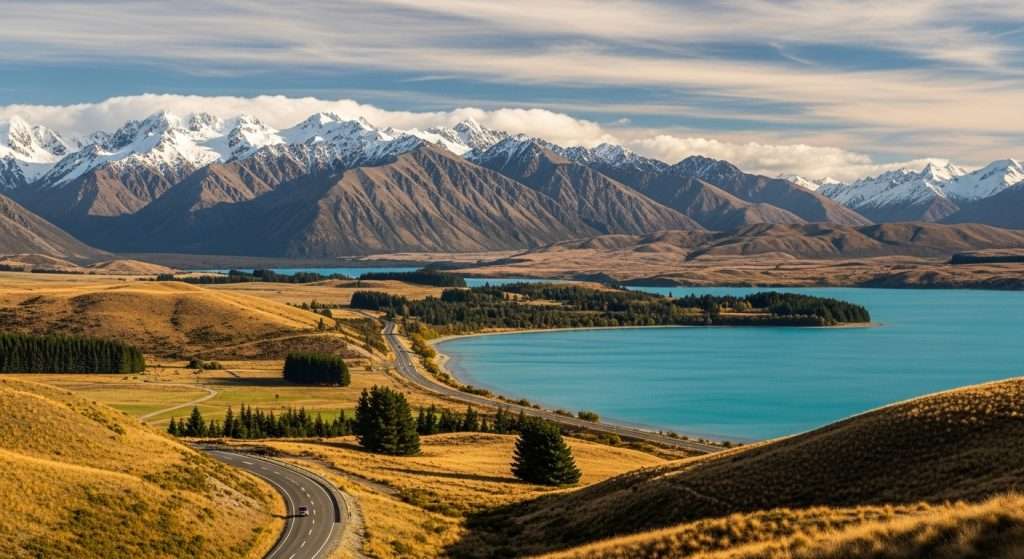
The Journey: Endless Dramatic Landscapes
New Zealand’s South Island packs more natural drama per square kilometer than seems physically possible. Fiords carved by ice ages, turquoise lakes fed by glaciers, snow-capped peaks, rainforests, vineyards, and adventure capital Queenstown — this is where Earth shows off.
Why New Zealand’s South Island Ranks Among World’s Best Road Trips:
Peter Jackson chose this location for Middle-earth for obvious reasons. The landscapes don’t look real. Every turn reveals another scene worthy of a fantasy film poster. But beyond beauty, the South Island combines outdoor adventure (seriously, everything is available here), excellent food and wine, and Kiwi hospitality that makes you want to relocate permanently.
The Ultimate South Island Road Trip Route:
Christchurch: Garden City rebuilt beautifully after 2011 earthquakes. Don’t rush through — the street art, botanic gardens, and innovative container mall surprise visitors.
Lake Tekapo: First taste of South Island’s lake beauty. Visit the Church of the Good Shepherd (stone church with mountain-and-lake views through its altar window). The Aoraki Mackenzie International Dark Sky Reserve makes this one of Earth’s best stargazing locations — the Milky Way appears in three dimensions.
Mount Cook/Aoraki: New Zealand’s highest peak dominates the skyline. The Hooker Valley Track (3-hour return hike) leads to a glacial lake with icebergs. Scenic flights over glaciers provide perspective on the scale.
Queenstown: Adventure capital of the world. Bungee jumping was invented here. You can also skydive, jet boat, canyon swing, paraglide, white-water raft, or simply sip wine overlooking Lake Wakatipu. The Skyline Gondola offers panoramic views, and Fergburger serves burgers worth the 30-minute queue.
Glenorchy: 45-minute drive from Queenstown through possibly the world’s most beautiful road. Mountains reflected perfectly in Lake Wakatipu, Paradise Valley’s Lord of the Rings locations, and Dart River jet boat adventures make Glenorchy essential.
Milford Sound: The crown jewel. Rudyard Kipling called it the “Eighth Wonder of the World.” The road journey through Homer Tunnel reveals why New Zealand inspires such hyperbole. Cruise the fiord to see waterfalls cascading hundreds of meters, seal colonies, and (if lucky) dolphins and penguins. Rain makes it more magical — waterfalls multiply into the hundreds.
Te Anau: Gateway to Fiordland. The glowworm caves offer underground boat tours past thousands of bioluminescent larvae creating constellations on cave ceilings.
Wanaka: Queenstown’s quieter, equally beautiful sibling. That Wanaka Tree (lone tree in the lake) is Instagram famous. Roy’s Peak Track provides views that break rating scales but requires serious hiking fitness (5-6 hours, steep).
Franz Josef and Fox Glaciers: Rare temperate rainforest glaciers. You can hike on them with crampons (guided tours only). The contrast of green rainforest and blue ice feels impossible.
West Coast: Drive the wild western shore where Tasman Sea meets ancient forests. Hokitika offers greenstone (jade) workshops, and Punakaiki’s Pancake Rocks stack limestone in geological impossibility.
Marlborough Sounds: The top of the South Island rewards with calm waters, pristine bays, and world-class Marlborough wine region. Sauvignon Blanc originated here — taste it at the source.
Planning Your South Island Adventure:
Duration: Minimum 10-14 days. Three weeks allows proper exploration without exhausting yourself.
Route Options:
- Full loop: Clockwise from Christchurch (2-3 weeks)
- West Coast focus: Christchurch-Queenstown-West Coast-Christchurch (10-14 days)
- Highlights only: Christchurch-Queenstown-Milford Sound-Christchurch (7-10 days)
Best Time to Visit:
- December-February: Summer, warmest weather, longest days, most crowded
- March-May: Autumn colors, fewer tourists, still good weather
- June-August: Winter = skiing season, snow-capped beauty, some roads close
- September-November: Spring wildflowers, emerging weather, shoulder season prices
Budget Breakdown:
- Campervan Rental: $80-150/day (most popular option, includes accommodation)
- Accommodation: $30-60/night (hostels), $100-200/night (hotels)
- Meals: $40-70/day per person
- Activities: $50-200 per activity (Milford cruise, glacier hike, bungee)
- Fuel: $300-500 total
- Total: $150-250/day per person (mid-range)
Essential New Zealand Road Trip Tips:
- Book Milford Sound accommodation/tours months ahead
- Campervans require planning (freedom camping restrictions increased)
- Drive on the LEFT side of the road (major adjustment for Americans)
- Roads are narrow and winding — allow extra travel time
- Weather changes rapidly — pack layers
- Download offline maps — cell coverage is spotty
- Respect conservation land — New Zealand takes nature seriously
9. The Coastal Route, Norway: Fjords, Mountains, and Arctic Beauty
The Journey: Multiple Spectacular Routes Through Norse Mythology
Norway doesn’t have one coastal road trip — it has several legendary routes collectively called the Norwegian Scenic Routes (18 designated routes totaling 2,000+ kilometers). Each showcases different aspects of Norway’s impossible beauty: knife-edge fjords, Arctic tundra, fishing villages clinging to cliffsides, and mountains that rise straight from the sea.
Why Norway’s Coastal Routes Define Scenic Driving:
Norwegian landscapes inspire awe, not just admiration. These aren’t pretty views — they’re primal, powerful scenes that make you feel small and alive simultaneously. Add to that innovative rest stops designed by world-class architects (seriously, even the viewpoints are art installations), and you have road trips that blend nature and human creativity perfectly.
The Atlantic Ocean Road: Norway’s Most Famous Drive
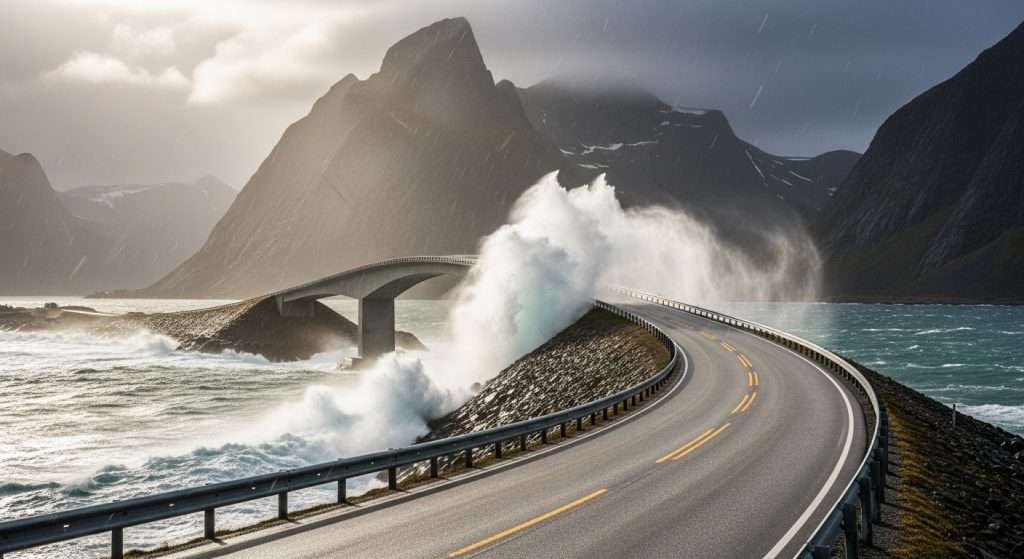
The Atlanterhavsveien (Atlantic Ocean Road) is Norway’s most celebrated route — and one of the world’s most dramatic. This 8.3-kilometer section between Kristiansund and Molde leaps across islands on a series of bridges that seem to defy physics.
What Makes It Extraordinary:
- Eight bridges connect islands
- Storseisundet Bridge appears to end at the sky (optical illusion)
- Atlantic storms crash over the road (seasonal thrill)
- Architectural viewpoints jut over the ocean
- Possible to spot whales and seals
Other Essential Norwegian Coastal Routes:
Trollstigen (Troll’s Ladder): The most dramatic mountain road in Norway zigzags up 11 hairpin turns through waterfalls. The engineering required building this in the 1930s staggers the imagination. Open May-October only.
Geirangerfjord: UNESCO World Heritage fjord accessible via serpentine roads with viewpoints at Dalsnibba and Flydalsjuvet. The Seven Sisters waterfall and abandoned mountain farms accessed only by boat or steep trails add mysterious beauty.
Lofoten Islands: Arctic archipelago where mountains rise directly from the sea. Red fishing cabins (rorbuer) dot shorelines, Northern Lights dance in winter, and midnight sun illuminates summer. The E10 highway connecting the islands ranks among Europe’s most scenic drives.
North Cape (Nordkapp): Drive to Europe’s northernmost point (accessible by road). The 71° North location offers midnight sun (May-July) and polar night (November-January). The journey through Arctic tundra feels like driving to the edge of the world.
Planning Your Norwegian Coastal Road Trip:
Duration:
- Atlantic Ocean Road: Day trip or overnight
- Full coastal exploration: 2-3 weeks minimum
Best Time to Visit:
- June-August: Midnight sun, all roads open, warmest weather (15-20°C), peak prices
- September: Northern Lights begin, autumn colors, fewer tourists
- October-April: Northern Lights peak, snow-covered beauty, many routes closed
- May: Waterfalls at peak flow from snowmelt, shoulder season pricing
Budget Reality: Norway isn’t cheap. It rivals Switzerland for expense.
- Accommodation: $150-300/night (budget to mid-range)
- Meals: $60-100/day per person (groceries help manage costs)
- Fuel: Premium price ($8-10/gallon equivalent)
- Tolls: Automatic system charges rental car
- Activities: $50-150 (fjord cruises, cable cars)
- Total: $250-400/day per person
Norwegian Road Trip Essentials:
- Book accommodations months ahead (limited options in remote areas)
- Check road opening dates (mountain passes close October-May)
- Fuel up regularly — stations are sparse in remote areas
- Headlights required 24/7 by law
- Speed limits are strictly enforced (cameras everywhere)
- Pack layers — weather changes instantly
- Download offline maps — cell coverage varies
Driving Challenges:
- Narrow roads: Single lane with passing places common
- Tunnels: Some are unlit, rough-carved through mountains
- Weather: Sudden changes, especially on exposed coastal sections
- Wildlife: Reindeer, moose, sheep wander onto roads
10. The Wild Atlantic Way, Ireland: Europe’s Longest Coastal Route
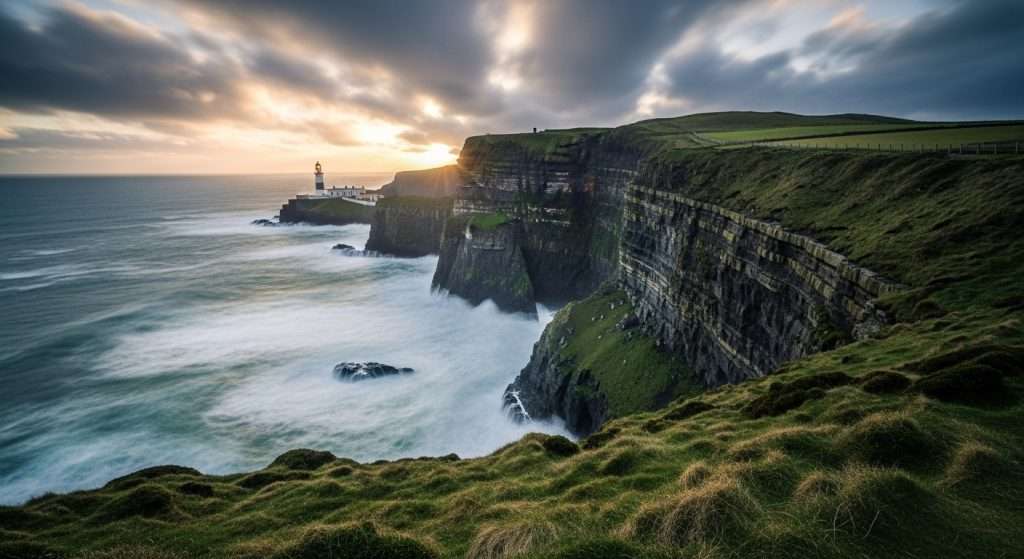
The Journey: 2,500 Kilometers of Raw Irish Beauty
The Wild Atlantic Way traces Ireland’s entire western coastline from County Donegal in the north to County Cork in the south. This is Ireland at its wildest, most authentic, most breathtaking. Where the Atlantic pounds ancient cliffs, where Celtic history lives in stone circles and medieval ruins, where traditional Irish culture survives in Gaeltacht (Irish-speaking) regions, and where every pub promises excellent music and even better conversation.
Why the Wild Atlantic Way Is Europe’s Greatest Coastal Drive:
This isn’t manicured Mediterranean beauty — it’s raw, powerful, edge-of-Europe drama. The Atlantic shaped everything: the cliffs, the culture, the character of the people. The Wild Atlantic Way connects it all through Ireland’s most spectacular landscapes, charming villages, and genuine experiences far from tourist crowds.
Regional Highlights Along the Route:
Donegal (The Northern Headlands): Start at Malin Head (Ireland’s northernmost point) where Wild Atlantic weather hits hardest. The Slieve League Cliffs (601 meters) rival the Cliffs of Moher with fraction of the crowds. Glenveagh National Park offers castle tours and red deer populations in unspoiled wilderness.
Mayo & Sligo (The Surfing Coastline): Achill Island connects by bridge and offers dramatic scenery and excellent surfing. Downpatrick Head features sea stacks and the haunting blowhole. Sligo was W.B. Yeats’ inspiration — Benbulben Mountain and Mullaghmore reveal why Ireland’s greatest poet chose this landscape.
Galway (The Cultural Heart): Galway City pulses with traditional music, colorful shopfronts, and infectious energy. The Connemara region west of the city offers mountains, lakes, and the Sky Road loop drive with panoramic coastal views. Kylemore Abbey provides Gothic architecture reflected in tranquil lakes.
Clare (The Cliffs): The Cliffs of Moher tower 214 meters above the Atlantic. Yes, they’re touristy. Yes, they’re worth it. Visit early morning or late evening for fewer crowds and better light. The Burren inland offers lunar limestone landscapes and ancient dolmens. Doolin village is Ireland’s traditional music capital.
Kerry (The Peninsulas): Beyond the Ring of Kerry, explore the Dingle Peninsula — arguably more beautiful and definitely less crowded. The Slea Head Drive passes ancient beehive huts, dramatic cliffs, and Ireland’s westernmost point. Inch Beach stretches for kilometers of wild, windswept beauty.
Cork (The Southern Finish): Mizen Head marks Ireland’s southwestern extreme. The Sheep’s Head Peninsula and Beara Peninsula offer Wild Atlantic Way beauty without the tourist infrastructure. Bantry and Kinsale provide culture, cuisine, and colorful harbor-town charm.
Planning the Wild Atlantic Way:
Duration Options:
- Full route: 3-4 weeks minimum to appreciate it properly
- Northern section: 1-2 weeks (Donegal to Galway)
- Southern section: 1-2 weeks (Galway to Cork)
- Highlights only: 10-14 days hitting major sites
Best Time to Drive:
- May-June: Longer days, wildflowers, fewer crowds than July-August
- September: Excellent weather often, harvest season, thinning tourists
- July-August: Warmest, busiest, most reliable weather
- October-April: Dramatic storms (thrilling but potentially dangerous), many businesses closed
Budget Breakdown:
- Accommodation: $80-150/night (excellent B&Bs throughout)
- Meals: $40-60/day per person
- Fuel: $200-300 total for full route
- Activities: $30-80 (castle visits, boat tours, music sessions)
- Total: $120-200/day per person
Essential Wild Atlantic Way Tips:
- Book ahead in peak season (July-August)
- Pack for all weather in one day (seriously)
- Download offline maps — cell service disappears regularly
- Stop for music sessions in pubs (usually starts 9-10 PM)
- Learn basic Irish phrases (appreciated in Gaeltacht regions)
- Allow flexibility — best discoveries happen on detours
- Respect the Atlantic — waves are dangerous, winds are powerful
Road Trip Planning Essentials: Making Your Dream Drive Reality
Universal Tips for the Best Road Trips Worldwide
Before You Go:
1. Vehicle Preparation:
- Research rental requirements (international license, age restrictions, deposits)
- Understand insurance options (collision damage waiver essential)
- Check vehicle size appropriately (bigger isn’t better on narrow roads)
- Inspect thoroughly before driving away (document existing damage)
- Know fuel type (diesel vs. petrol confusion costs money)
2. Route Planning:
- Use multiple resources (apps, guidebooks, local advice)
- Download offline maps (Google Maps, Maps.me, Gaia GPS)
- Identify fuel stops (critical on remote routes)
- Book accommodations ahead for popular areas
- Build flexibility (rigidity kills road trip joy)
- Calculate realistic daily distances (winding roads slow progress)
3. Essential Documents:
- Valid driver’s license (international permit where required)
- Passport/ID
- Rental agreement and insurance documents
- Emergency contact numbers
- Accommodation confirmations
- Digital and physical copies of everything
4. Packing Wisdom:
- Car Emergency Kit: First aid, flashlight, basic tools, jumper cables, spare tire verification
- Navigation: Phone mount, car charger, portable battery
- Comfort: Snacks, water, sunglasses, sunscreen, wet wipes
- Entertainment: Curated playlist, podcasts, audiobooks
- Weather Gear: Layers appropriate for destination climate
- Camera: Phone plus dedicated camera for best quality
On the Road:
1. Safety First:
- Never drive fatigued (pull over, nap, switch drivers)
- Respect local driving laws (speed limits, right/left side)
- Wear seatbelts always (passengers too)
- Avoid driving at night on unfamiliar roads
- Watch for wildlife (dawn/dusk especially risky)
- Keep doors locked in sketchy areas
- Share your location with someone regularly
2. Budget Management:
- Fill up at cheaper stations (research apps)
- Pack snacks (gas station prices add up)
- Use credit cards with no foreign transaction fees
- Withdraw local currency from ATMs (better rates than exchange booths)
- Eat local (street food and markets beat tourist restaurants)
- Free activities (hiking, beaches, viewpoints) balance paid attractions
3. Photographic Opportunities:
- Golden hours (first hour after sunrise, last before sunset) provide best light
- Pull over safely (don’t photograph while driving)
- Include foreground interest (not just vast landscapes)
- Take photos WITH people occasionally (not just of scenery)
- Get off the main roads (best shots require exploration)
- Respect private property and local customs
4. Environmental Responsibility:
- Stay on marked roads and trails
- Pack out all trash (leave no trace)
- Use refillable water bottles
- Support local businesses
- Respect wildlife (observe from distance, don’t feed)
- Follow fire regulations (wildfires devastating)
5. Cultural Sensitivity:
- Learn basic phrases in local language
- Respect dress codes (temples, conservative areas)
- Ask permission before photographing people
- Tip appropriately (research local customs)
- Support ethical tourism operations
- Be patient with different paces and customs
Choosing Your Perfect Road Trip
For First-Time Road Trippers:
- Great Ocean Road, Australia: Easy driving, excellent infrastructure, English-speaking
- Garden Route, South Africa: Manageable distance, variety, affordable
For Adventure Seekers:
- Iceland Ring Road: Dramatic landscapes, outdoor activities, wilderness
- New Zealand South Island: Adventure capital with stunning scenery
For Foodies:
- Amalfi Coast, Italy: Culinary paradise with beautiful coastal driving
- Wild Atlantic Way, Ireland: Fresh seafood, traditional Irish cuisine, pub culture
For History Buffs:
- Route 66, USA: American history brought to life
- Ring of Kerry, Ireland: Ancient Celtic sites and castles
For Photography:
- Pacific Coast Highway, USA: Iconic shots around every corner
- Norway Coastal Routes: Dramatic fjords and mountains
For Budget Travelers:
- Thailand (bonus: add to your solo travel!): Extremely affordable
- Garden Route, South Africa: Excellent value for money
For Luxury Seekers:
- Amalfi Coast, Italy: High-end hotels and dining
- Norway: Expensive but worth every crown
Final Thoughts: The Road Awaits
The best road trips around the world share something beyond beautiful scenery: they offer freedom. Freedom to pause when inspiration strikes. Freedom to deviate from plans. Freedom to discover that perfect beach, that hidden restaurant, that viewpoint nobody mentioned in any guidebook.
These 10 scenic drives represent different flavors of that freedom. Australia’s surf-carved coastline teaches patience as waves sculpt limestone over millennia. Iceland’s volcanic landscapes remind us Earth is still forming. California’s Highway 1 celebrates the joy of cruising with good music and better views. Italy’s Amalfi Coast proves beauty can be almost overwhelming. South Africa’s Garden Route showcases nature’s diversity. Ireland’s rings and ways connect you to ancient Celtic magic. Route 66 celebrates American optimism and nostalgia. New Zealand’s South Island delivers Middle-earth grandeur. Norway’s fjords demonstrate nature’s power. And Ireland’s Wild Atlantic Way shows what happens when ocean meets land for thousands of years.
But here’s the truth every experienced road tripper knows: the best road trip isn’t necessarily the most famous one. It’s the one you take. The one where you laugh at wrong turns, make friends with locals, eat amazing food in unexpected places, and return home changed.
So choose your route. Load your playlist. Check your oil. And remember the journey matters more than the destination. That cliché exists because it’s profoundly true.
The road is calling. Time to answer.
Safe travels, and may every kilometer bring discovery.
For more travel inspiration, check out this detailed France itinerary a great example of how to explore Europe without overspending.