
Introduction: The Spirit of Buddhist Travel
Buddhist travel is more than a vacation, it’s a spiritual journey rooted in reflection, simplicity, and awareness. Across Asia, thousands seek inner peace by visiting sites tied to the life and teachings of the Buddha. These are not ordinary destinations; they are sacred spaces for renewal and mindfulness.
Why Choose Buddhist Travel?
Embarking on a Buddhist tour offers benefits beyond the physical. For many travelers, it becomes a deeply moving experience. Here’s why:
- Spiritual depth – Travel with meaning, not just motion
- Cultural richness – Explore ancient rituals, architecture, and beliefs
- Personal transformation – Disconnect from chaos and reconnect with self
- Community connection – Meet monks, pilgrims, and fellow seekers
What You’ll Discover in This Guide
In this blog post, we’ll cover nine must-visit destinations perfect for your next Buddhist holiday. Each location is:
| Feature | Benefit |
|---|---|
| Spiritually significant | Sites tied to the Buddha’s life and teachings |
| Serene and scenic | Natural beauty and tranquil environments |
| Culturally immersive | Rich in tradition, festivals, and temple life |
These worship places of Buddhism serve as spaces for insight and contemplation. Whether you’re seeking peace, learning, or simply a break from the fast-paced world, this list can guide your path.
Let’s begin your journey through the most serene and sacred places in Asia. First stop: Bodh Gaya, India, where enlightenment began.
1. Bodh Gaya, India – The Root of Enlightenment
Bodh Gaya stands as the most sacred destination in Buddhist travel. It is where Siddhartha Gautama attained enlightenment under the Bodhi Tree, becoming the Buddha. For those on a Buddhist pilgrimage, this site marks both a spiritual beginning and a profound reminder of mindfulness.
Highlights of Bodh Gaya
Located in the Indian state of Bihar, Bodh Gaya draws monks, scholars, and seekers year-round. The atmosphere is quiet yet powerful, infused with centuries of devotion.

Key Sites to Visit:
- Mahabodhi Temple – A UNESCO World Heritage Site and a major worship place of Buddhism
- Bodhi Tree – A direct descendant of the tree under which the Buddha meditated
- Vajrasana – The “diamond throne” where enlightenment is said to have occurred
- Monasteries – Built by countries like Japan, Thailand, Bhutan, and Sri Lanka
Useful Travel Tips
| Tip | Details |
|---|---|
| Best time to visit | October to March (cool and comfortable weather) |
| Entry fee | Free (small charge for camera use at Mahabodhi Temple) |
| Meditation opportunities | Available daily in temple gardens and monasteries |
| Local experiences | Join chanting sessions or speak with resident monks |
Why It Matters
Because Bodh Gaya is deeply rooted in Buddhist history, visiting allows you to reflect on the core teachings of compassion, impermanence, and awakening. As you walk barefoot among pilgrims or sit silently in meditation, you begin to understand why this place transforms so many.
Next, we journey north to Lumbini, Nepal, the sacred birthplace of the Buddha.
2. Lumbini, Nepal – Birthplace of the Buddha
Located in the tranquil plains of southern Nepal, Lumbini is one of the most revered sites in Buddhist travel. It is believed to be the birthplace of Prince Siddhartha Gautama, who later became the Buddha. For those undertaking a Buddhist pilgrimage, Lumbini is both the literal and symbolic start of the spiritual path.
Major Attractions in Lumbini
Lumbini’s peaceful environment and sacred landmarks create an atmosphere perfect for reflection and learning. Although it is quiet, the energy here is unmistakably sacred.

Top Places to Explore:
- Maya Devi Temple – Built around the exact spot of the Buddha’s birth
- Ashokan Pillar – An ancient sandstone pillar inscribed by Emperor Ashoka
- Sacred Garden – A meditation zone surrounded by ancient ruins and ponds
- Monastic Zone – Home to over 25 international monasteries built in distinct styles
Planning Your Buddhist Tour to Lumbini
| Aspect | Details |
|---|---|
| Best time to visit | October to February (cool and dry weather) |
| Entry requirements | No visa required for Indian citizens; visa-on-arrival for most |
| Meditation centers | Vipassana sessions available for tourists and pilgrims |
| Accessibility | Closest airport: Gautam Buddha International Airport |
A Place of Peace and Beginnings
Although Lumbini is smaller and less crowded than other sites, it holds immense emotional weight for those on a Buddhist tour. The simplicity of its shrines and the quiet dignity of its gardens make it an ideal place to begin or deepen, your spiritual journey.
Next, let’s explore the glowing marvel of Shwedagon Pagoda in Myanmar, where spirituality shines, literally.
3. Shwedagon Pagoda, Myanmar – A Golden Legacy
Standing high above Yangon’s skyline, the Shwedagon Pagoda is a luminous jewel of Buddhist travel. Believed to be over 2,500 years old, this golden stupa is one of the oldest and most sacred worship places of Buddhism in the world. Pilgrims and travelers alike are drawn to its radiant beauty and spiritual presence.
What Makes Shwedagon Unique?
As you step into the pagoda grounds, your senses awaken. The scent of incense fills the air. Candles flicker beside intricate statues. Every corner of this vast complex offers a new experience.

Key Highlights:
- The Main Stupa – Covered in over 60 tons of gold and topped with thousands of diamonds
- Eight Planetary Posts – Used for daily worship based on one’s day of birth
- Bells and Shrines – Dozens of pavilions for chanting and meditation
- Panoramic views – Especially captivating at sunset when the pagoda glows
Tips for Your Buddhist Holiday in Myanmar
| Travel Tip | Details |
|---|---|
| Best time to visit | November to February (cooler, less humid) |
| Entry fee | Approx. $5 USD; dress modestly (shoulders and knees covered) |
| Local etiquette | Walk clockwise, remove shoes, remain silent in shrine areas |
| Special activities | Join candle-lighting ceremonies during full moon nights |
A Sacred Light in the Heart of Myanmar
The Shwedagon Pagoda isn’t just a place of worship, it’s a symbol of resilience, community, and peace. For anyone on a Buddhist holiday, it offers both cultural richness and spiritual clarity. The glow of its spire lingers in memory long after you leave.
Now, let’s head to Indonesia for a spiritual encounter with stone, at Borobudur, the world’s largest Buddhist temple.
4. Borobudur, Indonesia – A Monument to Meditation
Rising from the misty jungles of Central Java, Borobudur is a masterwork of sacred architecture and a cornerstone of Buddhist travel. Built in the 9th century, this massive stone structure is not only the world’s largest Buddhist temple but also a deeply symbolic representation of the path to enlightenment.
For those on a Buddhist pilgrimage, Borobudur offers more than just history, it offers a walking meditation through spiritual progression.
What to See at Borobudur
Each level of the monument reflects a stage of spiritual development, encouraging mindfulness as you ascend.

Spiritual Highlights:
- Kamadhatu (Base level) – Depicts human desires and worldly attachments
- Rupadhatu (Middle levels) – Illustrates detachment and spiritual discipline
- Arupadhatu (Top level) – Represents the realm of formlessness and enlightenment
- 72 Bell-shaped stupas – Each housing a Buddha statue facing outward
Making the Most of Your Buddhist Holiday
| Travel Tip | Details |
|---|---|
| Best time to visit | Sunrise (early entry available via special access) |
| Entry fee | Approx. $25 USD for foreign tourists |
| Recommended attire | Modest clothing; sarongs available at the entrance |
| Guided tours available? | Yes – highly recommended for deeper understanding |
A Temple Built for Inner Journey
Walking up Borobudur is a meditation in motion. Each step invites you to leave behind worldly distractions. Many who visit describe a deep sense of calm at the summit, where silence meets the open sky.
Next, we travel to vibrant Thailand, where peace exists in the heart of a bustling city, at Wat Pho in Bangkok.
5. Wat Pho, Thailand – Harmony in the Heart of Bangkok
Not all sacred spaces are hidden in the mountains or tucked away in silence. Wat Pho, located in the center of bustling Bangkok, proves that serenity can thrive in the heart of a city. As one of Thailand’s oldest and largest temples, it is a beloved stop for anyone on a Buddhist travel journey.
Despite the lively surroundings, Wat Pho offers an oasis of calm and reflection, a reminder that peace is possible anywhere.

Why Wat Pho is a Must on Your Buddhist Holiday
This historic complex isn’t just one of the worship places of Buddhism; it’s also a cultural landmark and center of learning.
What to Explore:
- The Reclining Buddha – A 46-meter-long gold-plated statue symbolizing the Buddha’s entry into Nirvana
- 108 Bronze Bowls – Dropping coins in them brings good luck and reminds one of the 108 positive actions and symbols in Buddhism
- Meditation halls – Open to visitors for quiet reflection and group sessions
- Traditional Thai massage school – A blend of spiritual and physical wellness
Quick Guide for Visiting Wat Pho
| Feature | Details |
|---|---|
| Best time to visit | Morning or late afternoon to avoid crowds |
| Entrance fee | Approx. $6 USD |
| Dress code | Modest attire required; no sleeveless shirts or shorts |
| Bonus tip | Visit early to hear monks chanting at sunrise |
Where Stillness Meets Daily Life
Wat Pho reminds travelers that even in the busiest environments, spiritual practice can flourish. For those seeking balance during their Buddhist tour, this temple offers the perfect blend of tradition, energy, and introspection.
Next, we head to Sri Lanka, where a sacred relic lies at the heart of one of Buddhism’s most revered temples, The Temple of the Tooth in Kandy.
6. Temple of the Tooth, Sri Lanka – Sacred Relic and Cultural Heart
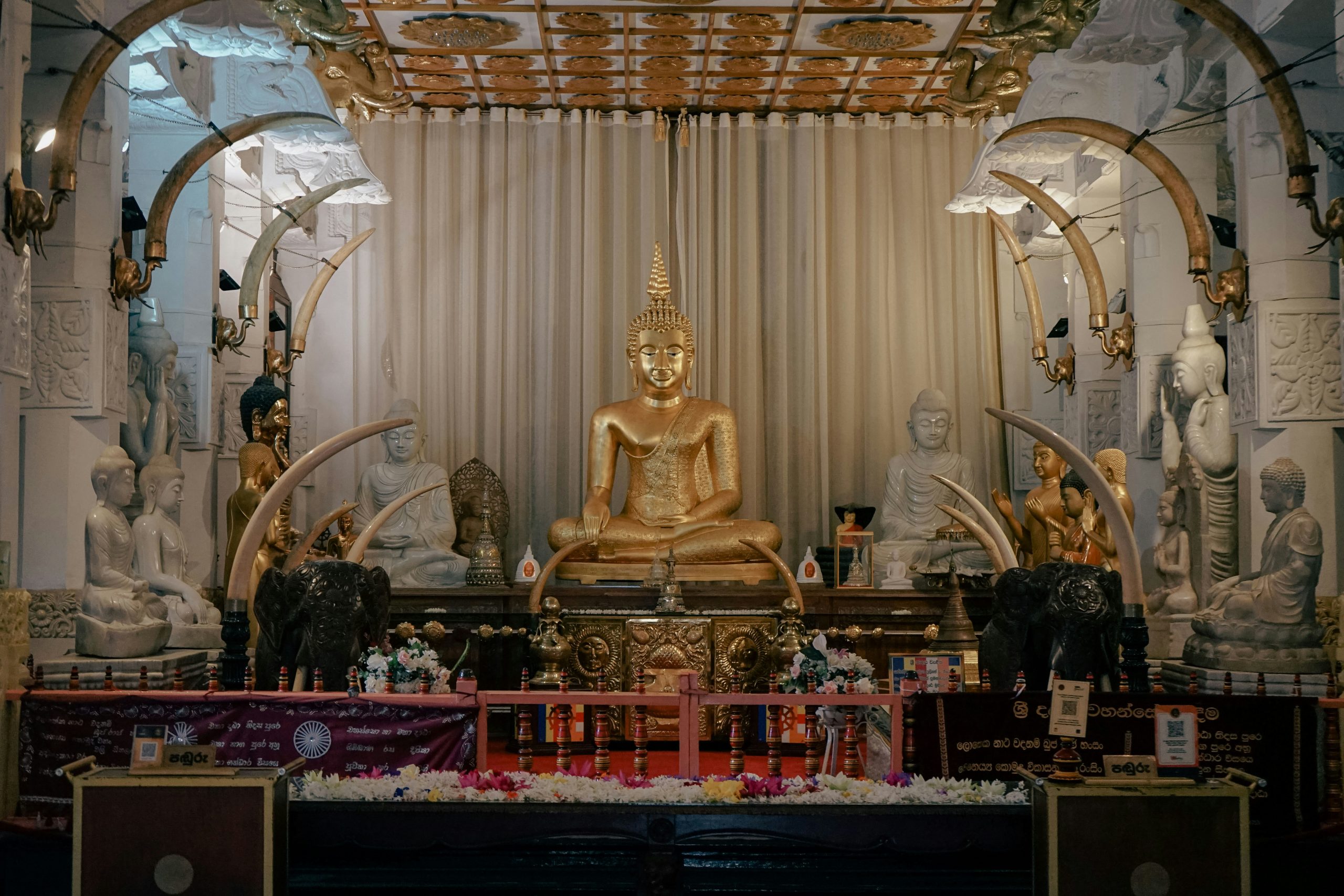
Nestled in the scenic hills of Kandy, the Temple of the Tooth is a revered site in Buddhist travel. Known locally as ”Sri Dalada Maligawa”, it houses what many believe to be the Buddha’s left canine tooth, a sacred relic of immense historical and spiritual value. For centuries, this temple has been a center of devotion, culture, and national pride.
Why Include Kandy in Your Buddhist Tour?
This temple is not just one of the worship places of Buddhism, it also plays a key role in Sri Lanka’s identity. Devotees from all over the world visit daily, while vibrant rituals and cultural practices continue year-round.

Must-See Features:
- Sacred Relic Chamber – The relic is protected in a golden casket inside the inner sanctum
- Daily puja rituals – Morning and evening offerings with traditional drumming
- Royal Palace complex – Historically linked to Sri Lanka’s kings who guarded the tooth
- Kandy Esala Perahera – A famous Buddhist festival held annually in July/August
Planning Your Visit to the Temple of the Tooth
| Tip | Details |
|---|---|
| Best time to visit | During puja times (dawn, mid-day, evening) |
| Entry fee | Approx. $6 USD for foreign visitors |
| Cultural note | Remove shoes, cover shoulders and legs |
| Festival period | Book months in advance for Esala Perahera celebrations |
A Living Link to the Buddha
The Temple of the Tooth offers both spiritual depth and cultural immersion. For anyone planning a Buddhist tour, visiting this temple provides a rare opportunity to witness living faith in action. The rhythms of drumbeats, chants, and floral offerings create a sacred ambiance that lingers long after you leave.
If you’re spending more time in the region, consider exploring the surrounding highlands. Here’s a helpful guide to 10 breathtaking places to visit in the Hill Country of Sri Lanka that pair perfectly with your spiritual journey.
Next, we explore China’s legendary Shaolin Temple, where spiritual stillness meets disciplined action.
7. Shaolin Temple, China – Where Mind Meets Motion
Unlike many quiet temples, Shaolin Temple offers a unique blend of spiritual focus and physical discipline. Located in Henan Province, China, it’s a pivotal stop for anyone interested in Buddhist travel, especially those who wish to understand the harmony between body and mind.
Famous as the birthplace of Zen Buddhism and Shaolin Kung Fu, the temple balances stillness with strength, making it a compelling stop on any Buddhist tour.

What to Explore at Shaolin Temple
This sacred site combines history, martial arts, and meditation into one transformative experience.
Key Attractions:
- Main Prayer Hall – A center of daily worship and meditation
- Pagoda Forest – Over 240 stone pagodas housing relics and ashes of monks
- Martial arts schools – Live demonstrations of Shaolin Kung Fu
- Bodhidharma Cave – Where the founder of Zen Buddhism is said to have meditated
Tips for Your Visit
| Travel Tip | Details |
|---|---|
| Best time to visit | Spring and fall (mild temperatures and fewer crowds) |
| Entry fee | Around $15 USD including Kung Fu shows |
| Clothing | Comfortable wear for walking and optional participation |
| Bonus activity | Join a half-day meditation or movement workshop |
Where Action Becomes Meditation
Shaolin Temple redefines what it means to be on a Buddhist holiday. While many worship places of Buddhism invite silence, Shaolin encourages discipline, focus, and movement. The experience teaches that the path to inner peace can also begin through outer strength.
Up next, we head to a kingdom where happiness is a priority, Punakha Dzong in Bhutan, a spiritual and architectural masterpiece.
8. Punakha Dzong, Bhutan – Sacred Beauty by the River
Nestled at the confluence of the Mo and Pho rivers, Punakha Dzong is often called the most beautiful dzong in Bhutan, and for good reason. This majestic fortress monastery is a true highlight of Buddhist travel, offering breathtaking views, peaceful surroundings, and centuries of sacred tradition.
As both a spiritual center and administrative landmark, it remains one of the active worship places of Buddhism, used for ceremonies, festivals, and monastic education.

Key Features of Punakha Dzong
Punakha Dzong is more than just a beautiful building, it’s a spiritual hub wrapped in natural harmony. Each part of its design symbolizes Buddhist values of balance, impermanence, and wisdom.
Must-See Elements:
- Main Assembly Hall – Houses sacred texts and religious murals
- Bodhi Tree Courtyard – Offers shade and a place for meditation
- Sacred Relics – Contains remains of Bhutan’s most revered Buddhist masters
- Suspension Bridge – Offers panoramic views and a quiet walk over the river
Tips for a Meaningful Buddhist Holiday in Bhutan
| Tip | Details |
|---|---|
| Best time to visit | March to May (spring flowers) and October (festival season) |
| Entry requirements | Bhutan requires travel through approved tour operators |
| Dress code | Respectful attire (long sleeves and pants/skirt) |
| Cultural etiquette | Speak softly and always walk clockwise around temples |
Peace in Every Corner
Bhutan’s commitment to Gross National Happiness is reflected in places like Punakha Dzong. The energy here is calm, collected, and deeply spiritual. It’s an essential stop for anyone pursuing a Buddhist holiday that’s immersive, scenic, and soulful.
Next, we travel to South Korea, where serenity is carved in stone, at Seokguram Grotto, a UNESCO World Heritage site.
9. Seokguram Grotto, South Korea – Stone-Carved Serenity
Perched on the slopes of Mount Toham near Gyeongju, Seokguram Grotto is a hidden jewel of Buddhist travel in South Korea. This UNESCO World Heritage site blends natural beauty with masterful stone craftsmanship, offering a peaceful setting for those on a Buddhist pilgrimage.
Unlike massive temple complexes, Seokguram is modest in scale but monumental in meaning.
What Awaits Inside the Grotto
The grotto houses a granite statue of the seated Buddha, surrounded by delicately carved disciples and guardians. Every detail, from the soft curves of the robes to the calm expression of the Buddha, speaks of stillness and presence.
Main Highlights:
- Seated Buddha – A 3.5-meter statue symbolizing enlightenment and deep meditation
- Stone carvings – Intricate depictions of bodhisattvas, arhats, and celestial beings
- Mountain path – A tranquil trail that offers forest views and space for reflection
- Connected sites – Nearby Bulguksa Temple, another major worship place of Buddhism
Travel Tips for Visiting Seokguram
| Tip | Details |
|---|---|
| Best time to visit | Spring and autumn (clear skies, pleasant hiking conditions) |
| Entry fee | Approx. $4 USD |
| Accessibility | A short uphill walk from the parking area |
| Travel pairings | Combine with Bulguksa Temple for a complete day experience |
A Temple in Stone and Silence
While not as grand as some Buddhist landmarks, Seokguram offers a quiet, intimate space for inner exploration. Its calm energy and sacred setting make it a favorite among those seeking depth during their Buddhist travel experience.
Now that you’ve explored nine incredible destinations, let’s look at some practical tips to help you plan a meaningful and smooth Buddhist tour across Asia.
Tips for Planning Your Buddhist Tour in Asia
Planning a meaningful Buddhist tour involves more than booking flights and hotels. These journeys are about intention, awareness, and preparation. With the right approach, your Buddhist holiday can offer both spiritual depth and cultural enrichment.
Here are essential tips to ensure your journey is respectful, fulfilling, and well-organized.
General Travel Tips for Buddhist Travel
| Tip Category | Suggestions |
|---|---|
| Timing | Travel during cooler months (October–March) for comfort and local festivals |
| Attire | Dress modestly at temples (shoulders, arms, and legs covered) |
| Etiquette | Remove shoes before entering temples; speak softly; walk clockwise |
| Pacing | Avoid rushing, spend time meditating or observing rituals |
| Mindfulness | Practice silence or journaling between visits to absorb experiences |
What to Bring on a Buddhist Holiday
- Light, respectful clothing
- Notebook or journal for reflections
- Meditation shawl or cushion if planning to sit regularly
- Local currency for donations and small purchases
- Language guide or app for basic phrases (especially helpful in rural areas)
Consider These When Booking
- Choose destinations aligned with your intent (peace, study, reflection)
- Look for guided retreats or meditation programs if deeper immersion is desired
- Consider eco-conscious and locally-owned accommodations to align with Buddhist values
By planning with care, your Buddhist travel experience becomes more than a trip, it becomes a part of your personal path. Preparation allows for presence, and presence allows for transformation.
Conclusion: Walking the Path of Peace
Buddhist travel is not just about moving across borders, it’s about crossing into deeper awareness. From India’s Bodh Gaya to South Korea’s Seokguram Grotto, each destination you’ve explored carries centuries of devotion, silence, and spiritual wisdom.
These sacred places remind us that peace isn’t found in noise or rush. Instead, it lives in the stillness of a monastery courtyard, the rhythm of morning chants, or the soft breeze beneath a Bodhi tree. Whether you choose to embark on a full Buddhist tour or simply visit one of the worship places of Buddhism, each journey has the potential to awaken something within.
As you plan your next Buddhist holiday, remember: it’s not about checking destinations off a list. It’s about walking slowly, listening carefully, and allowing these spaces to speak to your spirit.
Ready to Begin Your Journey?
We hope this guide has inspired you to explore Asia through a more mindful and meaningful lens. Whether you’re a first-time traveler or a returning pilgrim, there is always more to discover on the path of peace.
We’d Love to Hear From You!
If you enjoyed this guide on Buddhist travel or have visited any of these serene destinations:
- Leave a comment below and share your favorite place or experience
- Share this post with a fellow traveler or spiritual seeker
- Engage with us by subscribing or following for more mindful travel content
Let’s keep the journey going, together.