Pick Unawatuna if you want calm water for swimming and easy day trips to Galle Fort. Pick Mirissa if you want whale watching, beach bars and the most going on in the evening. Pick Hiriketiya if you want to learn to surf in a small, laid-back bay and don't mind being further from everything.
All three sit on Sri Lanka's south coast and share the same season: roughly December to April, when the southwest monsoon has passed and the sea is calm. This guide compares them side by side, with facts checked in November 2026.
The three beach towns at a glance
| Unawatuna | Mirissa | Hiriketiya | |
|---|---|---|---|
| Best for | Swimming, snorkelling, Galle day trips | Whale watching, nightlife, sunsets | Beginner surfing, a slower pace |
| The beach | Sheltered, reef-protected crescent bay | Long, busy main beach with Parrot Rock at one end | Small horseshoe bay with a sandy beach break |
| Swimming | The calmest of the three in season | Good in calm spots in season; watch for waves and currents | Possible, but the bay is shared with surfers |
| Surf | Not a surf spot | Reef breaks for advanced surfers; learners go to nearby Weligama | Beginner beach break plus a reef point for experienced surfers |
| Vibe | Busy, developed, close to town | The liveliest beach town on the coast | Small, surf-and-café scene, getting busier |
| Location | About 5–6 km from Galle | Between Weligama and Matara | About 22 km east of Matara, next to Dikwella |
| Best months | December to April | December to April (whales from about November) | December to March for beginner waves |
When to go (it's the same for all three)
The south coast is a winter destination. From about December to April the sea is usually calm and the skies mostly dry. From May to September the southwest monsoon brings rain, big swell and strong currents, and some beach businesses close or slow down. If you're travelling in the European summer, the east coast around Trincomalee and Arugam Bay is the better beach choice. Our month-by-month guide explains how the two monsoons work.
Whatever the month, look for warning flags and ask locally before swimming at open beaches. Currents can be strong even on sunny days.
Unawatuna: the swimmer's choice
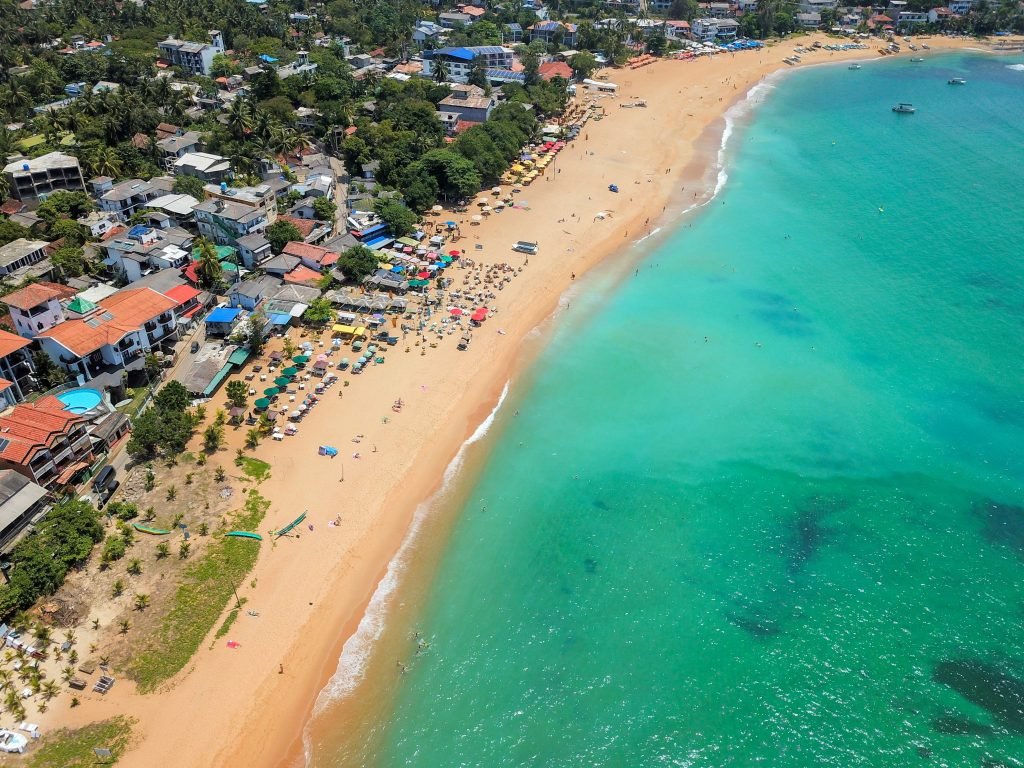
Unawatuna is a curved bay about 5–6 km from Galle, around 15–20 minutes by tuk-tuk. A reef shelters much of the bay, so in season the water is calm and shallow, which makes it the best of the three for a simple swim or for families with confident swimmers.
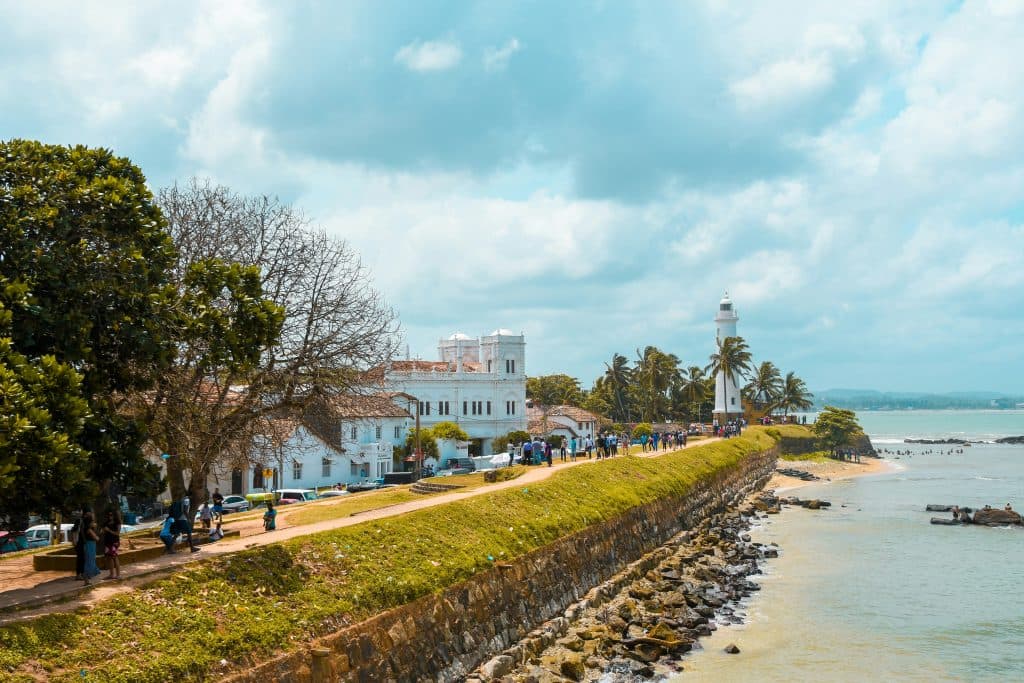
The trade-off is that it's the most built-up. Restaurants and guesthouses line the sand, and the beach is busy in peak season. Many people choose Unawatuna because it pairs so well with Galle: you can sleep by the sea and spend a day walking the ramparts of the fort. See our Galle Fort walking guide for that part of the trip.
Things to do around Unawatuna
- Jungle Beach: a small cove just west of Unawatuna below Rumassala hill. You can walk over the hill (about 2 km, hilly) or take a tuk-tuk. Snorkelling is possible when the sea is calm, but Lonely Planet notes the reef is degraded, so keep expectations modest.
- Japanese Peace Pagoda: a white stupa on the hillside above Jungle Beach, with views back across the bay towards Galle.
- Galle Fort: the UNESCO-listed walled town is a short tuk-tuk ride away and is free to enter.
- Dalawella: a little further east along the coast, known for its palm-tree rope swing. Expect a queue for photos mid-morning.
Choose Unawatuna if: you want swimmable water, lots of restaurant choice, and Galle on your doorstep. Skip it if: you want a quiet, undeveloped beach.
Mirissa: whales, sunsets and the most nightlife
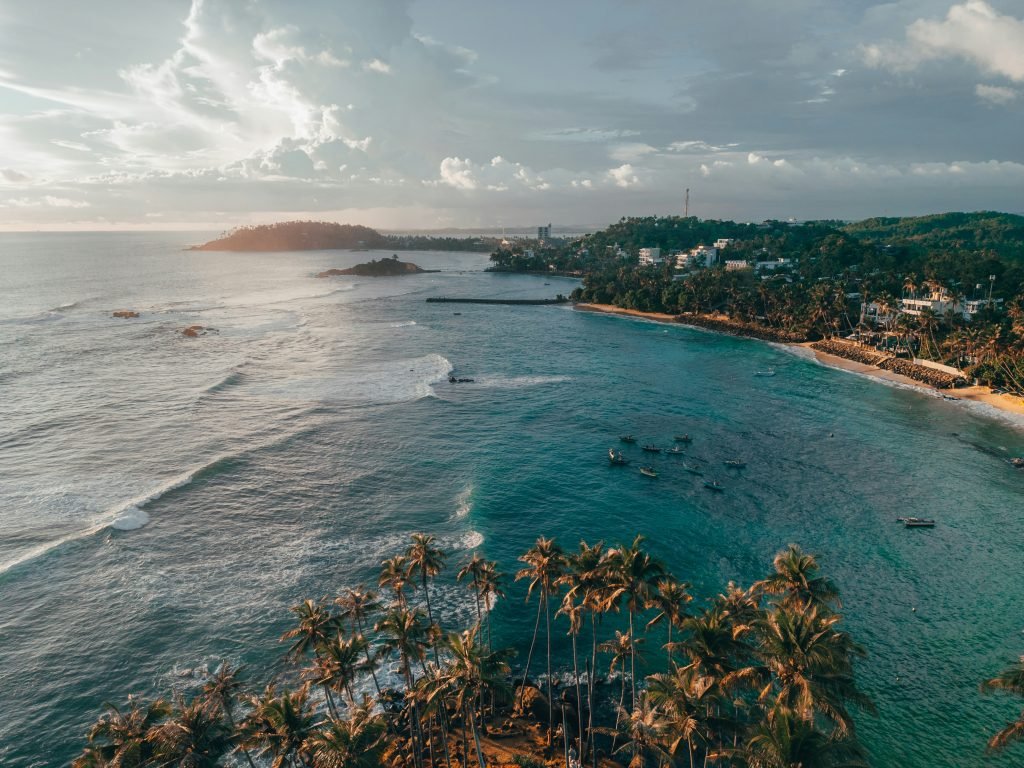
Mirissa is the liveliest of the three. In the evening, restaurants put tables on the sand and grill the day's catch, and there are more bars here than anywhere else on this stretch of coast. At one end of the main beach is Parrot Rock, a small rocky outcrop just off the sand.
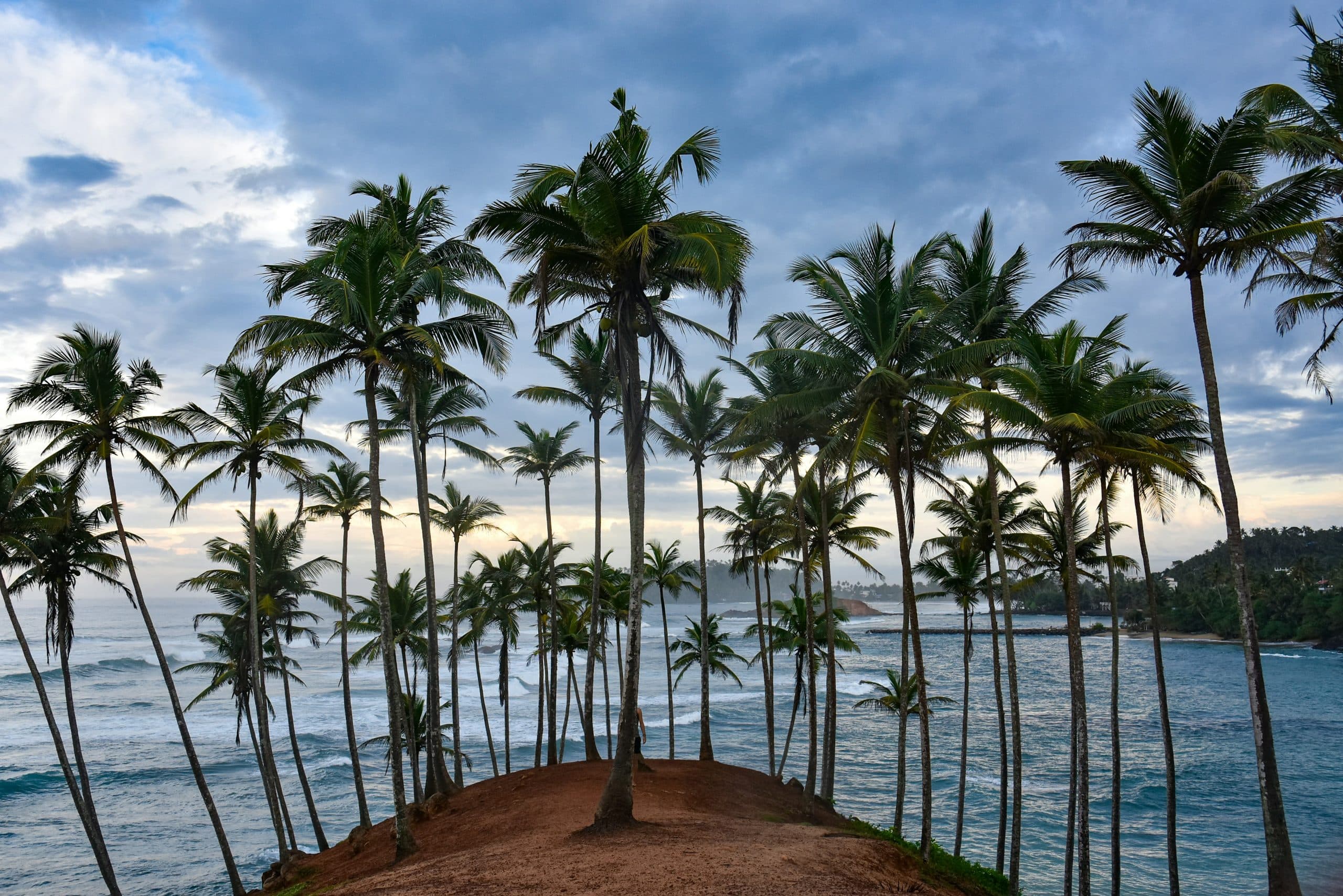
A short walk along the coast is Coconut Tree Hill, a red-earth headland covered in tall palms above the sea. It's one of the most photographed spots in Sri Lanka, so go early in the morning for fewer people, or at sunset for the best light.
Whale watching from Mirissa
Mirissa harbour is Sri Lanka's main base for whale watching. Boats leave early in the morning to look for blue whales, sperm whales and dolphins. The Wildlife Diaries' Mirissa guide (updated December 2025) gives the peak season as November to April, with August to October depending on the weather and no trips from May to July during the monsoon. Tours usually last four to six hours, and the sea can be rough, so take seasickness tablets if you need them.
Choose your operator with care. A good one keeps the distance set out in whale-watching guidelines, doesn't chase whales, and doesn't race other boats to a sighting. Avoid any offer to swim or dive with whales: Sri Lanka's Department of Wildlife Conservation has said such activity is prohibited by law.
Surfing near Mirissa
Mirissa itself has reef breaks that suit experienced surfers, not beginners. Lonely Planet describes a fast right over shallow rock reef at the western end of the bay, best from November to March. If you want lessons, nearby Weligama has a long sandy bay with gentle waves and is the usual place to learn on this part of the coast.
Choose Mirissa if: you want whale watching, sunsets and a social evening scene. Skip it if: you want quiet nights or a beginner surf break right outside your door.
Hiriketiya: the small surf bay
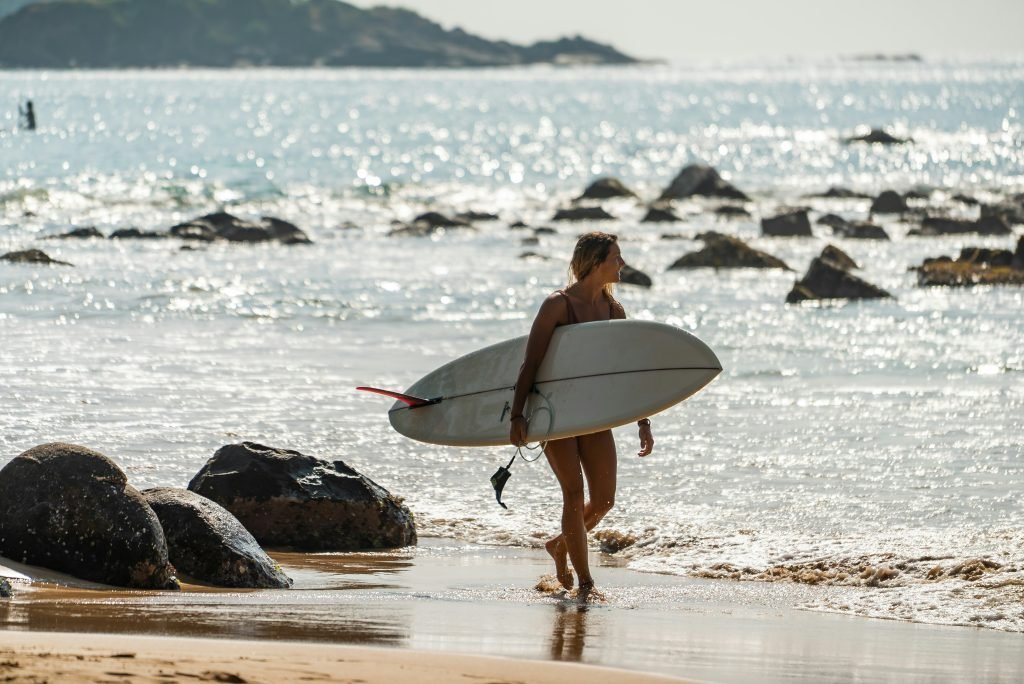
Hiriketiya is a small horseshoe-shaped bay next to the town of Dikwella, about 22 km east of Matara. It has the best beginner waves of the three. According to The Surf Atlas (updated February 2026), the west side of the bay has a sheltered, sand-bottomed beach break that suits beginners, while a reef point break on the eastern headland is for upper-intermediate and expert surfers, over shallow reef with sea urchins.
The same source gives December to March as the peak time for beginner waves, and describes April to August as unreliable and not good for learning. Board hire and lessons are available near the beach.
Hiriketiya has changed a lot in the last few years. It used to be a quiet secret; today the bay is busy in peak season, and there's been plenty of new building around it. It still feels smaller and more relaxed than Mirissa or Unawatuna, with a café-and-surf scene rather than a party one.
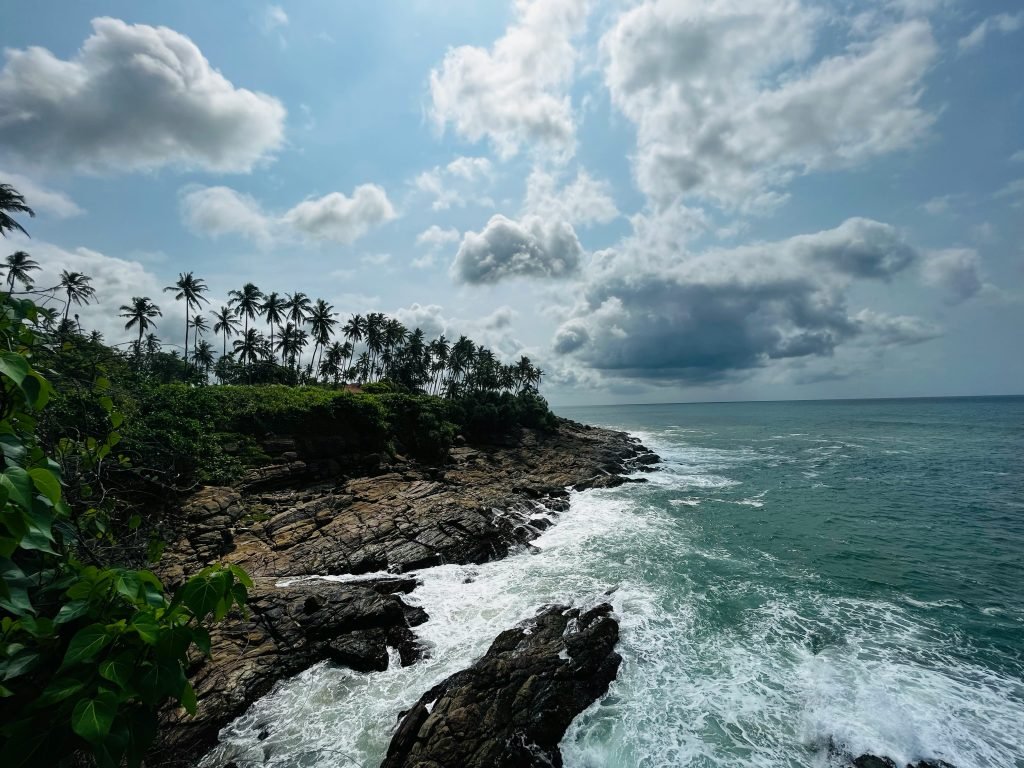
Things to do around Hiriketiya
- Dikwella beach: a longer beach about a 15-minute walk around the headland, or about 5 minutes by tuk-tuk.
- Tangalle's beaches: further east, long and wide with fewer people. Some have strong currents, so ask before swimming.
- Rekawa turtle watch: near Tangalle, a conservation project runs night watches on a sea turtle nesting beach. See our south coast guide.
- Yala safari: Hiriketiya is a reasonable base for heading east to Yala National Park.
Choose Hiriketiya if: you want to learn to surf, and you like a smaller, slower place. Skip it if: you want a big beach for long walks, lots of nightlife, or easy access to Galle.
Getting there
All three are on or near the coast road and the Southern Expressway, which runs from Colombo past Galle and Matara.
- Unawatuna: the easiest to reach. Trains run along the coast from Colombo Fort to Galle, about 2 to 3.5 hours, from Rs. 240 in third class and Rs. 500 in second (November 2026 timetable, see our Galle guide). From Galle it's a short tuk-tuk ride.
- Mirissa: continue along the coastal line to Weligama or Matara, then take a tuk-tuk or local bus. Lonely Planet quotes Rs. 300–500 for a tuk-tuk from Weligama, but fares change, so agree a price first or use a ride app (see our tuk-tuk prices guide).
- Hiriketiya: the furthest from Colombo. The Surf Atlas puts a private transfer from the airport at about 2.5 hours. By public transport, go to Matara by train or bus, then take a bus or tuk-tuk on to Dikwella.
Coming from Ella or the hill country? There's no direct train to the coast, and after Cyclone Ditwah the hill country line currently runs only between Nanu Oya, Ella and Badulla, with Colombo–Kandy–Nanu Oya trains suspended. See our Kandy to Ella train update and our guide to getting from Ella to Mirissa and Arugam Bay by bus, car or shuttle.
Can you do more than one?
Yes, and many people do. Unawatuna and Mirissa are both on the western half of the south coast, so you could base yourself in one and visit the other. A common pattern on a one-to-two-week trip is two nights near Galle (Unawatuna) followed by two or three nights further east (Mirissa or Hiriketiya). If you only have time for one, let your main activity decide: swimming points to Unawatuna, whales to Mirissa, surf lessons to Hiriketiya.
For complete routes, see our 7-day itinerary and 2-week itinerary.
Which one is for you?
- Families and swimmers: Unawatuna.
- Couples who want sunsets and good dinners: Mirissa.
- Groups and solo travellers after a social scene: Mirissa.
- First-time surfers: Hiriketiya (or Weligama, if you'd rather stay near Mirissa).
- Experienced surfers: Hiriketiya's reef point or Mirissa's reef breaks, depending on swell.
- History lovers: Unawatuna, for easy access to Galle Fort.
Frequently asked questions
Which is better, Mirissa or Unawatuna?
Unawatuna is better for calm swimming and for visiting Galle. Mirissa is better for whale watching, sunsets and nightlife. Both are at their best from December to April.
Is Hiriketiya good for beginner surfers?
Yes. The sandy beach break on the west side of the bay is one of the best places on the south coast to learn, especially from December to March. Leave the reef point on the eastern side to experienced surfers.
Can you swim at these beaches in the monsoon?
From May to September the southwest monsoon brings big waves and strong currents, and swimming is often unsafe. Check the flags, ask locally, and consider the east coast instead.
When is whale watching season in Mirissa?
The peak season is roughly November to April. Some boats run from August to October if the weather allows, and trips stop from May to July.
How far apart are the three towns?
They run west to east along the same coast: Unawatuna near Galle, Mirissa between Weligama and Matara, and Hiriketiya about 22 km east of Matara. You can move between them by car, tuk-tuk or bus in a few hours at most.