The best time to visit Trincomalee and Nilaveli is roughly March to September, when Sri Lanka's east coast is dry, sunny and the sea is calm. The east gets most of its rain from October to January, with November and December the wettest months. That's the opposite of Mirissa and the south coast, which makes Trinco the natural beach stop for a summer trip.
This guide covers the season month by month, the beaches at Uppuveli and Nilaveli, Pigeon Island snorkelling, whale watching, and how to get there in 2026 now that the eastern railway is running again after Cyclone Ditwah.
Trincomalee at a glance
| Question | Short answer |
|---|---|
| Best months | March to September (June is the driest month) |
| Wettest months | November (about 376 mm of rain) and December (about 339 mm) |
| Main beaches | Uppuveli (just north of town) and Nilaveli (about 10 km further north) |
| Whale watching | About March to August, for blue whales, sperm whales and spinner dolphins |
| Pigeon Island entry | US$25 per foreign adult plus fees and 18% tax (2025 schedule), and a boat from Nilaveli beach |
| Train from Colombo | Night Mail at 9.30 pm, about 8 hours; 2nd class Rs. 950, 3rd class Rs. 460 |
| How long to stay | 2 to 4 nights |
When is the east coast season?
Sri Lanka has two monsoons. The southwest monsoon, roughly May to September, brings rain to the west and south coasts and the hill country. The northeast monsoon, roughly October to January, brings rain to the north and east. Trincomalee sits on the east side, so its dry season falls while the south coast is wet.
Long-term averages for Trincomalee (1991 to 2020 climate normals, via Climates to Travel) show the pattern clearly:
| Month | Rain (mm) | Rainy days | Average temp | What to expect |
|---|---|---|---|---|
| January | 152 | 8 | 26.4 °C | Monsoon tailing off, still showery |
| February | 96 | 5 | 27.2 °C | Drying out, quiet |
| March | 55 | 4 | 28.2 °C | Season starts; sunniest month |
| April | 48 | 4 | 29.4 °C | Dry and calm |
| May | 72 | 4 | 30.7 °C | Hot; the odd heavy shower |
| June | 26 | 2 | 30.8 °C | Driest and hottest month |
| July | 51 | 3 | 30.6 °C | Peak season, very hot |
| August | 67 | 4 | 30.4 °C | Peak season, very hot |
| September | 113 | 6 | 30.0 °C | Season winding down |
| October | 216 | 13 | 28.4 °C | Northeast monsoon begins |
| November | 376 | 18 | 26.9 °C | Wettest month; cyclone risk |
| December | 339 | 15 | 26.3 °C | Very wet; cyclone risk |
The sea stays warm all year, between about 27.5 °C and 30 °C. Cyclones in the Bay of Bengal usually affect Sri Lanka in November and December, more rarely in May. Cyclone Ditwah, which hit the island in November 2025, is a recent reminder, so if you travel in those months, keep your plans flexible.
So which months should you pick?
- March to May: dry and calm, and the start of the whale season. A good time for snorkelling.
- June to August: the driest and hottest months, and the heart of the season. Book your room ahead.
- September: still mostly good, with rain starting to creep back.
- October to January: the off season. Uppuveli and Nilaveli go very quiet, the sea can be rough, and boat trips may not run.
If you're travelling from December to March, the south and west coasts are the better beach choice. Our month-by-month guide shows where the weather is good in every month.
Uppuveli vs Nilaveli: which beach to stay on
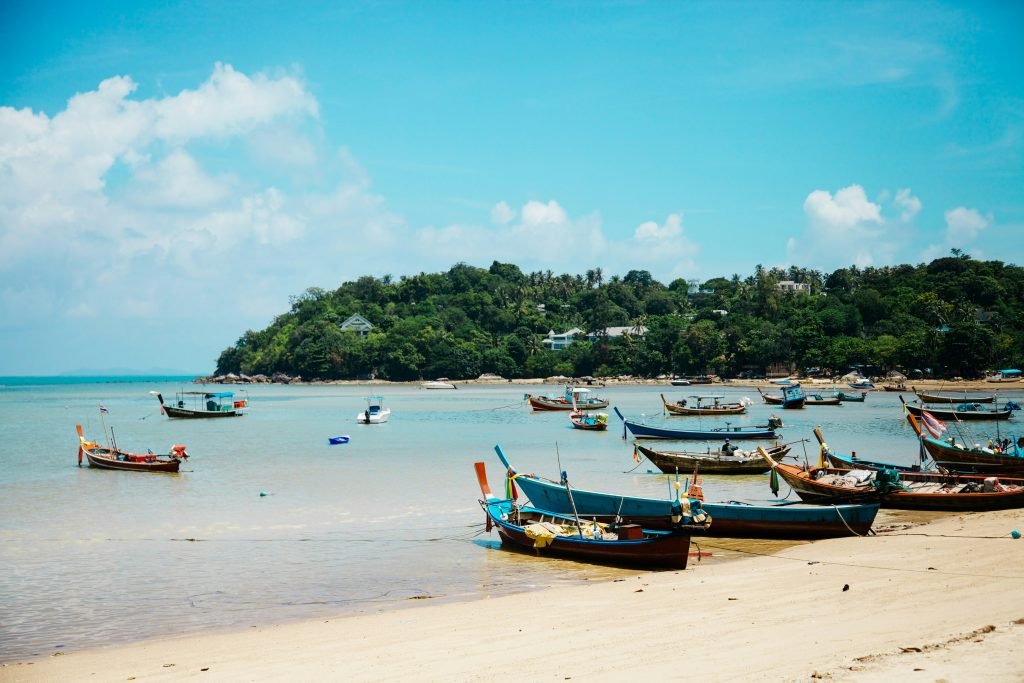
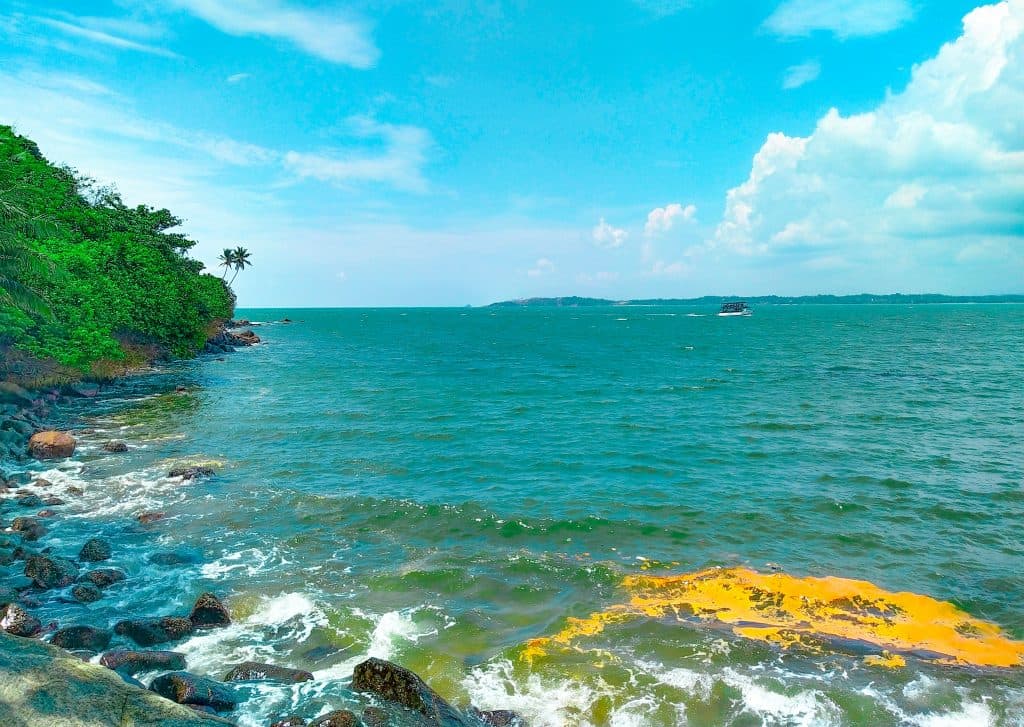
Most visitors don't stay in Trincomalee town itself but on the long golden beach that runs north of it. It starts at the village of Uppuveli and continues to Nilaveli and beyond.
Uppuveli is just a few kilometres north of town. It's the livelier of the two (though still low-key), with more places to stay and eat, and it's a short tuk-tuk ride into Trinco for the temples and the fort. Pick it if you want some choice of restaurants and easy access to the sights.
Nilaveli is about 10 km further north. The beach is wide and largely empty, and it's where boats leave for Pigeon Island. Pick it if you want a peaceful beach and plan to snorkel. You'll rely more on your hotel for meals, and a trip into town takes longer.
Both are very quiet outside the May to September season. If you're coming in the shoulder months, check that your guesthouse is open and that the restaurants nearby are too.
Pigeon Island National Park: snorkelling and costs
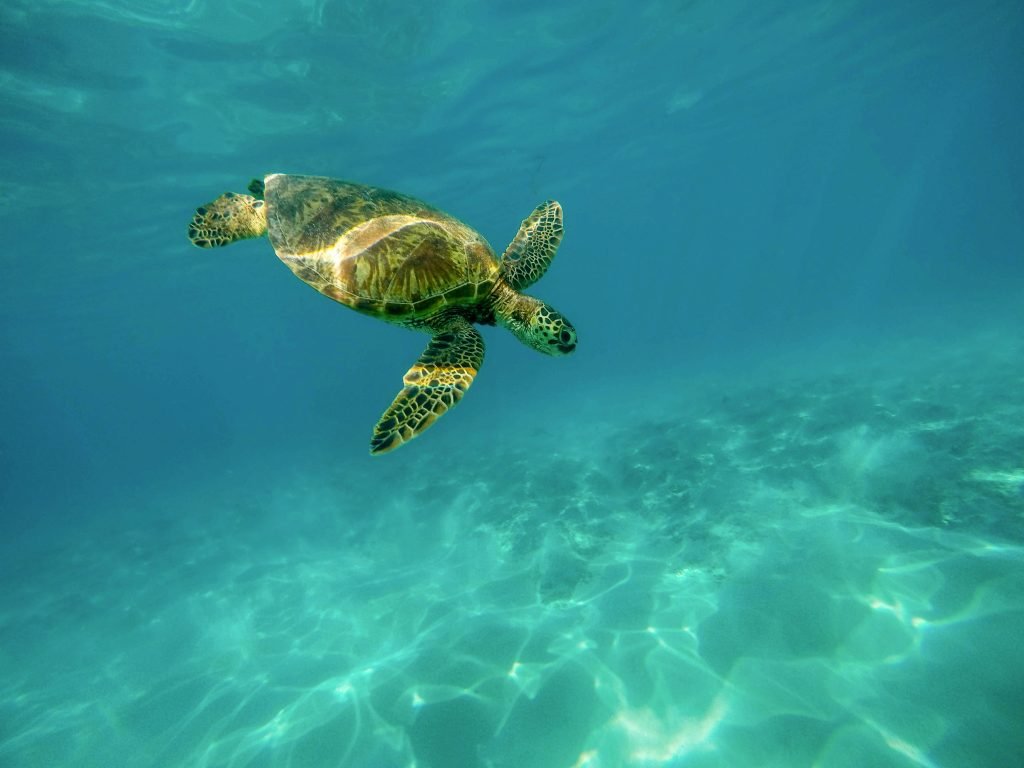
Pigeon Island is a small marine national park a short boat ride off Nilaveli, and it's the main reason many people come to this stretch of coast. Its reefs are some of the best remaining coral in Sri Lanka, and the shallow bay is good for snorkelling.
What it costs. The park is run by the Department of Wildlife Conservation. Under the fee schedule published by Amazing Lanka (fees gazetted in 2022 and listed as valid for 2025):
- Foreign adult: US$25 (SAARC adults US$20)
- Foreign child aged 6 to 12: US$15 (SAARC children US$10)
- Children under 6: free
- Group fee: US$10 per group, plus 18% tax on the total
- Vehicle entrance fee: Rs. 300
As a worked example from the same page, two foreign adults and one child come to US$88.50 including the group fee and tax. You can pay in US dollars or the rupee equivalent. National park fees change from time to time, so confirm the current price at the counter or on the government information line, 1919.
The boat. Tickets are sold from a Wildlife Department hut on Nilaveli beach, and the boat owners are next to it. The boat is a separate cost, around Rs. 15,000 for a 6 to 8 seat boat as of 2025, often with a short detour to look for dolphins. Agree the price and the return time before you set off. Snorkel sets can be hired from the boat operators.
When to go. Ticket counters open at 6 am and close at 4 pm. Go early, before the crowds and the midday heat. The island is best visited in the calm-sea months, roughly May to September. In the northeast monsoon the Navy can suspend all boats to the island when the sea is rough.
Look after the reef. Visitor numbers have damaged the shallow coral, mostly from people standing on it. Don't stand on or touch coral, keep your fins up in shallow water, use reef-safe sunscreen and take all rubbish back with you. If you aren't a confident swimmer, wear a life jacket rather than resting on the reef.
Whale and dolphin watching off Trincomalee
Trincomalee is Sri Lanka's other whale-watching centre besides Mirissa, and its season runs at the opposite time of year. Most sightings off Trinco happen between about March and August, while Mirissa's season is roughly December to April. Blue whales are seen about six to eight nautical miles east of Trincomalee, around 30 minutes by boat, and sperm whales and spinner dolphins are also seen (Rough Guides).
Sightings are never guaranteed. Ask your guesthouse to recommend an operator, and choose one that keeps its distance, doesn't chase the animals and limits how many boats crowd around one whale. Trips leave early in the morning, when the sea is calmest. Take seasickness tablets if you need them, plus water and sun protection.
Things to do in Trincomalee town
Trinco town sits on a headland beside Trincomalee Bay, a few kilometres south of Uppuveli. Half a day is enough for the main sights.
- Fort Frederick: built by the Portuguese and still used by the Sri Lankan military, but the old fort is open to visitors. Its shady trees make it a pleasant walk even in the midday heat.
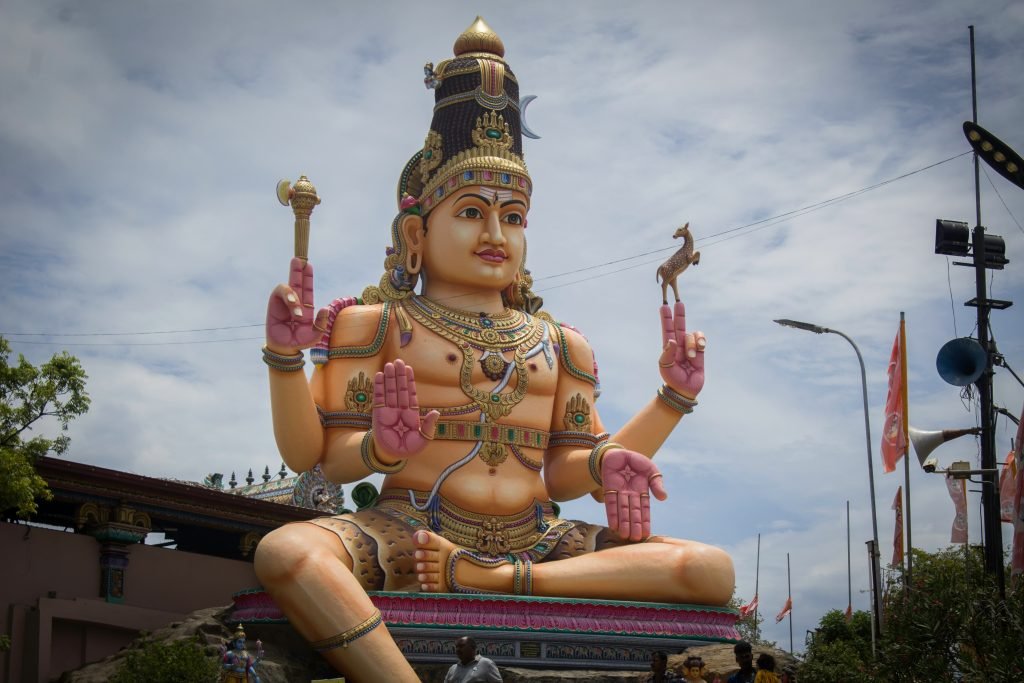
- Swami Rock and Koneswaram Temple: the road through the fort climbs to Swami Rock, a cliff above the sea, and the Koneswaram Hindu temple on top. The views over Trincomalee Bay are the highlight. Swami Rock is also the best spot on land for a chance of seeing whales offshore.
- Hindu temples in town: Sri Pathrakali Amman Kovil is the best known. Temple bells ring for the late-afternoon puja at around 4 pm, a good time to visit.
Temple etiquette: cover your shoulders and knees, take off your shoes before entering, and ask before photographing people or shrines.
How to get to Trincomalee in 2026
By train
Trains to the east were disrupted after Cyclone Ditwah, but the Colombo Fort to Trincomalee Night Mail resumed daily services in both directions on 20 January 2026 (Newsfirst). It leaves Colombo Fort at 9.30 pm and arrives around 5.40 am the next morning, a journey of about 8 hours. Current listings on TrainSchedule.lk give fares of Rs. 950 in 2nd class and Rs. 460 in 3rd class.
The few 1st class sleeping berths on the night trains usually sell out as soon as booking opens, so book early if you want one. Unreserved 2nd and 3rd class seats can't be booked in advance; you buy them at the station on the day. Some timetables also list a morning train, so check the current timetable at Colombo Fort before you plan around it. Our train booking guide explains how reserved tickets work.
The eastern line isn't the hill country line. That one is still only open between Nanu Oya, Ella and Badulla in 2026, and trains from Colombo and Kandy into the hills are suspended, so you can't take a train from Trincomalee into tea country. See our Kandy to Ella train guide for the latest.
By road
Many travellers combine Trinco with the Cultural Triangle, adding two or three beach nights after Sigiriya, Dambulla or Polonnaruwa. A private car and driver is the most comfortable way to do this, and our driver guide covers daily rates. Public buses also run to Trincomalee; ask locally for current routes and times.
Getting around
Tuk-tuks are the easiest way to get between Trinco town, Uppuveli and Nilaveli. Agree the fare before you set off, or use a ride app where it works. See our tuk-tuk prices guide for typical fares.
How Trincomalee fits into a Sri Lanka itinerary
Because the east coast is dry from about May to September, Trincomalee is the beach to pair with a summer trip. A simple plan is to start in the Cultural Triangle (Sigiriya, Dambulla and Polonnaruwa), then head to the east coast for two to four nights on the beach. If you have longer, Arugam Bay further south on the same coast is the surf town, and it's in season at the same time.
From November to March, do the opposite and pick the south coast for your beach time. Our two-week itinerary includes an east coast version for summer travellers.
Most nationalities need an ETA before they fly, even those on the free 30-day ETA list. See our ETA guide for how to apply.
Frequently asked questions
What is the best month to visit Trincomalee?
June is the driest month, and March to August is the most reliable period overall. For calm seas outside the hottest months, April is a good choice.
Is it worth visiting Trincomalee in December?
Usually not for a beach holiday. December is one of the two wettest months, the beach towns are very quiet, and boat trips may be cancelled. Head to the south or west coast instead.
Is Uppuveli or Nilaveli better?
Uppuveli is better for restaurants and easy trips into town. Nilaveli is better for a quiet, wide beach and quick access to Pigeon Island.
How much does Pigeon Island cost?
The 2025 schedule lists US$25 per foreign adult, plus a group fee and 18% tax, and the boat is extra (around Rs. 15,000 per boat in 2025). Confirm the current fee at the ticket hut on Nilaveli beach.
Can you see whales from Trincomalee?
Yes, roughly from March to August. Blue whales are seen about 30 minutes offshore, and sperm whales and spinner dolphins are also seen, but sightings aren't guaranteed.