For most Sri Lanka trips, pack light, breathable clothes for the heat, one warm layer for the hill country, a light rain jacket, and at least one outfit that covers your shoulders and knees for temples. Add a UK-style Type G plug adapter, strong mosquito repellent and sun protection, and you have covered most of what matters. The rest depends on when you go and which regions you visit, which is what this guide breaks down.
Sri Lanka is small, but it packs beach, jungle and mountains into a few hours' drive. You can be sweating on the south coast in the morning and reaching for a fleece in Nuwara Eliya by evening, so a smart packing list is about layers, not volume.
Sri Lanka packing list at a glance
| Item | Why you need it | Where it matters most |
|---|---|---|
| Light cotton or linen clothes | Coastal and lowland heat and humidity year-round | Colombo, south and east coasts, Cultural Triangle |
| Temple outfit (shoulders and knees covered) | Required to enter Buddhist temples | Kandy, Dambulla, Anuradhapura, Polonnaruwa |
| Fleece or light jumper | Nights around 10–14°C in Nuwara Eliya | Hill country, Adam's Peak, Horton Plains |
| Light rain jacket or umbrella | One monsoon or another is usually active somewhere | Everywhere, especially May–Sept (south-west) and Oct–Jan (north-east) |
| Type G adapter (UK 3-pin) | Sri Lanka uses 230 V, 50 Hz, Type G sockets | Everywhere |
| Mosquito repellent | Dengue and other mosquito-borne illnesses are a risk | Everywhere, especially after rain |
| Sunscreen, hat, sunglasses | Strong tropical sun close to the equator | Beaches, Sigiriya, safaris |
| Sandals you can slip off fast | Shoes come off at every temple | Temples, guesthouses |
| Socks | Temple floors and stone terraces get very hot | Temples in the midday sun |
Clothing basics: think light, modest and quick-drying
Lowland Sri Lanka is warm and humid all year. Loose cotton and linen are more comfortable than synthetic fabrics, and quick-drying pieces help when hotel laundry is slow or it rains for days.
A practical core wardrobe for a two-week trip looks like this:
- 4–5 light tops or T-shirts, including at least one with sleeves that cover the shoulders
- 2 pairs of loose long trousers or a long skirt, plus 1–2 pairs of shorts
- 1 light long-sleeved shirt (sun, mosquitoes and temples, all in one)
- 1 sarong or large scarf, which doubles as a temple cover-up, beach towel and train blanket
- Swimwear, plus a cover-up for walking from the beach to town
- 1 fleece or light jumper, and a pair of long socks, for the hills
- Sleepwear and underwear for about a week (laundry services are easy to find)
Sri Lanka is fairly conservative away from the beach. Beachwear is fine on the sand, but cover up in towns, markets and on buses. The UK government's travel advice notes that nude or topless sunbathing is not allowed.
What to wear to temples in Sri Lanka
Temples are where packing mistakes cause the most trouble. According to the UK Foreign Office (checked November 2026), when you enter a Buddhist temple you should cover your legs and shoulders and take off your shoes and hats.
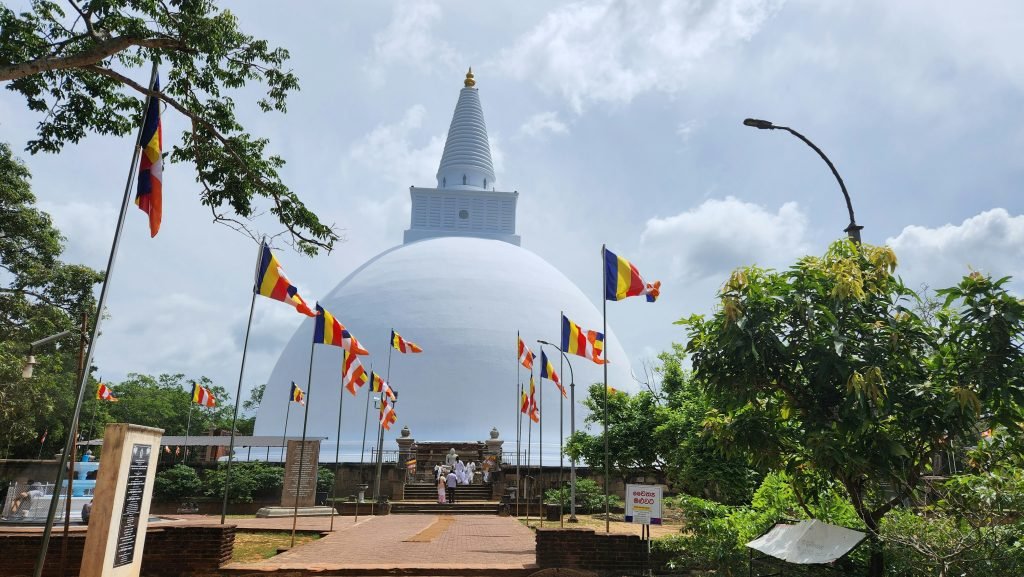
- Cover shoulders and knees. A T-shirt with sleeves and long trousers or a long skirt works. White or light colours are traditional but not required.
- Bring socks. You walk barefoot or in socks, and stone terraces at places like Anuradhapura and Polonnaruwa get very hot by late morning.
- Pack a sarong or scarf. If you are in shorts, you can wrap up before going in.
- Leave Buddha-print clothing at home. The same advice warns that disrespecting Buddhist images is a serious offence, that visible Buddha tattoos can lead to refused entry or deportation, and that you should not pose for photos with your back to a Buddha statue. Cover any religious tattoos and skip clothing with Buddha images.
If you plan to visit the Temple of the Tooth in Kandy, Dambulla and the ancient cities, wear your temple outfit on those days rather than carrying it.
What to pack by region
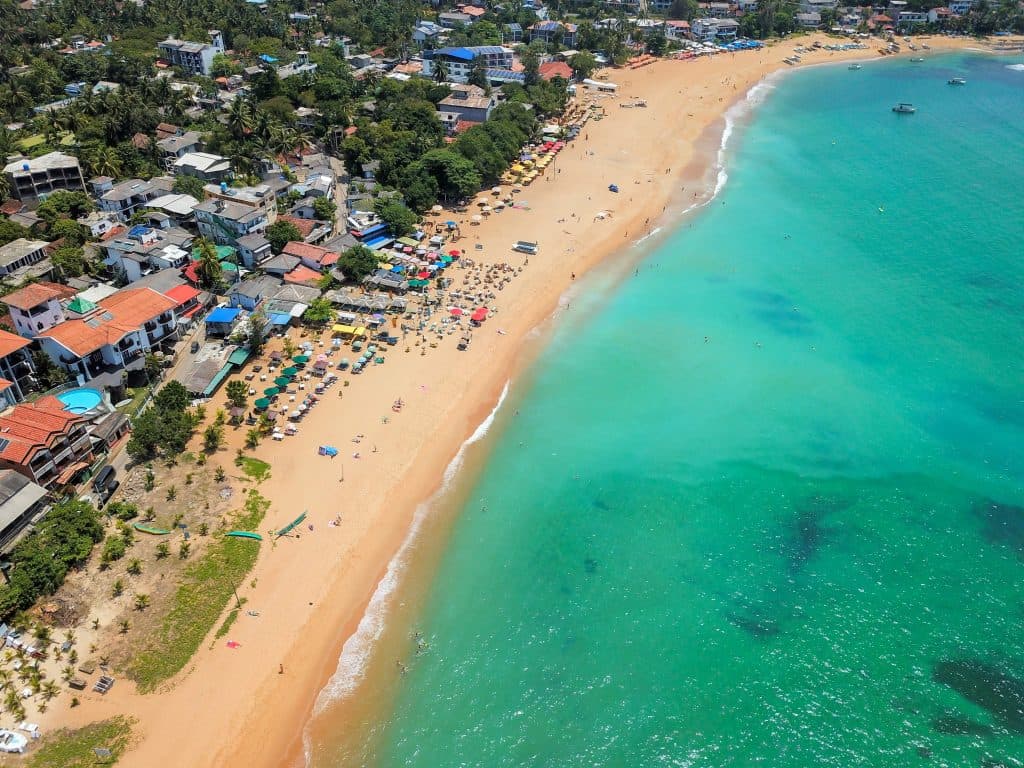
Beaches: south, west and east coasts
Pack swimwear, a cover-up, sunscreen, a hat, sunglasses and sandals. A dry bag is useful for boat trips and whale watching. Bring a rash vest if you plan to surf or snorkel; the sun on the water is intense.
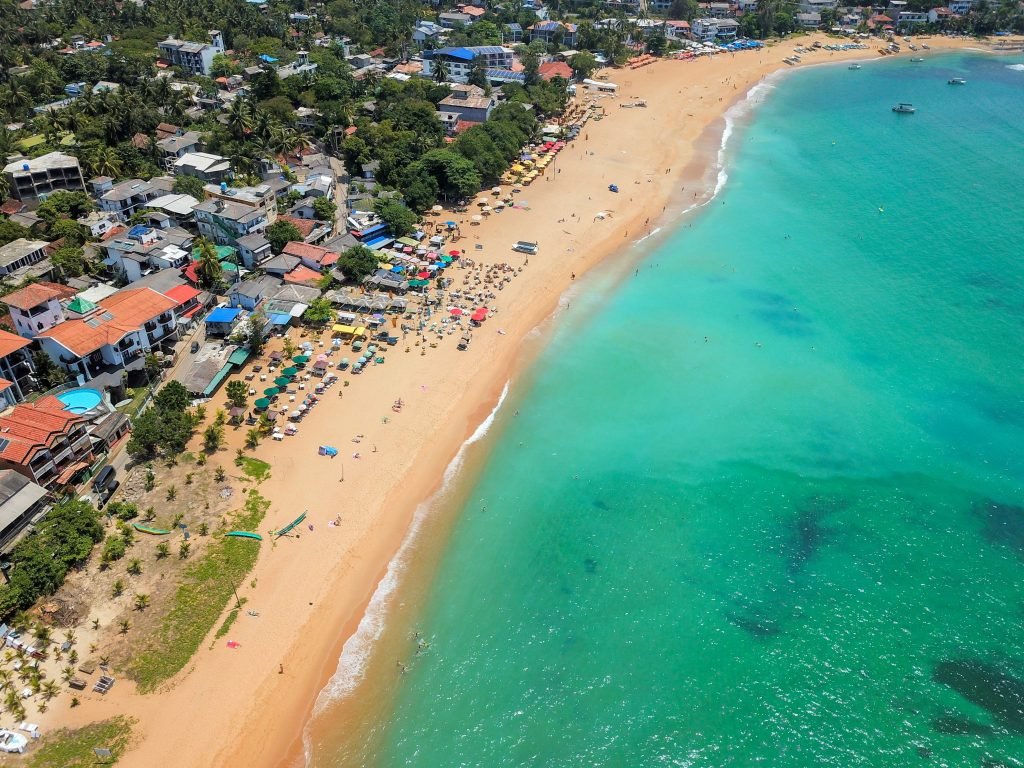
Check the sea before you swim. The UK advice warns that many beaches have dangerous surf or rip currents at certain times of year, so ask your hotel before going in.
Hill country: Kandy, Nuwara Eliya, Ella and Haputale
This is where people get caught out. Nuwara Eliya sits at about 1,900 m, and its average lows are roughly 10–14°C all year, with average highs of only about 19–22°C (1991–2020 averages). January and February are the coldest nights. Ella and Kandy are lower and milder, but evenings can still be cool.
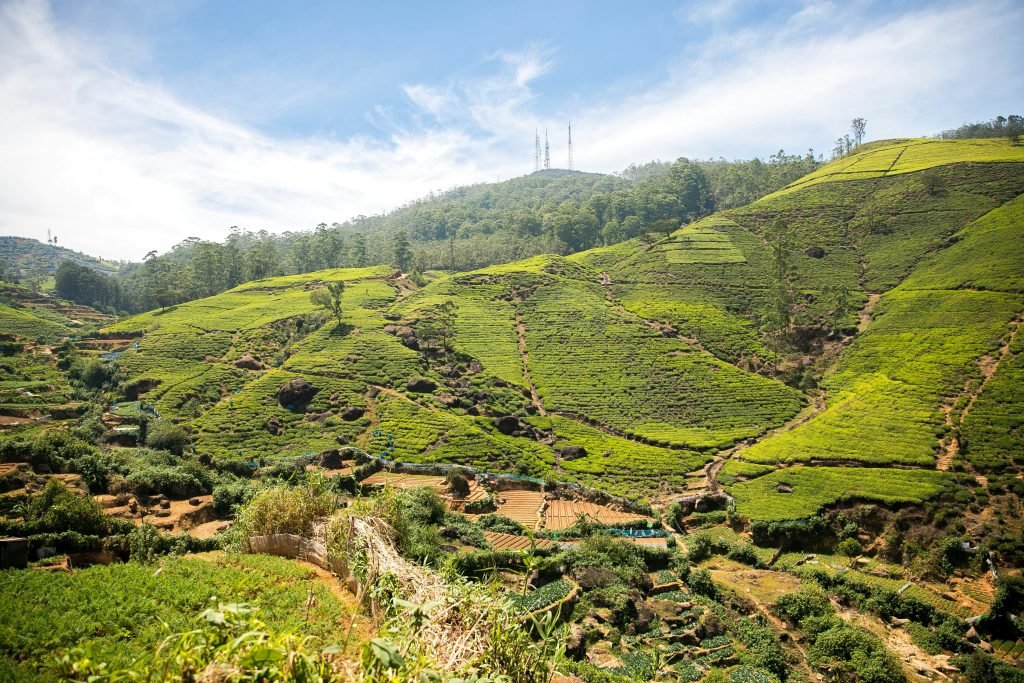
For the hills, add:
- A fleece or warm jumper, plus long trousers
- A light waterproof jacket (mist and showers roll in fast)
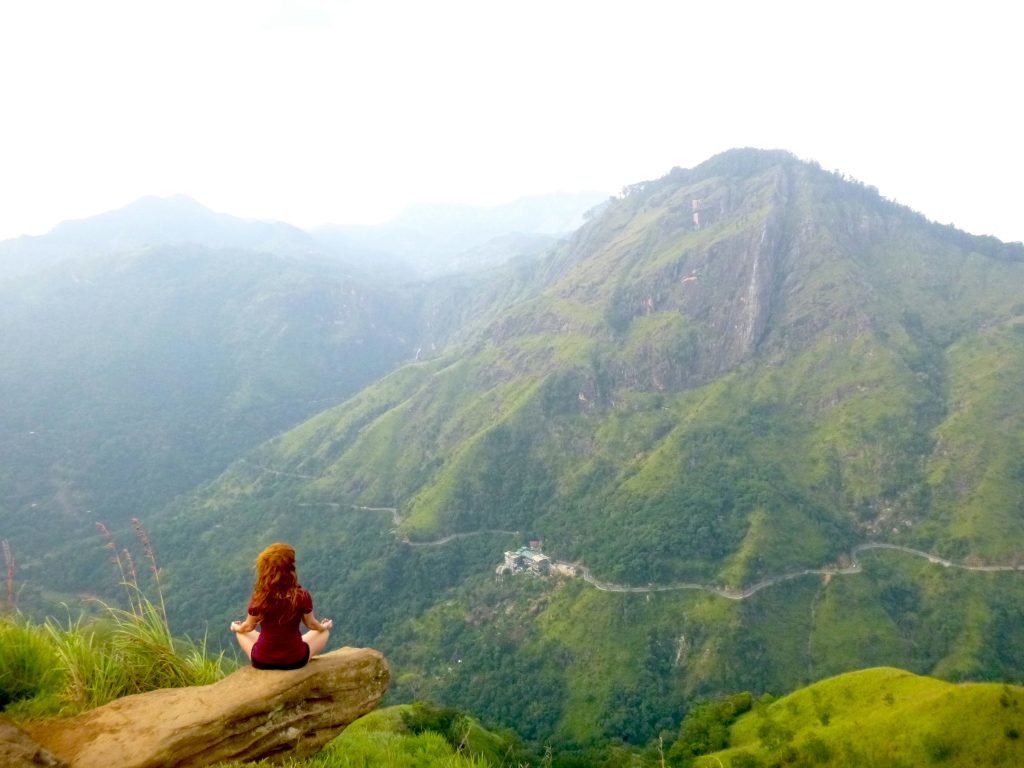
- Comfortable walking shoes or trail shoes with grip for Little Adam's Peak, Ella Rock and Horton Plains
- Long socks, which also help against leeches on wet forest trails
Train note: As of early November 2026, after Cyclone Ditwah and later landslides, hill country trains run only between Nanu Oya, Ella and Badulla; Colombo–Kandy–Nanu Oya services are suspended. Rail officials have given a possible reopening target, but no confirmed date, so check locally before you travel. Our Kandy to Ella train guide explains how to still ride the scenic section. If you do ride, a jumper is handy: the open windows and higher altitude make it cooler than you expect.
Adam's Peak and early-morning hikes
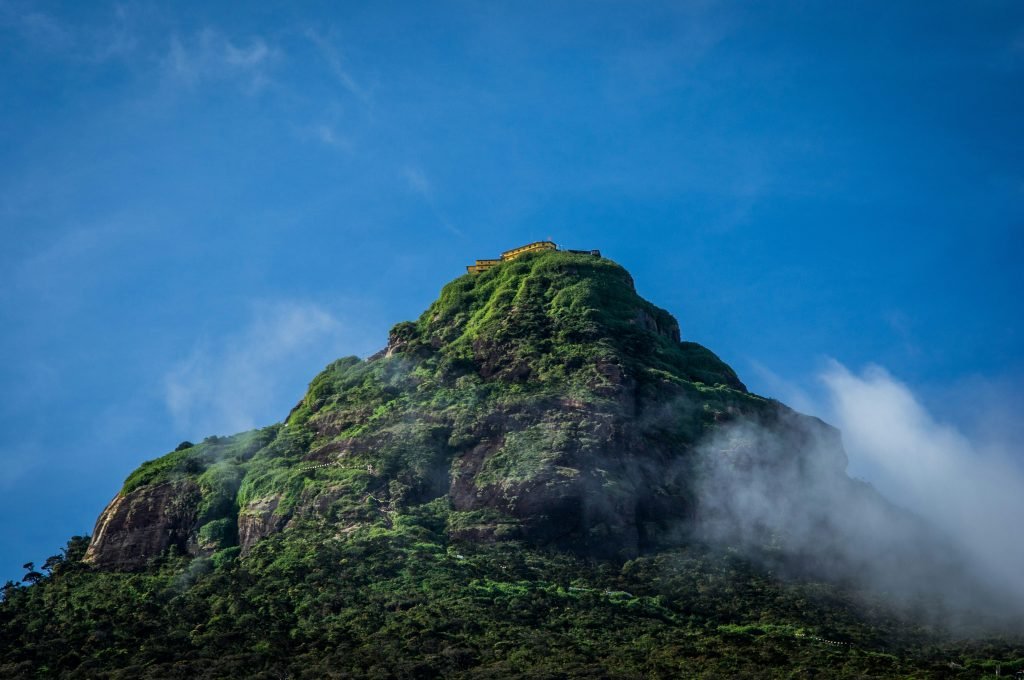
Most people climb Adam's Peak overnight to reach the summit, at over 2,200 m, for sunrise. You will sit still in the dark and wind at the top, so pack more warmth than you think: a fleece, a windproof layer, a hat and gloves if you feel the cold. Add a head torch, water, snacks and sturdy shoes for the thousands of steps.
Cultural Triangle: Sigiriya, Dambulla, Anuradhapura, Polonnaruwa
It is hot and dry here, with little shade at the ruins. Pack a wide-brimmed hat, sunscreen, a refillable water bottle and your temple outfit. Start early to beat the heat. Sigiriya involves a lot of steps, so wear shoes with grip rather than flip-flops.
Safaris: Yala, Udawalawe, Wilpattu, Minneriya
Jeeps are open-sided and dusty. Bring a hat, sunglasses, a buff or scarf for dust, sunscreen and binoculars. Neutral colours are a good idea. Early-morning drives can feel chilly in an open jeep, so a light layer helps.
What to pack by season
Sri Lanka has two main monsoons, which hit different coasts at different times. Our month-by-month guide to the best time to visit explains them in full; here is how they change your bag.
| Season | Weather pattern | Packing priorities |
|---|---|---|
| December–March | Best on the south and west coasts and in the hills; the north-east monsoon brings rain to the east and north, mainly through December–January | Beachwear and sun protection, plus warm layers for cold hill-country nights |
| April | Hot and humid before the south-west monsoon | Lightest clothes, extra sunscreen, electrolytes |
| May–September | South-west monsoon: rain on the south and west coasts and in the hills; the east coast is in season | Rain jacket, quick-dry clothes, sandals that handle puddles, leech socks for forest trails |
| October–November | Inter-monsoon: heavy afternoon storms are common across much of the island | Good rain jacket or umbrella, dry bags for electronics, flexible plans |
Weather can be extreme in any season. The UK government's travel advice was updated in September 2026 with a warning about heavy rainfall, flooding and landslides, so check current conditions before travelling, especially if you are heading into the hills. If you are visiting at the end of the year, see our guide to Sri Lanka in December.
Electronics and documents
- Plug adapter: Sri Lanka uses Type G (the UK-style 3-pin plug) at 230 V and 50 Hz, according to WorldStandards. Older round-pin sockets may still turn up in some older buildings, so a universal adapter is a sensible backup. Check that your chargers accept 230 V; most phone and laptop chargers do.
- Power bank: Useful for long road days and power cuts.
- Phone and SIM or eSIM: See our guide to Sri Lanka SIM cards and eSIMs.
- Passport and copies: UK advice says you must always carry your passport as ID, though a copy is usually accepted. Keep a photo of it on your phone and a printed copy in your bag.
- ETA approval: You still need an ETA before you fly, even where it is now free. Keep a copy on your phone.
- Travel insurance details: Private hospital care is expensive, and serious cases may be moved to Colombo.
- Cards and some cash: Our guide to money in Sri Lanka covers ATMs, cards and tipping.
If you are bringing a drone, the UK advice says not to fly near military bases, government buildings or VIP vehicles, and to check registration rules with Sri Lanka's Civil Aviation Authority before you go.
Health and toiletries
- Mosquito repellent with DEET or another proven active ingredient. Dengue and chikungunya are risks in Sri Lanka, so use it day and night.
- Sunscreen, after-sun and lip balm with SPF. Sunscreen is sold in Sri Lanka, but choice is limited outside larger towns, so bring your preferred brand.
- Personal medicines in their original packaging, with a copy of your prescription.
- A basic first-aid kit: plasters, antiseptic, rehydration salts, anti-diarrhoea tablets and blister patches.
- Hand sanitiser and tissues for bus stations and roadside stops.
- A reusable water bottle, ideally with a filter, to cut down on plastic bottles.
Check vaccine recommendations at least eight weeks before you travel, as the UK Foreign Office suggests.
What not to bring
- Cigarettes and other tobacco: Sri Lanka Customs says cigarettes, cigars, beedies and snuff are not allowed as personal baggage. Buy locally if you smoke.
- Too much alcohol: The duty-free allowance for foreigners is 1.5 litres of liquor, per Sri Lanka Customs.
- Fresh fruit and plants: Many fruits and plants are not allowed in personal baggage by air.
- Large amounts of cash without declaring it: You must declare foreign currency over US$15,000 (or equivalent) when you arrive.
- Clothing with Buddha images, or anything that could be seen as disrespectful to religion.
- Anything involving illegal drugs. Penalties are severe, and airports use scanning technology on baggage.
- Expensive jewellery you would hate to lose.
Customs rules can change, so check the Sri Lanka Customs website before you fly if you are carrying anything unusual.
Bag size and type
A medium backpack or a soft-sided bag of about 40–50 litres works best. You will be lifting it into tuk-tuks, car boots and train racks, and up guesthouse stairs. Hard-shell suitcases are fine if you are travelling with a private driver, but they are awkward on buses and trains. Bring a small daypack for hikes, temple visits and safaris.
FAQ
Do I need warm clothes for Sri Lanka?
Only for the hill country and early-morning climbs. Nuwara Eliya's average lows are about 10–14°C all year, and the top of Adam's Peak is cold at dawn. One fleece and a light jacket are enough for most travellers.
Can I wear shorts in Sri Lanka?
Yes, at the beach and in tourist towns. Bring long trousers or a long skirt for temples, which require covered legs and shoulders, and for more traditional areas.
What plug adapter do I need for Sri Lanka?
Type G, the UK-style 3-pin plug. The voltage is 230 V at 50 Hz. A universal adapter is a good backup, as some older buildings still have round-pin sockets.
Should I pack a rain jacket in the dry season?
Yes. A light, packable rain jacket or compact umbrella is worth carrying all year. Afternoon storms are common, and the hills get showers even in the drier months.
Can I buy things I forget in Sri Lanka?
Basics like clothes, sarongs, toiletries and mosquito repellent are easy to find in towns. Bring specialist items, such as broken-in hiking shoes and any specific medicines you rely on, from home.