For most travellers, the best area to stay in Colombo is Colombo 3 (Kollupitiya and the Galle Face seafront): it's central, walkable by Colombo standards, and close to the sea, restaurants and the main sights. Is Colombo worth a day? Yes, one full day is enough for most people, and it fits neatly at the start or end of a trip. If you only need a bed near the airport, skip the city and stay in Negombo instead.
This guide compares Colombo's main neighbourhoods, names well-known places to stay in each, and gives a realistic one-day plan with current prices and opening times.
Updated November 2026.
Colombo at a glance
| Question | Short answer |
|---|---|
| Best area for first-timers | Colombo 3 (Kollupitiya and Galle Face) |
| Best for a quiet, leafy stay | Colombo 7 (Cinnamon Gardens) |
| Best for history and transport | Colombo 1 (Fort) |
| Best for a beach near the city | Mount Lavinia, south of the centre |
| Best for an early or late flight | Negombo, about 15 minutes from the airport |
| How long to spend | One full day, or one night between flights |
| Airport to central Colombo | About 30 to 35 km; roughly 35 to 45 minutes on the expressway off-peak, up to 90 minutes in rush hour |
| Cheapest airport transfer | Bus 187 to Colombo Fort, around Rs. 325 (about US$1) |
| Getting around | Metered tuk-tuks or ride apps; the official meter rate is Rs. 110 for the first km and Rs. 90 after that |
Dollar figures use about Rs. 333 to US$1, the Central Bank rate in early November 2026.
Is Colombo worth a day?
Colombo isn't the reason most people fly to Sri Lanka, and it doesn't need much time. But it's a good place to land, sleep off a long flight and get your bearings before you head for the hill country or the beaches. It's also a useful last stop before a flight home, with good restaurants, shopping and the Galle Face seafront for a final sunset.
Give Colombo a day if:
- Your flight lands in the afternoon or evening, or leaves late at night.
- You enjoy cities, food and markets as much as temples and beaches.
- You want to buy tea, spices or clothes before you go home.
Skip it, or stay in Negombo, if:
- You have a week or less and want to go straight to Sigiriya, Kandy or the south coast.
- You arrive early and plan to start a road trip that same day.
- You only need a bed for one night near the airport.
Where to stay in Colombo: the main areas
Colombo's neighbourhoods are numbered by postal district, and locals use the numbers all the time ("Colombo 3", "Colombo 7"). The city runs north to south along the coast, so most visitors stay in a strip from Fort down to Bambalapitiya, with Mount Lavinia further south.
Colombo 3: Kollupitiya and Galle Face (best for most visitors)
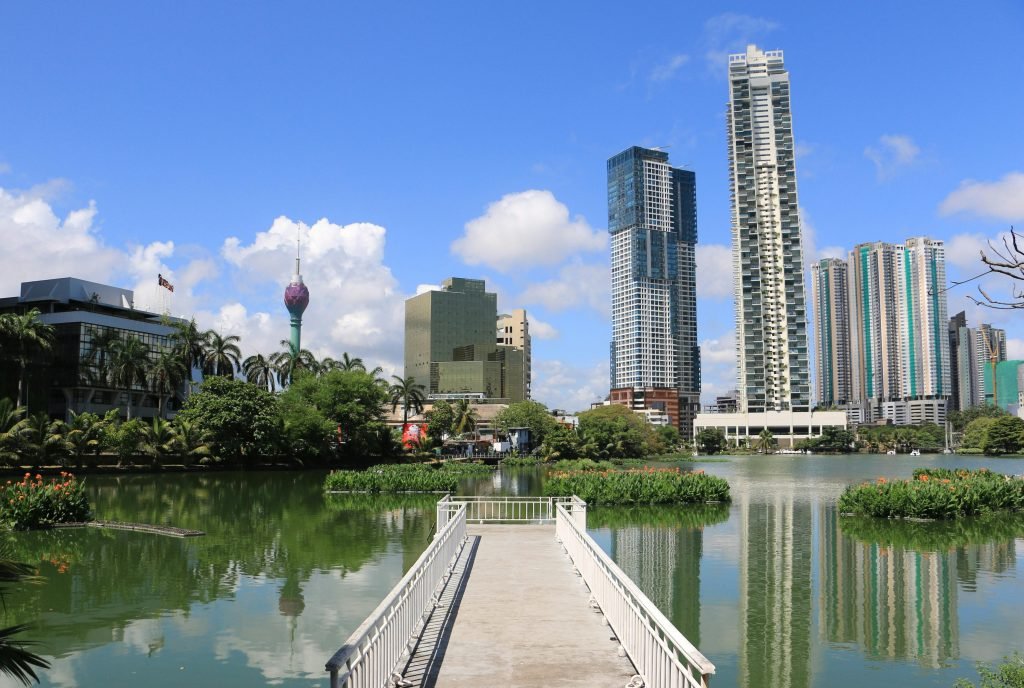
This is the easiest base for a first visit. You're close to Galle Face Green, Beira Lake, Gangaramaya Temple and plenty of restaurants and shops, and tuk-tuk rides to Fort or Cinnamon Gardens are short. The trade-off is traffic on Galle Road and higher prices than further south.
Well-known places to stay here include the historic Galle Face Hotel on the seafront, the large Cinnamon Grand Colombo, and the cheaper Cinnamon Red Colombo, a modern high-rise hotel aimed at value. The Shangri-La Colombo sits at the northern end of Galle Face, close to Fort.
Colombo 1: Fort (best for history and transport)
Fort is the old colonial core and the business district. It has the main railway station, the Dutch Hospital shopping and dining precinct, and the busy Pettah markets right next door. It's handy for an early train south, and the Galle Face seafront is a short walk away.
It's quieter in the evenings once the offices close, and the streets can feel hot and chaotic by day. The Kingsbury Colombo is the best-known hotel here, facing the sea. Budget travellers will find hostels and guesthouses around Fort as well.
Colombo 7: Cinnamon Gardens (best for a quiet, upmarket stay)
Cinnamon Gardens is the leafy, residential side of the city, with embassies, old mansions, Viharamahadevi Park and the Colombo National Museum. It feels calmer than the rest of Colombo, and it suits families and people who want a boutique hotel rather than a tower block.
There are fewer hotels here, and you'll need a tuk-tuk to reach the sea. Paradise Road Tintagel Colombo, a boutique hotel in a colonial-era house, is one of the best known.
Colombo 4 to 6: Bambalapitiya and Wellawatte (best for budget)
South of Kollupitiya, the coastal districts are more local and residential, with plenty of guesthouses, apartments and cheap places to eat. Wellawatte has a large Tamil community and good South Indian and Sri Lankan Tamil food. There aren't many sights, but the coastal railway and Galle Road buses connect it to the centre.
Mount Lavinia (best for a beach near the city)
Mount Lavinia is a beach suburb about 12 km south of Fort. It suits travellers who want sand and sunsets without leaving the Colombo area, and it has seafood restaurants on the beach. The landmark here is the colonial-era Mount Lavinia Hotel. The coastal train runs into Fort in around half an hour, though traffic makes the road trip slower at rush hour.
The sea here isn't as calm or clear as the south coast, and swimming is best in the dry season from December to April.
Negombo (best for the airport)
Negombo isn't part of Colombo, but it's the smart choice if you land late or fly out early. It's around 15 minutes from the airport, has a long beach, a lagoon and a fish market, and has a wide range of guesthouses and beach hotels. From Negombo you can still visit Colombo as a day trip.
Which area should you choose?
| If you want… | Stay in |
|---|---|
| A first visit, walkable, close to the sea and restaurants | Colombo 3 (Kollupitiya, Galle Face) |
| Old buildings, markets and the main train station | Colombo 1 (Fort) |
| Quiet streets, parks and a boutique hotel | Colombo 7 (Cinnamon Gardens) |
| The cheapest rooms and local food | Bambalapitiya or Wellawatte |
| A beach without leaving the Colombo area | Mount Lavinia |
| An easy airport run | Negombo |
Room rates change a lot by season. December to April is busy, and New Year's Eve is a big night in Colombo's hotels, so some set minimum stays or compulsory gala dinners. Compare current prices on a booking site and check whether tax and service charge are included in the rate shown.
How to spend one day in Colombo
Colombo is hot and humid all year, so plan your walking for the morning and late afternoon and use a tuk-tuk or a ride app in between. Here's a simple plan that links the main sights without much backtracking.
Morning: Pettah and Fort
Start early in Pettah, Colombo's old market district, before the heat and crowds build. The narrow streets are grouped by trade, and it's a good place for spices, fabric and everyday goods. Look for the red-and-white striped Jami Ul-Alfar Mosque, often called the Red Mosque, one of the most photographed buildings in the city.
Walk over to Fort for the colonial buildings and the Dutch Hospital, one of the oldest buildings in the city, now restored with cafés, restaurants and shops. It's a good place for a late breakfast or a cold drink.
Midday: museum or temple
Take a tuk-tuk to Cinnamon Gardens for the Colombo National Museum, the country's largest museum, in a white colonial building beside Viharamahadevi Park. One listing gives the foreign adult ticket as Rs. 1,200 (about US$3.60), or Rs. 1,500 with the Natural History Museum next door, and opening hours of 9am to 5pm (Amazing Lanka). Sources disagree on whether it now closes on Mondays, and it's closed on Poya (full moon) days, so check before you go.
Alternatively, head to Gangaramaya Temple near Beira Lake, a busy working temple packed with statues, gifts from devotees and a small museum. Foreign visitors pay an entry fee; check the current price at the gate. Nearby on Beira Lake is Seema Malaka, a small temple pavilion designed by the architect Geoffrey Bawa. Wear clothes that cover your shoulders and knees, and take your shoes off where asked.
Afternoon: lunch and a rest
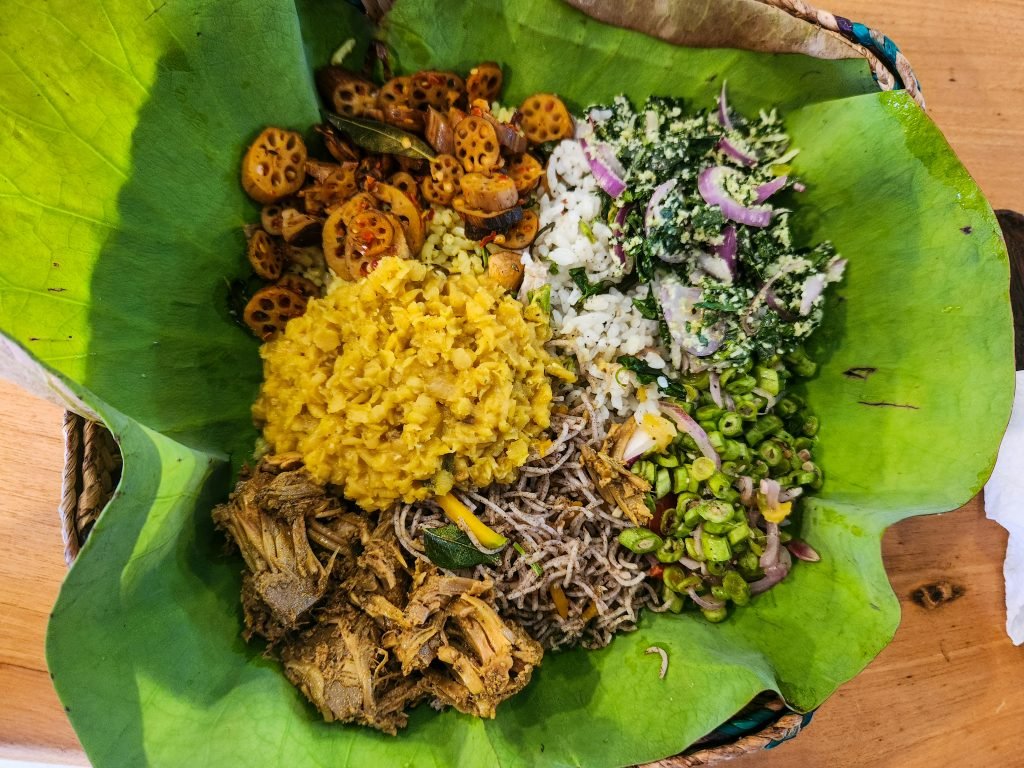
Have rice and curry for lunch, then head back to your hotel to cool off for an hour. Colombo has some of the best restaurants in the country, from simple local "hotels" (as small eateries are called) to smart dining in Colombo 3 and 7.
Late afternoon: Lotus Tower or Galle Face Green
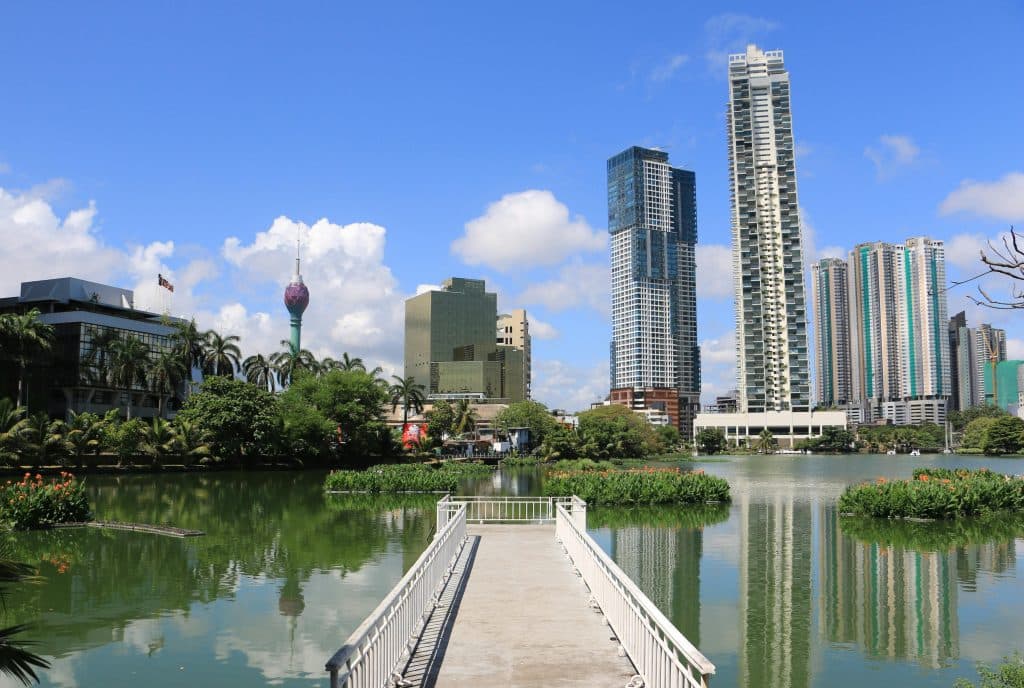
For a view over the whole city, go up the Lotus Tower, South Asia's tallest tower at about 350 metres. The official site lists opening hours of 9am to 9pm on weekdays and 9am to 10pm on weekends. A March 2026 price list put the foreigner ticket at US$20 (tuktukrental.com); check the official ticket page before you go, as it can close for events.
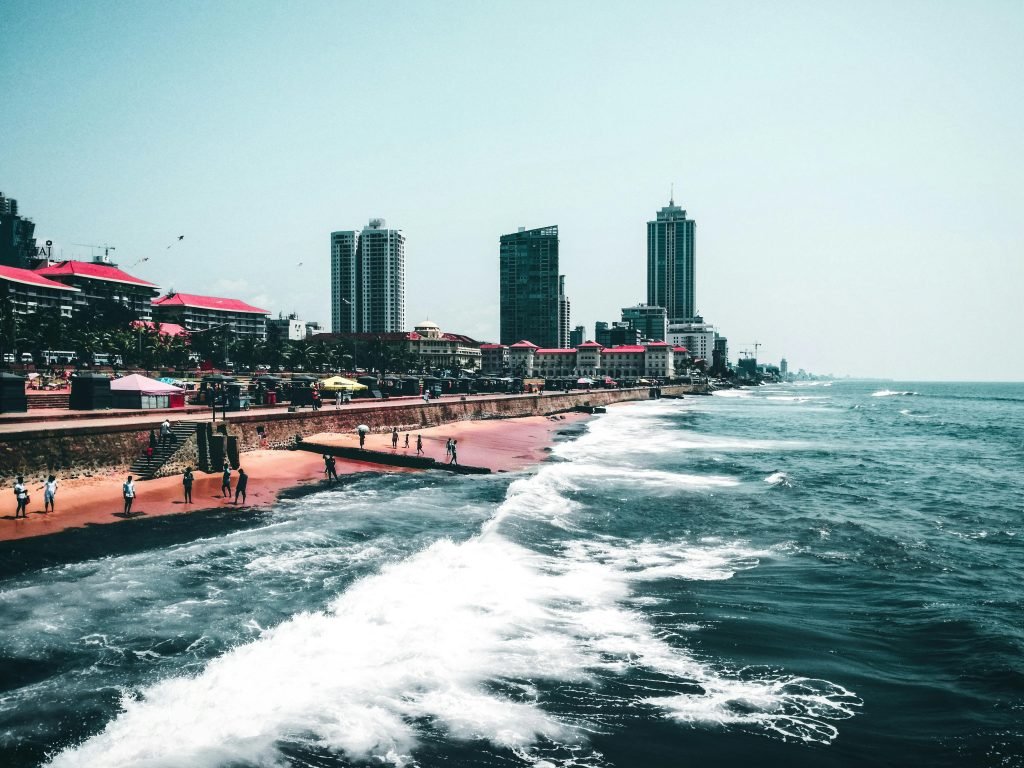
End the day on Galle Face Green, the long seafront lawn between Fort and Kollupitiya. In the late afternoon it fills with families, kite flyers and food stalls selling isso wade (prawn fritters) and other snacks. Sunset over the sea is the main event.
Getting to and around Colombo
From the airport
Bandaranaike International Airport (CMB) is at Katunayake, north of the city. By car or taxi via the Colombo–Katunayake Expressway, the trip to central Colombo usually takes 35 to 45 minutes outside rush hour, and can take 60 to 90 minutes at peak times. Ride apps such as PickMe and Uber show the fare before you book.
The cheapest option is bus 187, an air-conditioned bus to Colombo Fort for around Rs. 325, from outside the departure terminal. Our airport transfer guide covers every option, including the luxury bus to Makumbura for the south coast.
Getting around the city
Tuk-tuks are the easiest way to get around. Since 23 March 2026, the official meter rate in the Western Province has been Rs. 110 for the first kilometre and Rs. 90 for each one after, so a 5 km ride works out at about Rs. 470 (about US$1.40). Use a metered tuk or book through PickMe or Uber, which fixes the price up front. Our tuk-tuk prices guide has the details, including a proposed fare rise that hadn't been approved as of mid-November.
Leaving Colombo
The coastal railway south to Galle is running normally, and it's the pleasant way to reach the south coast; see our Galle Fort guide for train times. For the hill country, note that after Cyclone Ditwah in November 2025 the trains from Colombo to Kandy and Nanu Oya are suspended, and the hill country line is open only between Nanu Oya, Ella and Badulla. Travel to Kandy or Nanu Oya by road, then pick up the train. Our Kandy to Ella train guide explains how to still ride the scenic section.
When to visit Colombo
Colombo is warm all year, with highs around 30 to 31°C. The southwest monsoon brings the heaviest rain from roughly May to September, and October and November can also be wet. December to April is the drier, more comfortable season on the west and south coasts, and it's when most visitors pass through. A day in Colombo works at any time of year, though: if it rains, swap the seafront for the museum or a long lunch.
Frequently asked questions
What is the best area to stay in Colombo for tourists?
Colombo 3 (Kollupitiya and the Galle Face area) suits most first-time visitors. It's central, close to the seafront and has plenty of hotels and restaurants. Choose Colombo 7 for somewhere quieter, or Fort if you want to be near the main station.
Is it better to stay in Colombo or Negombo?
Stay in Negombo if you only need one night near the airport, because it's about 15 minutes away and has a beach. Stay in Colombo if you want to see the city, eat out or take a train south the next morning.
How many days do you need in Colombo?
One full day covers the main sights: Pettah, Fort, a museum or temple, the Lotus Tower and sunset at Galle Face Green. Add a second day only if you want to shop, eat well and take things slowly.
Is Colombo safe to walk around?
Central Colombo is generally safe for visitors, including at Galle Face Green in the evening. Watch for pickpockets in crowded Pettah and be wary of friendly strangers offering to guide you to a "special festival" or gem shop, a common scam. Our Sri Lanka safety guide covers more.
Can you visit Colombo on a long layover?
Yes, if you have at least eight or nine hours and are eligible to enter Sri Lanka. You'll need an ETA (Electronic Travel Authorization) even when the visa itself is free, so apply before you fly. Allow for traffic in both directions and get back to the airport early.