Mirissa's whale-watching season runs from about November to April, with the calmest seas and most reliable trips from December to March. Boats leave the harbour at around 6 to 7 am and spend four to six hours at sea looking for blue whales, sperm whales and spinner dolphins. A seat on a shared boat costs roughly US$30–80 in 2026.
This guide covers when to go, what you might see, what a trip costs, how to choose a responsible operator and what Sri Lanka's guidelines say about approaching whales. Facts were checked in November 2026.
Mirissa whale watching at a glance
| What to expect | |
|---|---|
| Main season | About November to April |
| Most reliable | December to March, when the sea is calmest |
| Weather-dependent | August to October: some trips run if the sea allows |
| No trips | About May to July (southwest monsoon) |
| Main sightings | Blue whales and spinner dolphins; sometimes sperm, fin and Bryde's whales |
| Departure | About 6–7 am from Mirissa harbour |
| Trip length | Usually 4–6 hours, sometimes longer |
| Price | About US$30–80 a person on a shared boat (about Rs. 10,000–26,600) |
| Off-season alternative | Trincomalee on the east coast, about May to September |
Rupee figures use about Rs. 333 to US$1 (early November 2026). Prices vary by operator and boat, so treat them as a guide.
When is whale-watching season in Mirissa?
Mirissa sits on Sri Lanka's south coast, so its season follows the south coast's weather. From about November to April the northeast monsoon brings rain to the other side of the island and the sea off Mirissa is usually calm enough for daily trips.
The Wildlife Diaries (updated December 2025) gives the peak season as November to April, with boats running daily as long as enough people have booked. From August to October, trips depend on the weather. From May to July, during the southwest monsoon, boats don't go out because the sea is too rough.
- November: the season is starting. Trips run, but the sea can still be choppy early in the month.
- December to March: the best months for most visitors, with the calmest seas and the most trips. This is also peak travel season, so book a day or two ahead.
- April: still a good month, as the season winds down.
- May to July: no trips from Mirissa. Head to Trincomalee instead (see below).
- August to October: occasional trips when the weather allows. Check with operators before you plan around it.
Our month-by-month guide explains how Sri Lanka's two monsoons work, and our Sri Lanka in December guide covers the start of the south coast season.
What you might see
Mirissa is best known for blue whales, the largest animals on Earth. Sri Lanka's Coast Guard notes that a blue whale can be more than 30 metres long.
Other animals you may see include:
- Spinner dolphins: common, and often seen in large pods leaping out of the water.
- Sperm whales: seen at times, sometimes in groups.
- Fin and Bryde's whales: occasional sightings.
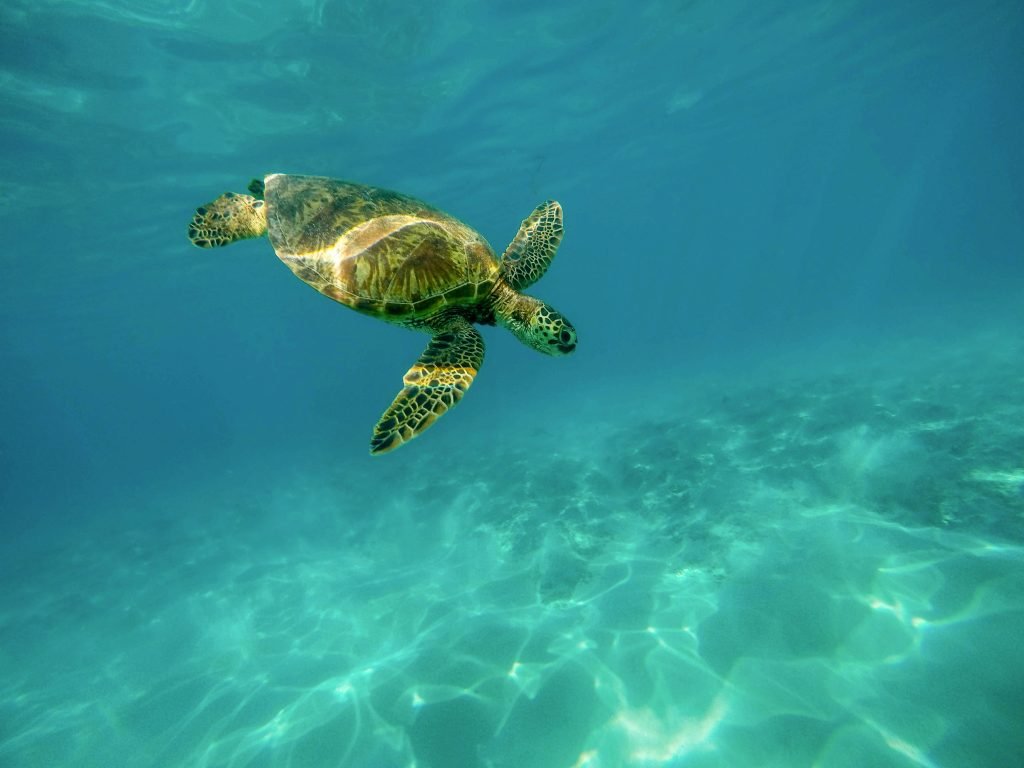
- Sea turtles and flying fish: often spotted on the way out or back.
Nothing is guaranteed. Whales are wild animals, and some trips see only dolphins or nothing at all. Some operators offer a free second trip if you don't see a whale, so ask about this when you book.
What a whale-watching trip is like
Most trips follow the same pattern:
- Early start. Many operators collect you from your hotel, or you meet at Mirissa harbour at about 6 to 6:30 am. Boats usually leave between 6 and 7 am.
- The ride out. It can take one to two hours to reach deep water. Crew watch for blows and fins and share news with other boats.
- Time with the whales. When whales are spotted, the boat slows and keeps its distance. A good crew explains what you're seeing.
- Back to harbour by late morning or early afternoon. In total, most trips take four to six hours, but The Wildlife Diaries notes they can last anywhere from two to eight.
Many tickets include a simple breakfast, drinks and life jackets. Check what's included before you book, and bring cash: some operators take cash only.
How much does whale watching in Mirissa cost?
Prices in 2026 vary a lot by boat size and how many people are on board:
- Large shared boats: from about US$30–60 a person. These can carry many passengers.
- Mid-range shared trips with breakfast: around US$45–80 a person. Kate & Mike Travels (August 2026) gives about US$45 for a Mirissa trip, while another January 2026 guide puts standard trips at US$50–80.
- Small-group or premium trips: roughly US$80–120 a person.
- Private charters: a few hundred US dollars for the whole boat.
Keep a little cash for tips for the crew. Book through your guesthouse, at the harbour or online, but make sure you know exactly which boat and company you're booked with.
The rules: how close can boats get?
Sri Lanka Tourism Development Authority (SLTDA) guidelines for registered whale and dolphin watching operators set out how boats should behave around whales:
- No-approach zone of 100 metres. Boats should not come closer than 100 m, and should not wait in front of a whale's direction of travel.
- Caution zone of 300 metres. No more than three boats should be within 300 m of the animals at any one time, and boats should go slower than 6 knots inside it.
- If a whale approaches the boat, the engine should go into neutral until it has passed.
- No swimming or diving with whales. The guidelines say this is not offered in Sri Lankan waters, and the Department of Wildlife Conservation has said such activity is prohibited.
- Jet skis and similar craft are not allowed for whale watching.
You can read the full SLTDA guideline (PDF). In practice, enforcement has been patchy. Mirissa has many boats, and travellers and journalists have reported boats crowding and chasing whales in peak season. Your choice of operator makes a real difference.
How to choose an ethical operator
- Ask how they approach whales. A good operator will happily explain that they keep their distance, don't chase and don't cut in front of animals.
- Smaller is usually better. Boats with fewer passengers tend to be calmer and more flexible, and the crew can explain what you're seeing.
- Read recent reviews for mentions of keeping distance, and for any complaints about chasing or racing other boats.
- Be wary of promises of close encounters, touching or swimming with whales. These go against the guidelines.
- Check the operator is registered and that the boat has life jackets for everyone.
- Speak up. If your skipper starts chasing a whale or racing other boats, it's fine to ask them to stop.
Several independent travel writers recommend smaller, long-running local operators that go further offshore to avoid the crowd, rather than the biggest boats. Compare recent reviews before you book.
Seasickness: how to avoid a miserable morning
The boats are usually single-hull and roll in the swell, and you'll be at sea for hours. Seasickness is common, even on calm days.
- Take a seasickness tablet at least an hour before the trip. Bring your own, though some crews offer them on board.
- Eat a light breakfast and drink water. Skip alcohol the night before.
- Sit low and towards the middle or back of the boat, where the motion is gentlest, and look at the horizon.
- Put your phone away while the boat is moving.
- Bring sun protection. A hat, sunscreen and a light long-sleeved top help on a long morning on an open deck.
Whale watching outside Mirissa's season
If you're in Sri Lanka between May and October, Mirissa's boats are mostly in harbour. Try the east coast instead:
- Trincomalee: whale-watching trips run from about May to September, with blue and sperm whales the main sightings. The deep water is close to the harbour, about a 30-minute boat ride out. See our Trincomalee and Nilaveli guide.
- Kalpitiya: on the northwest coast, best known for spinner dolphins, with a season of about November to March.
Getting to Mirissa
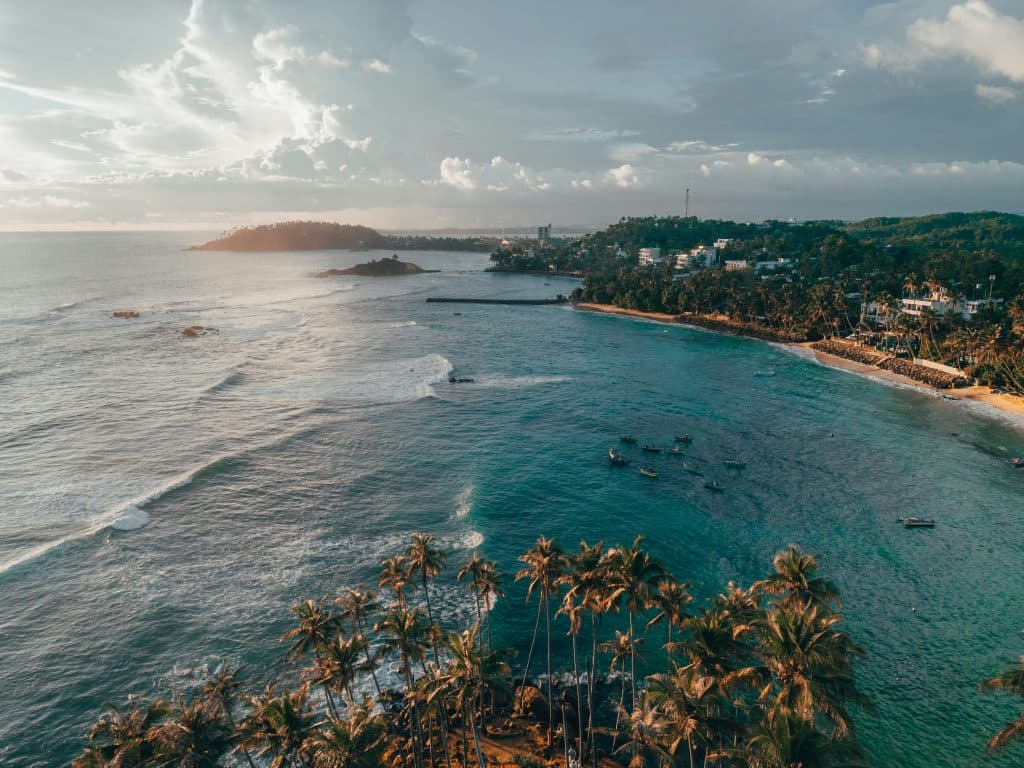
Mirissa is on the south coast between Weligama and Matara. Most people stay in Mirissa itself, or in Weligama or Unawatuna and take a tuk-tuk or taxi to the harbour before dawn. Some operators include hotel pickup.
- From Colombo: by car on the Southern Expressway, or by coastal train to Weligama or Matara and then a short tuk-tuk ride.
- From Ella: about 3 to 3.5 hours by private car. Our guide to getting from Ella to Mirissa and Arugam Bay has full prices and options.
Coming from the hill country by train? After Cyclone Ditwah, the hill country line currently runs only between Nanu Oya, Ella and Badulla, with Colombo–Kandy–Nanu Oya trains suspended. See our Kandy to Ella train update. To decide where to stay, see our comparison of Mirissa, Unawatuna and Hiriketiya.
Frequently asked questions
What is the best month for whale watching in Mirissa?
December to March is the most reliable time, with calm seas and daily trips. The wider season runs from about November to April.
How much does whale watching in Mirissa cost?
A seat on a shared boat costs about US$30–80 in 2026, depending on the boat and what's included. Small-group trips cost more, and a private charter costs a few hundred dollars.
Can you swim with whales in Sri Lanka?
No. Swimming or diving with whales is not permitted in Sri Lankan waters. Avoid any operator that offers it.
Are you guaranteed to see whales?
No. Sightings are common in season, but whales are wild. Some operators offer a free second trip if you don't see any, so ask when you book.
Is whale watching in Mirissa ethical?
It can be, if you choose carefully. Pick an operator that keeps its distance, doesn't chase whales and limits passenger numbers, and speak up if a skipper breaks the rules.