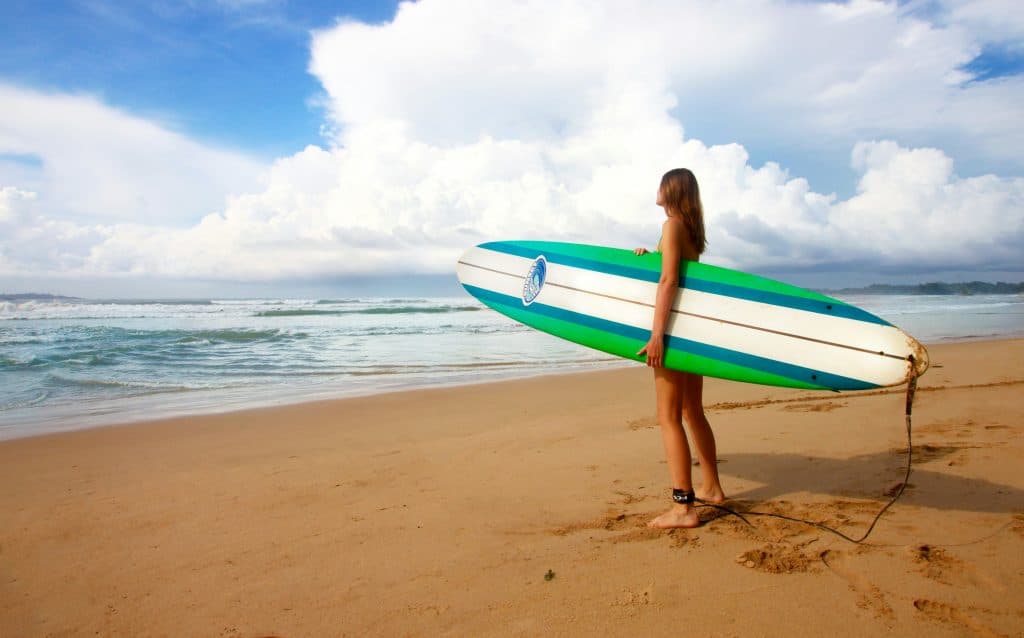
Arugam Bay's surf season runs from about May to September, with the most reliable waves from June to August. Beginners learn at Baby Point, Elephant Rock and Peanut Farm, while Main Point, the famous long right-hander in front of the village, is for intermediate and advanced surfers. A two-hour beginner lesson costs roughly US$20–40 in 2026, and board hire is a few dollars a day.
This guide covers when to go, every main break and who it suits, what lessons and boards cost, how to get there, and how to stay safe in the water. Facts were checked in November 2026.
Arugam Bay surf at a glance
| What to expect | |
|---|---|
| Surf season | About May to September; some surf in April and October |
| Most reliable months | June to August (busiest, too) |
| Off season | Roughly November to March: irregular surf on the east coast, so surf the south coast instead |
| Water temperature | About 27–29°C; no wetsuit needed |
| Best beginner spots | Baby Point, Elephant Rock, Peanut Farm (on small days) |
| Experienced only | Main Point, Okanda, Crocodile Rock, Lighthouse Point |
| Beginner lesson (2 hours) | About US$20–40 (about Rs. 6,700–13,300), usually including the board |
| Board hire | About Rs. 800–3,000 a day (about US$2.50–9), depending on board and shop |
| Getting there | About 3.5–4.5 hours by car from Ella; 8–9 hours from Colombo |
Rupee figures use about Rs. 333 to US$1 (early November 2026). Prices come from the sources linked below and vary between schools and shops, so treat them as a guide.
When is surf season in Arugam Bay?
Sri Lanka has two surf coasts with opposite seasons. The east coast, where Arugam Bay sits, gets its best waves during the southwest monsoon, when the wind blows offshore here and rain falls mostly on the other side of the island.
Rough Guides (updated July 2025) gives the Arugam Bay season as May through September, with June to August usually the most reliable, and typical waves of about 3 to 8 feet (0.9 to 2.4 m). The Sri Lanka Guides (May 2026) stretches it to October and notes that September and October still have good surf with far fewer people.
- April and early May: the season is starting. Waves are smaller and less consistent, which can suit beginners.
- June to August: peak season. The most consistent swell, and the most crowded line-ups. Book rooms early.
- September and October: the shoulder season. Still surfable, quieter and often cheaper. Sri Lanka's 2026 national surf championship ran at Main Point from 10 to 12 September.
- November to March: the surf on the east coast becomes irregular and some spots are unsurfable. Many surf businesses close or slow down.
Visiting between December and March? Surf the south coast instead. Hiriketiya and Weligama are the classic places to learn at that time of year; see our comparison of Mirissa, Unawatuna and Hiriketiya. Our month-by-month guide explains how the two monsoons work.
The main surf breaks, from north to south
Most breaks around Arugam Bay are right-hand points, meaning the wave peels to the right as you ride it. Only Baby Point and Main Point are in the village itself. For the rest, you take a tuk-tuk, often with your board strapped to the roof.
Crocodile Rock (experienced only)
About 6 km north of the bay, near Pottuvil. The Sri Lanka Guides describes it as a powerful wave for experienced surfers that needs local knowledge. Crocodiles live in the area, as the name suggests, though they are generally not in the line-up. Go with someone who knows the spot.
Whisky Point (improvers to intermediate)
A few kilometres north of the village, about 10 minutes by tuk-tuk. Rough Guides describes it as a right-hand break that works best at mid to high tide on a southeast swell. The Sri Lanka Guides calls it softer and more forgiving than Main Point, which makes it a popular step up from lessons. A tuk-tuk costs roughly Rs. 300–500 each way according to that guide, but agree the fare first.
Main Point (intermediate to advanced)
The wave Arugam Bay is famous for. It's a right-hand point over coral and sand, at the south end of the village, and on a good swell Rough Guides says it can line up for over 400 metres. It's best at mid to high tide.
Main Point is also the most crowded break in peak season. Locals and long-stay surfers know it well, and beginners in the way are not welcome. Hostelworld's 2026 guide advises keeping away from point breaks like this until you can paddle out and turn with confidence. If you're good enough, paddle out early: The Sri Lanka Guides suggests before 7 am, as it is busy by 9 am in July and August.
Baby Point (beginner)
Next to Main Point, Baby Point is a small, gentle wave over a mostly sandy bottom. It's the easiest place to learn within walking distance of the village, and many schools start their students here.
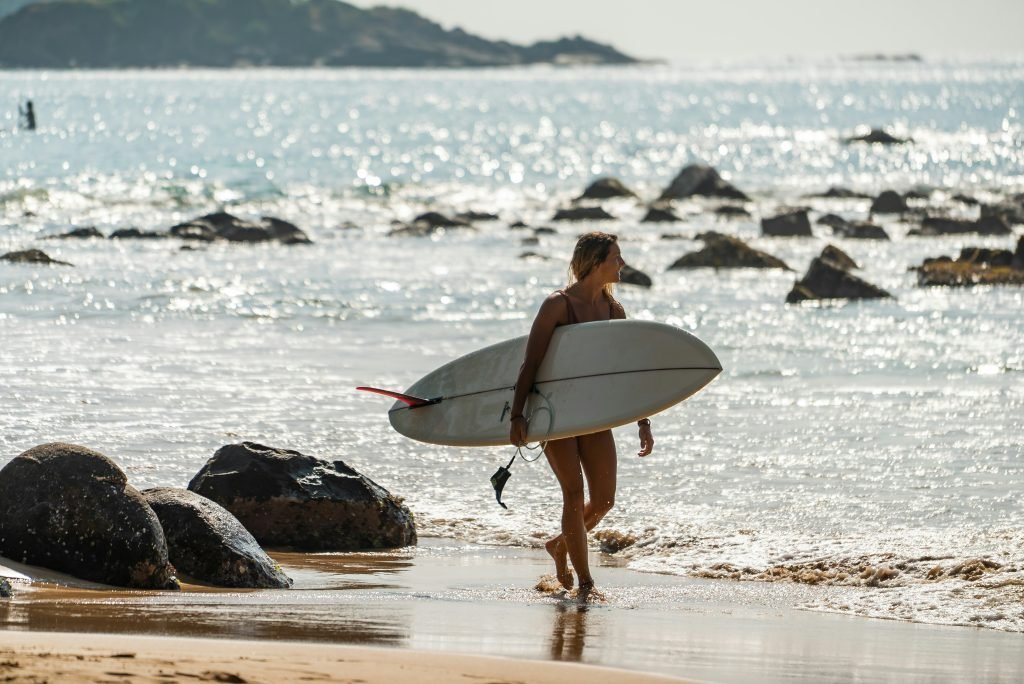
Elephant Rock (beginner to intermediate)
About 15 minutes south of the village by tuk-tuk, then a 10-minute walk over a rocky headland. Rough Guides describes it as a right-hand point that works best on a southeast swell of around 3 to 5 feet and a mid, rising tide. Hostelworld's 2026 guide rates it for beginners moving up to intermediate, with waves of about 2 to 6 feet, and many schools bring students here.
Peanut Farm (beginner to intermediate)
About 6 km south, or 20 to 25 minutes down a rough dirt road by tuk-tuk. Rough Guides describes it as an A-frame over sand and reef, with a faster right that can barrel and a softer left. On small days it's a good learning spot; on bigger days it's for confident surfers.
Okanda (experienced only)
About 20 km south, near the entrance to Kumana National Park. It's a powerful right-hand reef break that needs a swell of about 3 to 4 feet or more, and the drive takes 1 to 1.5 hours by 4WD. Most people go on a day trip with a local driver or surf guide.
Surf lessons and board hire: what they cost in 2026
Arugam Bay has many surf schools, from one-person outfits on the beach to full surf camps. Prices vary, but the 2026 figures from different sources are fairly consistent:
- Beginner group lesson (about 2 hours): US$20–30 including the board, according to The Sri Lanka Guides. In early November 2026, Hostelworld listed a two-hour beginner group lesson at one Arugam Bay school at US$30.
- Private lesson (about 2 hours): around US$35–60, depending on the school.
- Board hire: The Sri Lanka Guides gives Rs. 800–1,500 a day for a shortboard or funboard. Other operators quote up to Rs. 3,000 a day, or Rs. 500–1,000 an hour. Ask about weekly rates if you're staying a while.
- Rash vest hire: around Rs. 200–300 a day.
- Tuk-tuk to the outer breaks: usually Rs. 300–600 one way, more for return trips with waiting time.
How to choose a surf school
- Small groups. Look for no more than four students per instructor in the water.
- The right spot for your level. A good school takes beginners to Baby Point, Elephant Rock or Peanut Farm on a small day, not to Main Point.
- What's included. Check whether the price covers the board, rash vest and tuk-tuk to the break.
- Local instructors. Hostelworld notes that, by local custom, surf lessons are given by Sri Lankan instructors, and that foreign coaches giving private lessons can cause friction in the water.
- Read recent reviews and ask other travellers in your guesthouse. Schools change from season to season.
If you'd rather not organise anything, many surf camps sell packages with a room, lessons, board hire and transport to the breaks. Compare what's included rather than the headline price.
Surf etiquette at Arugam Bay
The line-ups here can be busy in peak season, and the usual rules are taken seriously:
- The surfer closest to the peak has the wave. Don't drop in on someone already riding it.
- Don't snake. Paddling around someone to steal their spot at the peak won't make you friends.
- Beginners stay on the inside or at beginner breaks, out of the path of surfers on the wave.
- Hold on to your board. A loose board in a crowded line-up can injure someone.
- Be patient and friendly. A smile and taking turns go a long way with local surfers.
Staying safe in the water
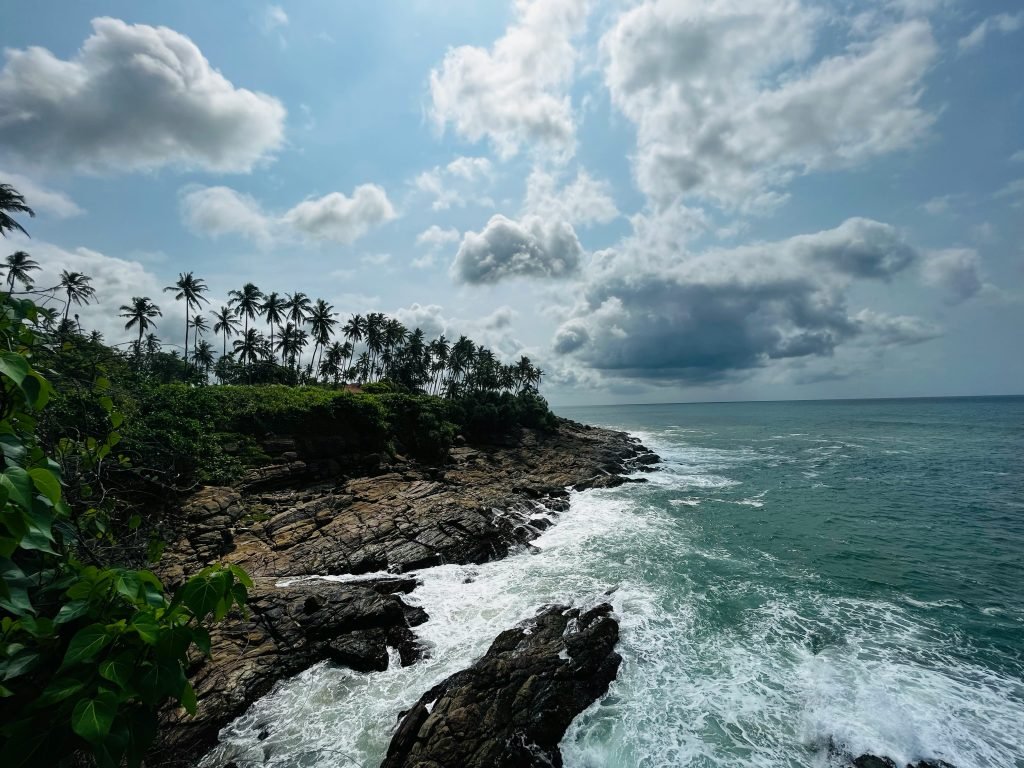
- Reef and rocks. Several breaks are over reef or rock. Check the tide before you paddle out, wear reef booties where it's shallow, and clean any cut straight away, as coral cuts get infected easily in the heat.
- Sun. The Sri Lanka Guides strongly recommends a long-sleeved rash vest. Use reef-safe sunscreen and surf early or late to avoid the midday sun.
- Jellyfish. They can appear at times, particularly in May and October, according to the same guide.
- Currents. The Government of Canada's Sri Lanka travel advice (updated 2 November 2026) warns that tides and strong winds can cause dangerous riptides and that public beaches are generally unsupervised. Ask locally before swimming, and don't swim or surf alone at quieter spots.
- Crocodiles. They are present in parts of Sri Lanka, including around Crocodile Rock north of the bay. Don't swim in lagoons or rivers, and ask locals about a spot before you paddle out.
On land, Arugam Bay is a relaxed surf town, but the surrounding area is conservative. Cover up with a T-shirt and shorts or a sarong when you leave the beach. In October 2024 the US Embassy issued a security alert about the Arugam Bay area and Sri Lankan police stepped up security there. Check your own government's current travel advice before you go, and see our guide to safety in Sri Lanka.
How to get to Arugam Bay
There's no railway to Arugam Bay, so you arrive by road. Most surfers come from Ella or straight from the airport.
- From Ella: about 3.5 to 4.5 hours by private car, through Wellawaya and Monaragala to Pottuvil, then 4–5 km south to the bay. Buses take 5 to 8 hours with changes. Our guide to getting from Ella to Mirissa and Arugam Bay has full prices and options.
- From Colombo or the airport: Rough Guides puts the drive at about 8 to 9 hours, usually through Ella and Wellawaya. Many people break the journey in Ella. See our guide to getting from Colombo airport for the first leg.
- By train: after Cyclone Ditwah, the hill country line currently runs only between Nanu Oya, Ella and Badulla, with Colombo–Kandy–Nanu Oya trains suspended. If you were planning to ride the train towards Ella first, read our Kandy to Ella train update.
If you're bringing your own board, a private car is much easier than the bus: boards travel on the roof, and you won't have to squeeze one into a crowded aisle.
Things to do when the surf is flat
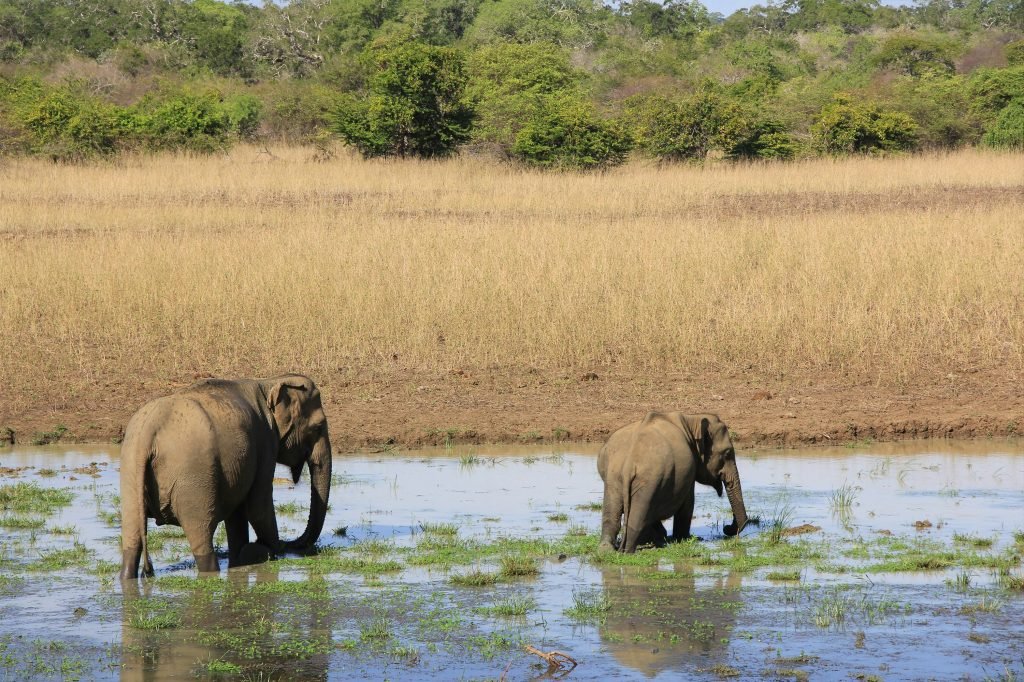
- Kumana National Park: the main gate is near Okanda, south of Arugam Bay. The park is best known for its birdlife in the mangrove swamps, and you may also see elephants, crocodiles and, with luck, a leopard. Jeep safaris can be arranged in Arugam Bay; check current park fees when you book.
- Sunrise and sunset in the village: Main Point and the headland around it are good places to watch the surfers at either end of the day.
- Rest: surf twice a day for a week and your shoulders will thank you for a day off in a hammock.
Frequently asked questions
Is Arugam Bay good for beginner surfers?
Yes. Baby Point in the village, plus Elephant Rock and Peanut Farm on small days, are all good places to learn with a school. Leave Main Point and the reef breaks like Okanda to experienced surfers.
Can you surf Arugam Bay in December or January?
Not reliably. From roughly November to March the east coast surf is irregular and many surf businesses close. At that time of year, surf the south coast at Hiriketiya, Weligama or Mirissa instead.
How much is a surf lesson in Arugam Bay?
A two-hour beginner group lesson costs about US$20–40 in 2026, usually with the board included. Private lessons are roughly US$35–60. Board hire on its own is around Rs. 800–3,000 a day.
Do you need a wetsuit in Arugam Bay?
No. The water is about 27–29°C. A rash vest, ideally long-sleeved, is enough and protects you from the sun.
How many days should you spend in Arugam Bay?
For lessons, three to five days gives you time to make real progress, with a rest day in between. Many experienced surfers stay a week or more in peak season, as conditions change from day to day.