For the best chance of seeing a leopard, choose Yala, but expect plenty of other jeeps. For almost guaranteed elephants on a short, easy safari, choose Udawalawe. For a quieter, wilder drive with leopards, sloth bears and lakes, and no rush of jeeps, choose Wilpattu, but allow a full day.
Most people decide by route as much as by animal. Yala and Udawalawe sit in the south, close to Ella and the south coast beaches. Wilpattu is in the northwest, close to Anuradhapura and the Cultural Triangle. This guide compares the three parks on wildlife, crowds, seasons, 2026 fees and logistics. Facts were checked in November 2026.
Yala vs Udawalawe vs Wilpattu at a glance
| Yala | Udawalawe | Wilpattu | |
|---|---|---|---|
| Best for | Leopards, variety | Elephants, families, short trips | Quiet, wild landscape, leopards |
| Region | Southeast, near Tissamaharama and Kataragama | South-central, near Embilipitiya | Northwest, between Anuradhapura and Puttalam |
| Size | About 979 km² (in blocks) | About 308 km² | About 1,317 km², the largest in Sri Lanka |
| Foreign adult entry (2026) | About US$25 + service charge + 18% VAT | About US$15 + service charge + 18% VAT | About US$15 + service charge + 18% VAT |
| Crowds | Busiest park in the country | Moderate | Quiet |
| Ideal safari | Half day (morning or afternoon) | Half day | Full day if you can |
| Fits a route with | Ella, Tissa, south coast | Ella, south coast, Galle | Anuradhapura, Cultural Triangle, Negombo |
Entry fees are from TukTuk Rental's Sri Lanka entrance fee list. Park sizes are from each park's Wikipedia entry. Fees are paid in rupees at the gate, so the exact total moves with the exchange rate.
Yala: the leopard park
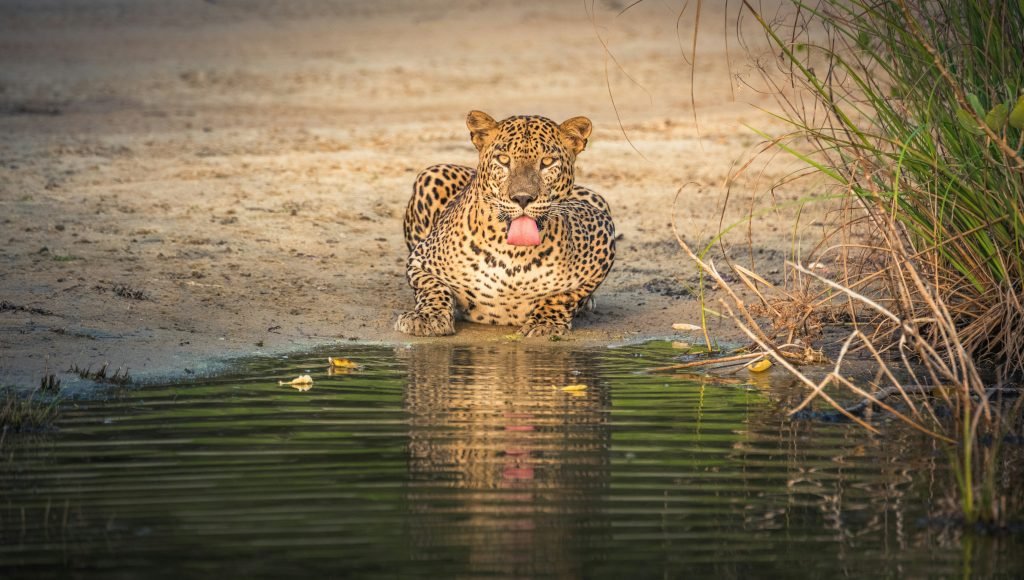
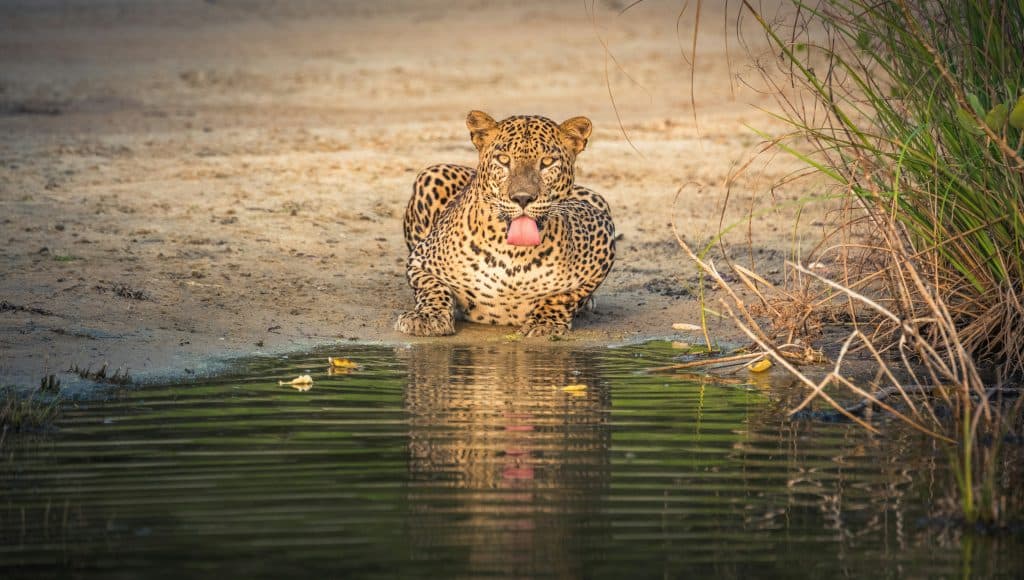
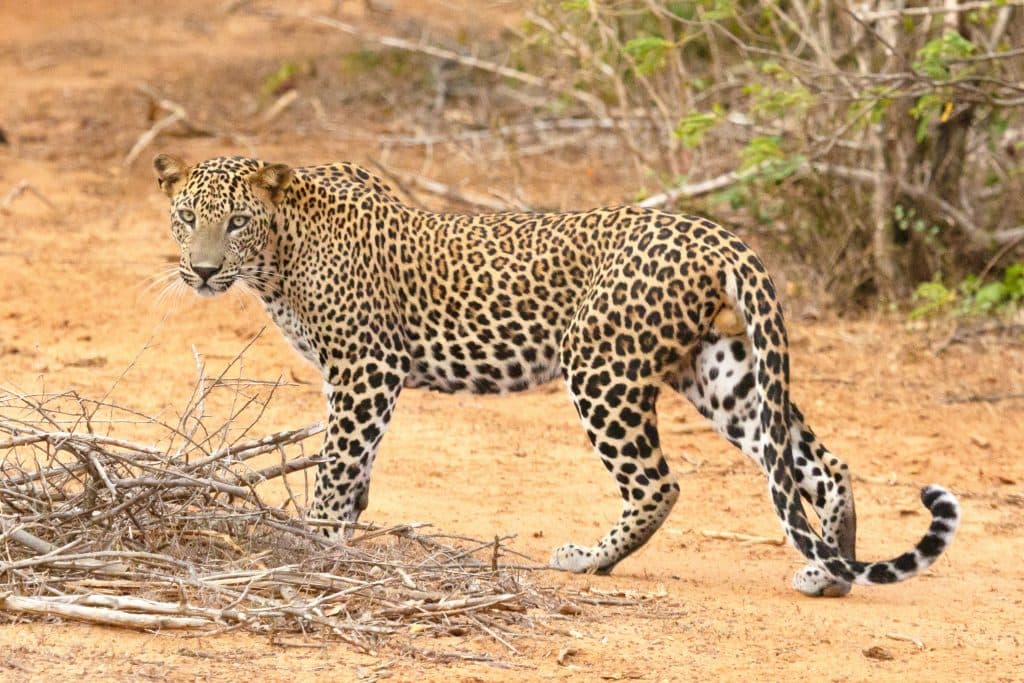
Yala is Sri Lanka's most famous and most visited national park. It is known for one of the highest leopard densities in the world, which is why it gives travellers the best odds of a leopard sighting in the country.
You will also see spotted deer, wild buffalo, crocodiles, peacocks and plenty of birds. Elephants are common, and sloth bears live here too, though they are seen far less often.
Blocks and gates
Yala is divided into blocks. Block 1 is the most popular and the one most people mean by "Yala". It is entered from the Palatupana gate (the usual choice from Tissamaharama) or the Katagamuwa gate (closer to Kataragama). Block 5 is reached from the Galge gate. It is quieter, with fewer leopard sightings but much less traffic.
The downside: crowds
Yala's popularity is its biggest problem. In peak season, many jeeps can gather around a single leopard, and drivers sometimes race to a sighting. If that bothers you, consider an afternoon safari, the Galge side, or one of the other two parks.
The annual closure
Yala's main blocks usually close for a few weeks around September and October. In 2026, Blocks 1 and 2 were closed from 14 September to 15 October because of drought, and they reopened to local and foreign visitors at 6 am on 16 October 2026, according to the Daily Mirror. Bungalows and campsites inside the park reopened from 1 November. If you are travelling in late August, September or October, check the dates locally before you book.
Yala costs in 2026
- Entry: about US$25 per foreign adult, plus a service charge and 18% VAT, paid in rupees at the gate.
- Jeep hire: a safari company listing the park's official jeep rates for 2026 gives LKR 21,450 for a half day and LKR 31,350 for a full day in Block 1, for a jeep of up to six people, tickets not included. Prices from hotels and drivers vary, so confirm what is included before you pay.
- Hours: the park is open from about 6 am to 6 pm. Morning safaris enter at the 6 am opening; afternoon safaris usually enter around 1:30 pm.
Udawalawe: the elephant park
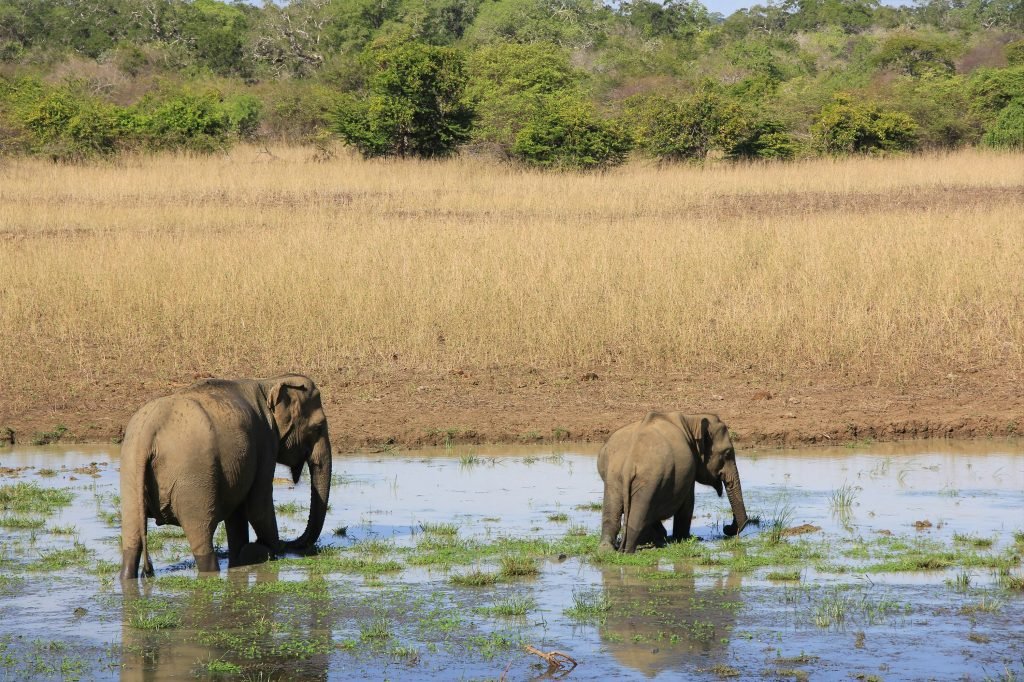
If your main wish is to see wild elephants, Udawalawe is the easiest choice. About 250 elephants are thought to live in the park permanently, and the open, grassy terrain makes them easy to see, often in herds.
Leopards live here too, but sightings are rare. You are more likely to see water buffalo, sambar and spotted deer, monitor lizards and many birds.
Why it suits many travellers
- Short and reliable: a half-day safari is usually enough to see elephants.
- Good for families: less driving inside the park and fewer jeeps than Yala.
- On the way: it sits between the hill country and the south coast, so it fits easily into a journey from Ella towards Mirissa or Galle. Our Ella to the coast guide covers that route.
- Cheaper entry: about US$15 per foreign adult, plus service charge and VAT.
The Elephant Transit Home
Just outside the park, the Elephant Transit Home (set up in 1995) cares for orphaned elephant calves, with the aim of returning them to the wild. Visitors can watch feeding time. Entry is about US$5. Feeding times are set by the centre, so ask your guesthouse for the current schedule.
Wilpattu: the quiet, wild option
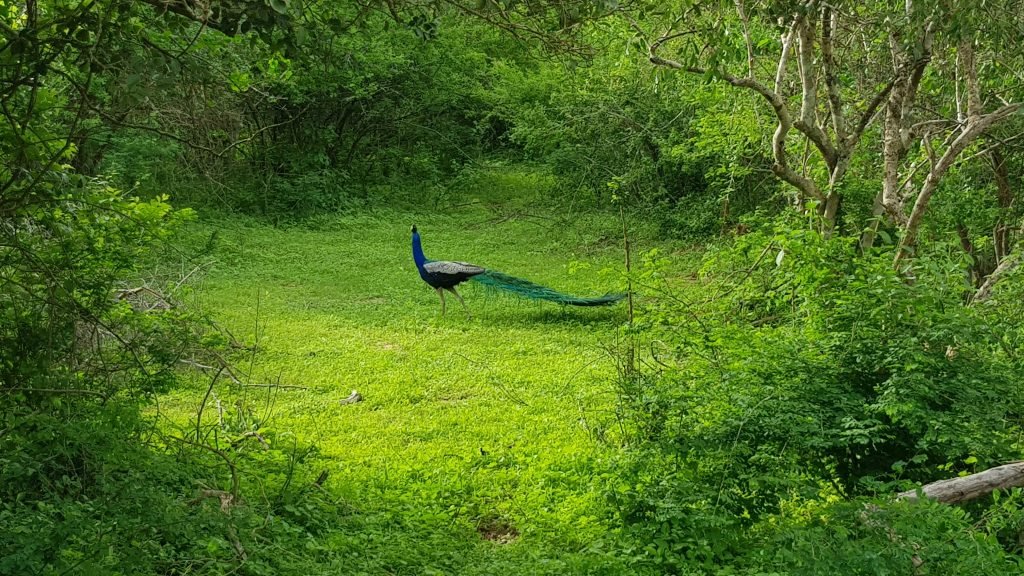
Wilpattu is Sri Lanka's largest national park, at about 1,317 km². It is mostly forest, broken up by villus: natural lakes that draw in animals. The park has around a hundred lakes and tanks, which gives it a very different feel from the open plains of Yala and Udawalawe.
Leopards live here in good numbers. A 2018 camera-trap survey recorded 133 individual leopards in about 660 km² of the park, roughly 18 per 100 km². But the forest is dense, so the leopards are harder to see than in Yala. Sloth bears, elephants, deer, mugger crocodiles and more than 200 bird species are also found here.
Why choose Wilpattu
- Few jeeps: you can often sit with a sighting without a crowd.
- Near the Cultural Triangle: it pairs well with Anuradhapura. See our Cultural Triangle guide.
- Cheaper entry: about US$15 per foreign adult, plus service charge and VAT.
The trade-offs
Wilpattu is big, and visitors can only use about a quarter of it. Distances between lakes are long, and quiet spells are normal. A full-day safari gives you a much better chance than a half day. Some jeep operators charge more for long routes inside the park, so agree on the route and price first.
Best time for each park
All three parks are open most of the year, but sightings are best in the dry months, when animals gather around the remaining water.
| Park | Best months | Watch out for |
|---|---|---|
| Yala | About February to July | Blocks 1 and 2 usually close for a few weeks around September and October (14 September to 15 October in 2026) |
| Udawalawe | Year-round; clearer views in the dry season | Rain makes tracks muddy and grass taller |
| Wilpattu | About February to October | Outside the dry months, rain can make the long internal tracks hard going |
For the bigger picture on Sri Lanka's two monsoons, see our month-by-month guide to the best time to visit.
Which safari should you choose?
- "I really want to see a leopard." Yala Block 1 gives you the best odds. Book a morning safari, and consider two drives.
- "I want elephants and I don't have much time." Udawalawe. A half day is usually enough.
- "I'm travelling with young children." Udawalawe, plus the Elephant Transit Home.
- "I hate crowds." Wilpattu, or Yala's Block 5 from the Galge gate.
- "I'm visiting Anuradhapura and Sigiriya." Wilpattu fits your route far better than the southern parks.
- "I'm going from Ella to the beaches." Either Yala or Udawalawe works. Udawalawe is the gentler stop; Yala needs a night in Tissamaharama to make an early start.
- "I have time for two parks." Pair a leopard park (Yala or Wilpattu) with Udawalawe for elephants.
What a safari costs
A safari price is made up of three parts:
- Park entry per person (about US$25 at Yala and US$15 at Udawalawe or Wilpattu for foreign adults).
- A service charge per vehicle, typically about US$8–10, plus a small vehicle permit and 18% VAT on all of it.
- Jeep and driver hire, paid to the jeep operator. This is shared by the group, so a full jeep is much cheaper per person.
Many hotels and guesthouses near the parks book jeeps and quote a price that covers everything. Ask clearly whether tickets are included, how long the safari lasts, and how many people will share the jeep. Children aged 6 to 12 pay a lower rate at Yala, and children under six usually enter free. For a full trip budget, see how much a trip to Sri Lanka costs.
How to have a better, more ethical safari
- Ask your driver not to chase. Racing to sightings and crowding animals is the biggest problem in Yala. Say up front that you are happy to wait quietly or move on.
- Stay in the jeep and keep your voice down.
- Never feed animals. Feeding elephants along the roads near the parks teaches them to approach vehicles, which is dangerous for both sides.
- Bring binoculars and a zoom lens, so you do not need to get closer.
- Take your rubbish back out of the park.
Practical tips
- Carry your passport (or a clear copy). Foreign visitors pay the foreign rate at the gate.
- Go early. The first hours after the 6 am opening are cooler and usually best for animals.
- Dress in neutral colours and bring a hat, sunscreen, water and a light layer for the early start. Our packing list has more.
- Getting there: most travellers reach the parks by private car or with a driver. See hiring a driver in Sri Lanka.
Frequently asked questions
Which park is best for leopards in Sri Lanka?
Yala, especially Block 1. Wilpattu also has many leopards, but its dense forest makes them harder to see.
Is Udawalawe better than Yala?
For elephants, yes: sightings are almost certain and the park is less crowded. For leopards and overall variety, Yala is better.
Is Yala open now?
Blocks 1 and 2 reopened on 16 October 2026 after the September to October drought closure. Closures can happen again in very dry or very wet spells, so check with your hotel or jeep operator a few days before you go.
How long should a safari be?
A half day (about three to four hours) is enough for Udawalawe and usually for Yala. In Wilpattu, a full day gives you a much better chance of good sightings.
Can I do Yala and Udawalawe on the same trip?
Yes. Both are in the south, and many travellers do one on the way from Ella to the coast and the other a day later.